Best 2011 Pistols: 5 Double-Stack 1911s Worth Your Money in 2026
The best 2011 pistol depends on the job. We compare competition, duty, value, and carry picks using independent accuracy and barrel-lockup data.

Written By
Michael Crites

Edited By
Michael Crites
Licensed Concealed Carry Holder
Share:
Products are selected by our editors. We may earn a commission on purchases from a link. How we select gear.
Updated
Oct 2026
The 2011 barely existed as a category in the early 1990s. What did exist was a handful of competition gunsmiths trying to solve a problem John Browning never had to think about: how do you get more than eight rounds of .45 or nine rounds of 9mm into a 1911 without ruining the grip angle that made the gun famous?
In This Article
The Roots of The 2011
Virgil Tripp and Sandy Strayer answered the 1911 riddle by splitting the frame into two bolted pieces. A steel or aluminum upper frame holds the fire-control parts, and a separate polymer grip module sits below it. That was the birth of the double-stack 1911.
Their partnership became STI, the company that pioneered the platform and gave it the “2011” name. The U.S. Marshals Special Operations Group adopted the Staccato P in 2019. The next year, STI rebranded around the name that had already taken over its lineup: Staccato.
The basic formula hasn’t changed much since. A 2011 combines the crisp single-action trigger of a traditional 1911 with a modular frame and a double-stack magazine. In 9mm, that typically means 17 or more rounds, against eight or nine in a classic single-stack 1911.
Add optics-ready slides and swappable grip modules, and it’s easy to see how the platform went from niche to the gold standard for high-performance competition handguns. It has also become a growing presence in duty holsters.
Today, “2011” gets used almost as loosely as “Kleenex.” It covers everything from a $959 Turkish import to custom guns that cost more than $5,000, and that range is part of the problem for anyone trying to buy one.
The market now spans duty, concealed carry, and USPSA stages, and the right gun for one role is often the wrong gun for another. So rather than crowning a single best 2011 pistol, we picked five finalists across use cases: competition, duty, entry-level value, mid-price, and premium carry. A few alternatives worth a look follow the main picks.
Where we had it, we used independently measured accuracy and barrel-lockup data instead of manufacturer spec sheets alone. The next section explains where that data came from.
How We Test 2011 Pistols
Accuracy & Trigger
We fire four 5-round groups from a bench at 15 yards and measure each group. We also check barrel lockup, measure trigger pull weight with a trigger scale, and assess reset.
Reliability
We fire at least 500 rounds of FMJ and hollow-point ammo through every magazine that ships with the gun. We log every feeding, ejection, or extraction issue, then run magazine drop, swap, and last-round hold-open tests.
Controls & Shootability
We run the thumb safety, slide stop, and magazine release from a real firing grip. We time reloads and split times on a shot timer to see how quickly each gun returns to target.
Durability & Maintenance
After testing, we inspect for wear, loosening, and buildup. That includes the joint between the frame and grip module, which is specific to the 2011 design. We also evaluate disassembly, cleaning, and how easy it is to find spare magazines and parts.
More on our testing process
2011 Pistol Comparison
| Product | Price | Details |
|---|---|---|
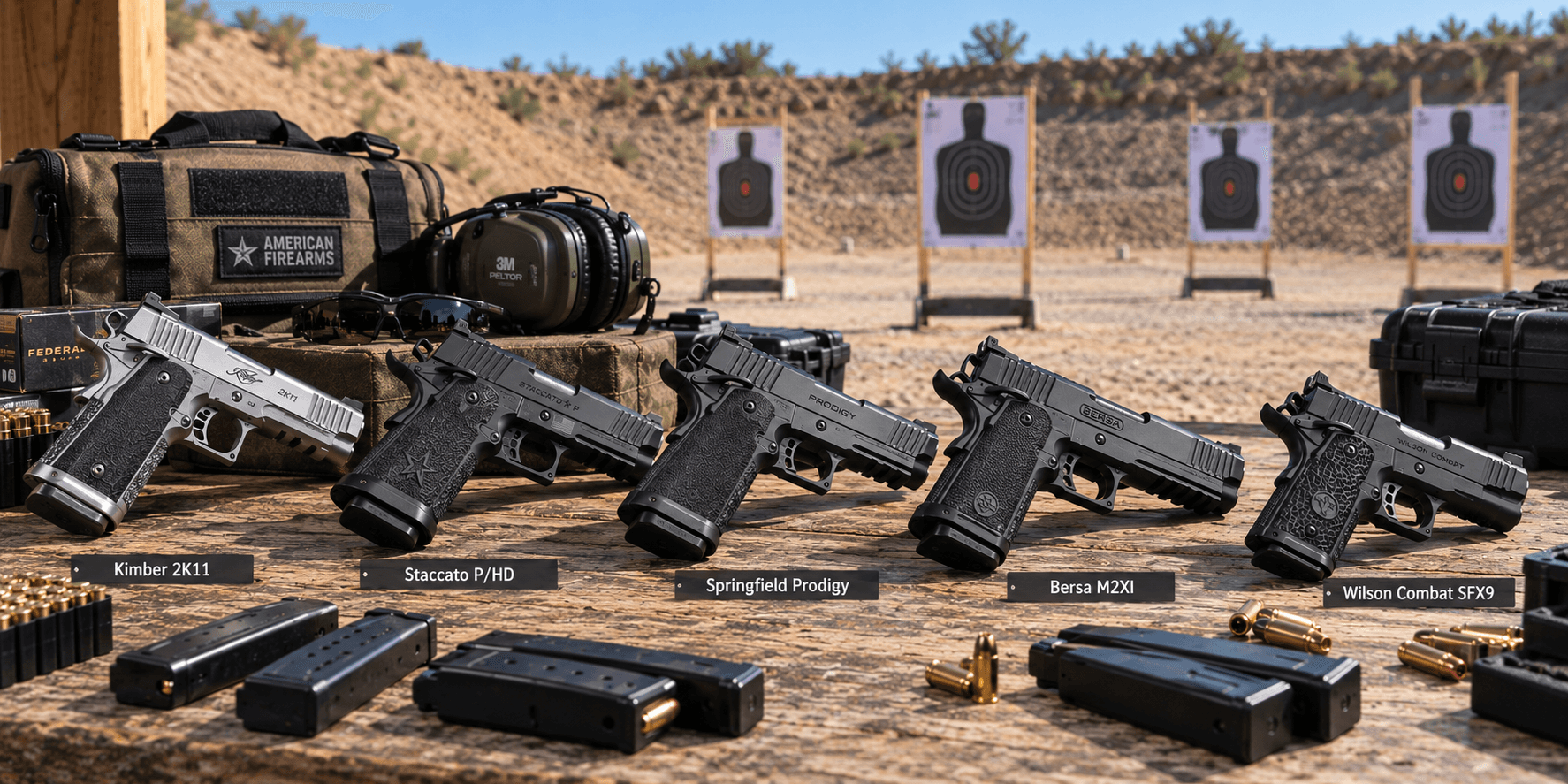
Best For: Competition Kimber 2K11 | $1747 | Jump to Details |
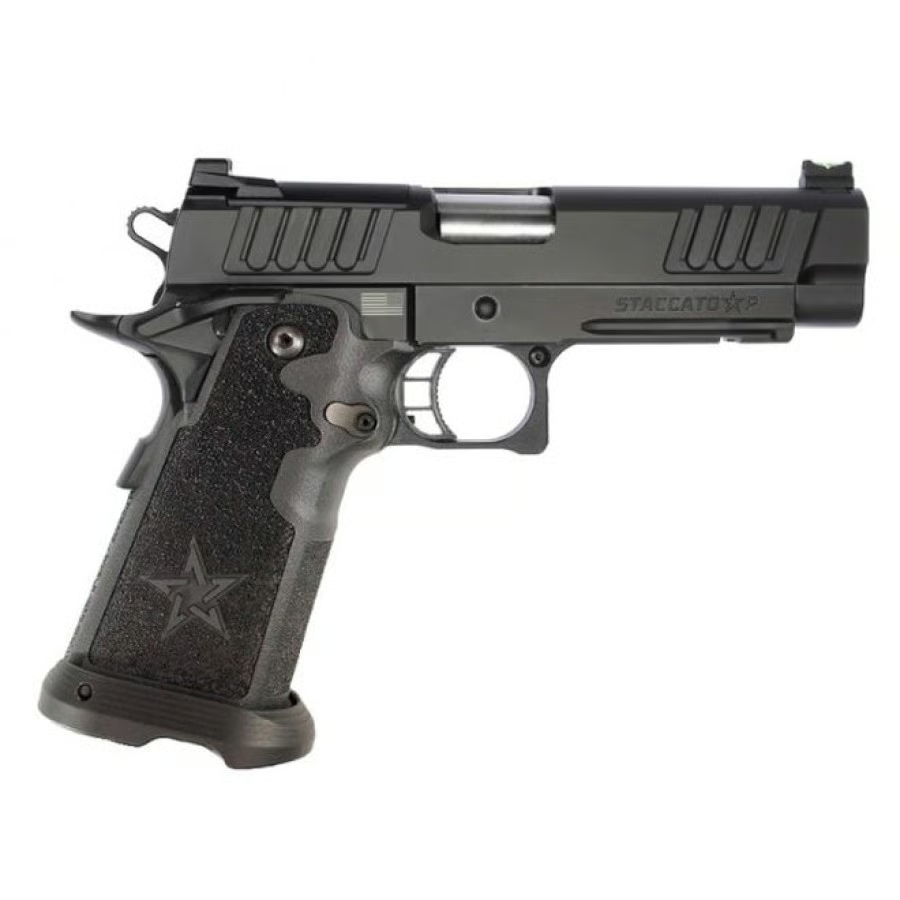
Best For: Duty Use Staccato P / HD | $2499 | Jump to Details |
Best For: Entry Level Value Springfield Prodigy | $1199 | Jump to Details |
Best For: Mid-Priced Value Bersa M2XI | $1399 | Jump to Details |
Best For: Concealed Carry Wilson Combat SFX9 | $349.99 | Jump to Details |
| Name | Best For | MSRP | Barrel Length | Capacity (9mm) |
|---|---|---|---|---|
Kimber 2K11 | Competition | $4,000+ | 5" compensated | 17+1 |
Staccato P / HD | Duty | $2,700–$2,900 | 4"–4.5" | 18+1 |
Springfield Prodigy | Entry-level value | $1,530 | 4.25" or 5" | 17–20+1 |
Bersa M2XI | Mid-price range and competition | $1,479 | 5" | 18+1 |
Wilson Combat SFX9 | Premium concealed carry | $3,700+ | 3.25"–4" | 15+1 |
The 5 Best 2011 Pistols by Use Case
1. Kimber 2K11 — Best 2011 for Competition
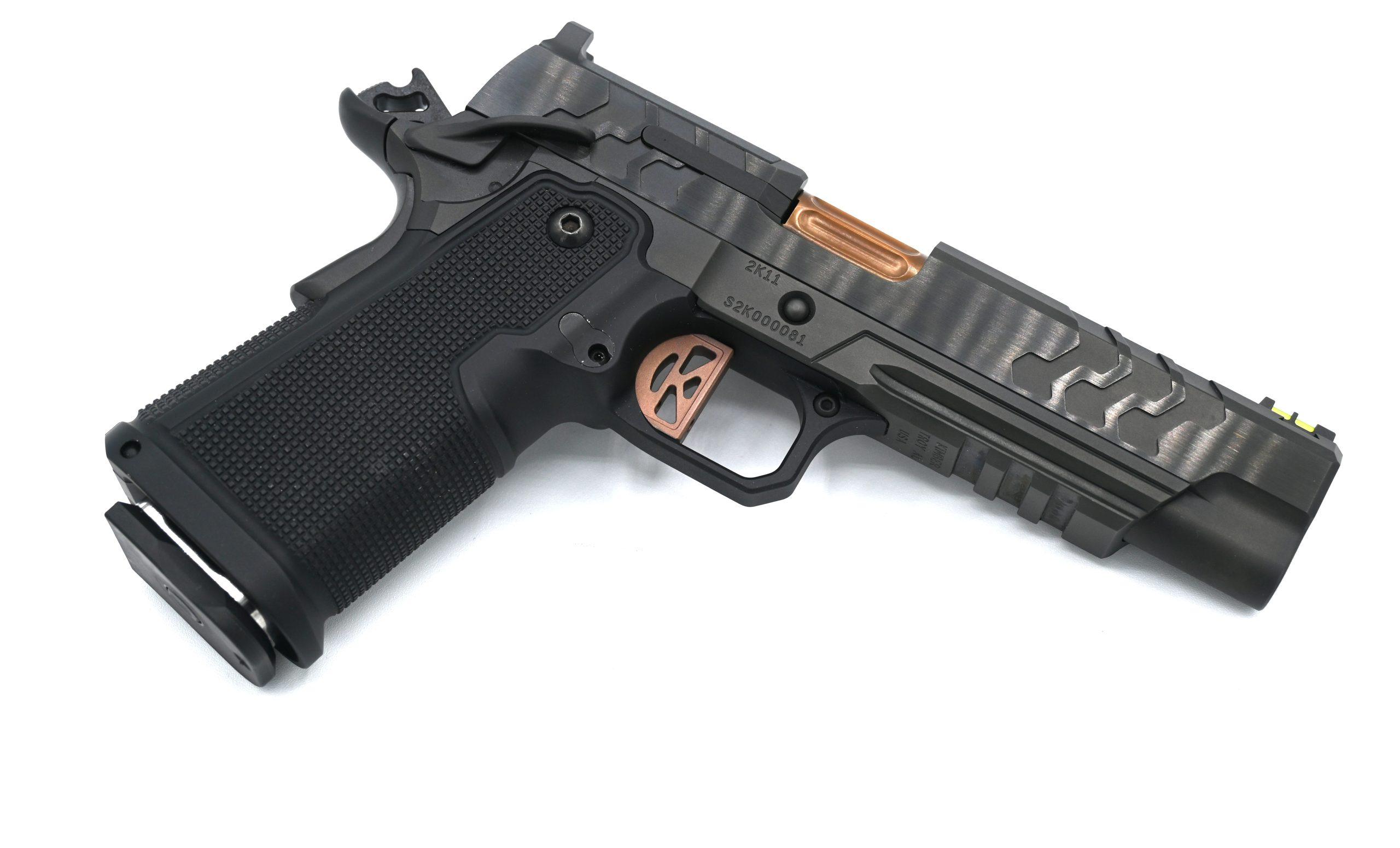
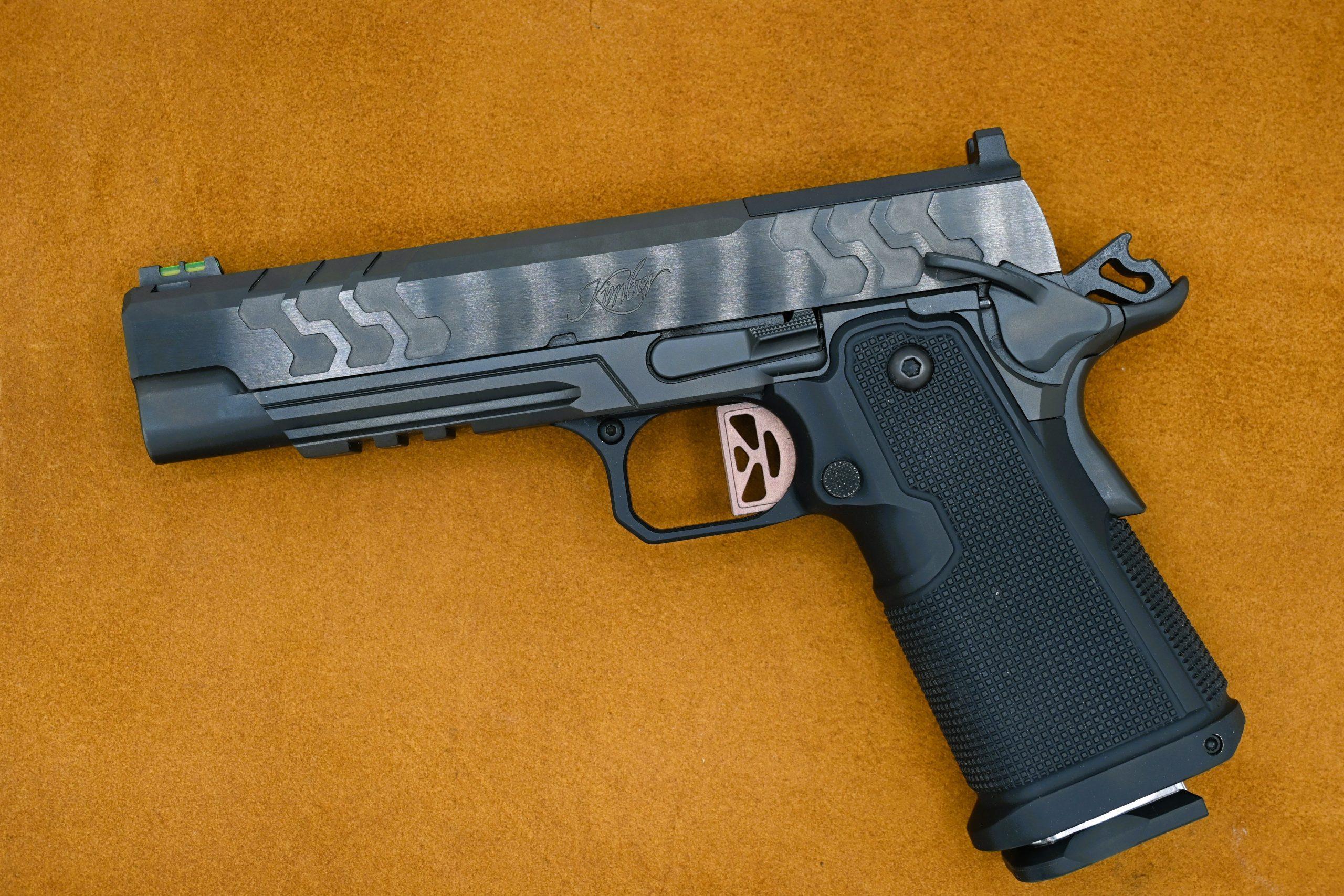
For three decades, Kimber built beautiful single-stack 1911s that purists loved and competitors mostly ignored. The 2K11 is the company’s answer to Staccato. It’s a true two-piece 2011: a stainless steel sub-frame paired with a machined aluminum grip module rather than the polymer module most competitors use. It holds 17 or 20 rounds of 9mm, or 13 rounds of .45 ACP. The base 2K11 OR model has an MSRP of $1,995 and street prices of $1,700 to $1,900, roughly $700 less than a Staccato P.
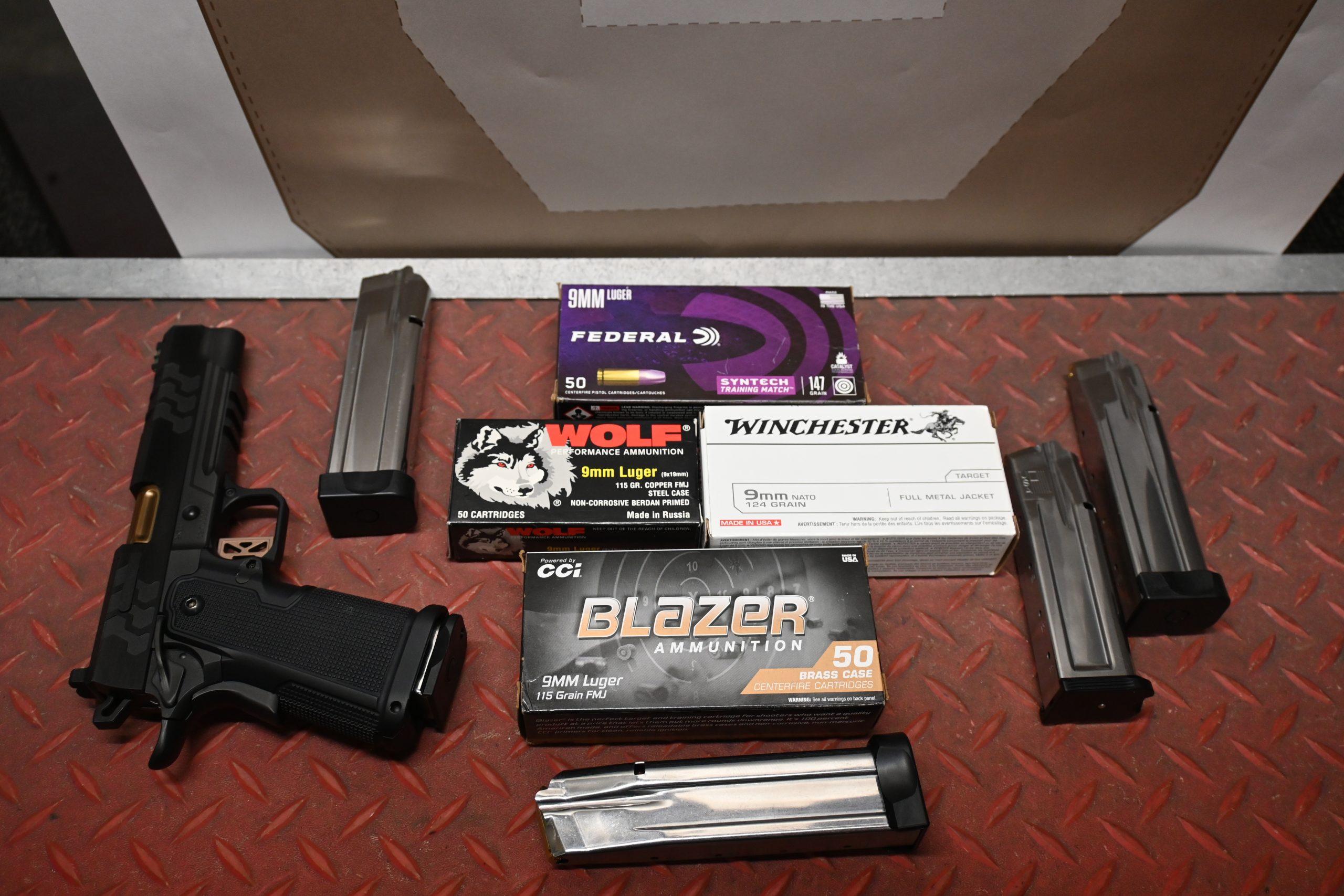
We spent six months with a 9mm 2K11 OR and a .45 ACP Target OR. Four shooters, ranging from novice to expert, put 847 rounds through them at temperatures from 34°F to 89°F.
Barrel Length & Recoil
Both guns run a 5-inch, 5R-rifled barrel with a target crown. At 38.5 ounces empty in 9mm, the 2K11 soaks up recoil better than a polymer-module 2011. The tradeoff is that it transitions between targets a beat slower than a lighter Staccato.
From a sandbag rest at 25 yards, our best 9mm load, Federal Syntech, averaged 1.58 inches across six five-shot groups. Winchester NATO 124-grain averaged 1.72 inches, and budget Blazer Brass opened up to 2.31 inches. The .45 ACP Target model shot even tighter, with Federal Syntech 220-grain averaging 1.41 inches. At 50 yards, our more careful shooters hit an 8-inch steel plate on the first shot close to 80 percent of the time.
Controls and Thumb Safeties
The ambidextrous thumb safety has firm, positive detents. A deep undercut beneath the trigger guard lets you get a higher grip than on most competitors. The slide stop is within easy reach for most hands, though our shorter-thumbed testers had to shift their grip to reach it.
The GT trigger is the 2K11’s standout feature. It broke at 3.1 pounds with almost no variation from pull to pull. Take-up is about an eighth of an inch before a distinct wall, and the reset is short and audible. Testers with shorter fingers said they’d prefer a curved shoe to the flat one.
What we learned on the range: Kimber’s quality-control reputation showed up early, then faded.
- Break-in: The 9mm gun had two malfunctions with Blazer Brass in its first 75 rounds, and the .45 had two light strikes and a failure to feed. Both guns smoothed out noticeably between 150 and 200 rounds. From roughly round 300 on, they ran clean through the end of testing.
- Optics plate: The included C&H Precision plate takes RMR- and SRO-footprint optics, but the Trijicon RCR won’t mount despite sharing the RMR footprint, because its screw threads are different. Check this before you buy an enclosed dot for the 2K11.
Test Results
| Category | Result |
|---|---|
Avg. group 25 yd (best 9mm load) | 1.58″ (Federal Syntech six 5-shot groups) |
Avg. group 25 yd (.45 ACP Target) | 1.41″ (Federal Syntech 220 gr) |
50-yd first-round hits 8″ steel | ~80% |
Trigger pull / reset | 3.1 lb / short audible |
Rounds fired / malfunctions | 847 rounds; 5 malfunctions all during break-in |
Shooters / test period | 4 shooters / 6 months |
Notable Pros
- A 3.1-pound trigger out of the box that rivals guns costing far more
- Sub-2-inch groups at 25 yards with quality ammunition
- Ships with three magazines and an RMR/SRO optics plate
- Costs about $700 less than a Staccato P
Known Tradeoffs
- Expect 150 to 200 rounds of break-in before it runs at its best.
- Magazines cost $55 to $65 each, and MBX or Atlas mags need modification to fit.
- Holster options are limited, though Crucial Concealment, DAA, and Ghost make fitted models.
- At 1.4 inches wide and 38.5 ounces or more, it’s a match and range gun, not a carry gun. It also exceeds IDPA equipment limits.
Read our full Kimber 2K11 review.
2. Staccato P / HD — Best 2011 for Duty
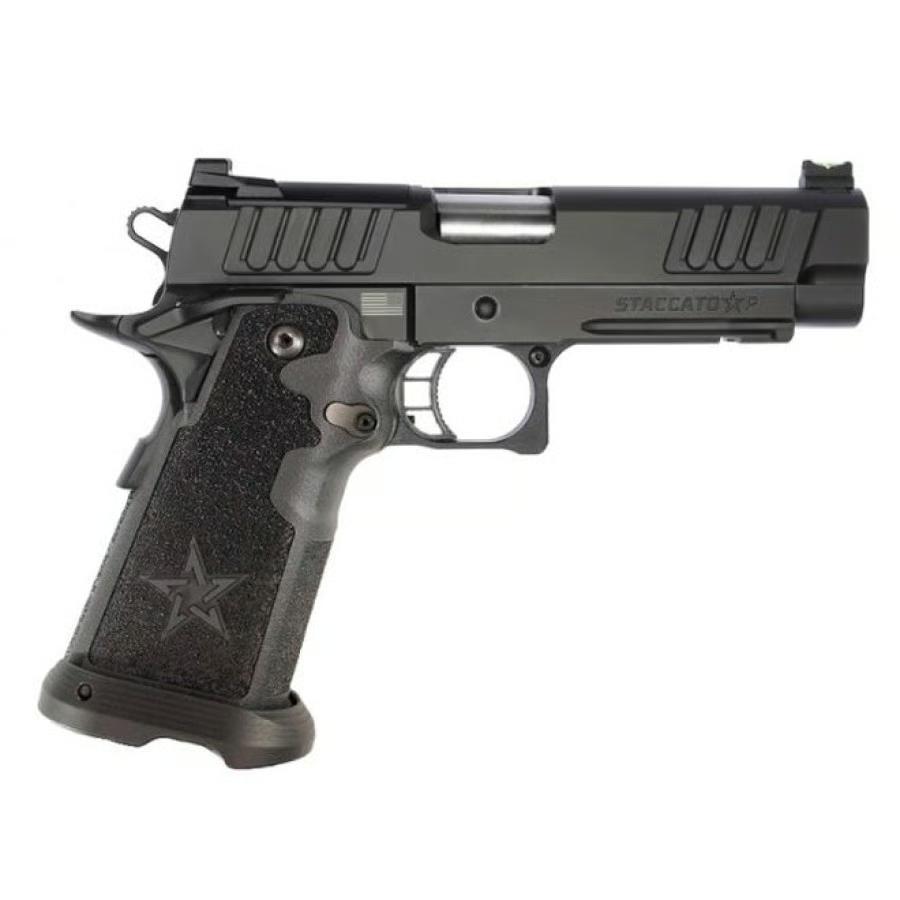
This is the gun that put “2011” into the law enforcement vocabulary. The Staccato P and the newer HD models built alongside it run roughly 4- to 4.5-inch barrels, depending on configuration. They use a full-size frame designed to ride in a duty holster for an entire shift.
Barrel Length & Recoil
A 4- to 4.5-inch barrel splits the difference. You get most of the XC’s sight radius in a package a patrol officer can carry all shift without a permanent list to one side. Recoil is flatter than a comparable single-stack 1911 because the wider dust cover puts extra weight up front, and the P gets there without a compensator.
Controls and Thumb Safeties
An ambidextrous thumb safety comes standard. Staccato also engineers its duty guns for drop safety, which older single-action 1911s weren’t built around. For a gun meant to ride in a duty holster, that’s not a small detail, and an agency’s use-of-force lawyers will notice it.
Notable Pros
- Agency-proven reliability since the 2019 Marshals adoption
- Holds up to sustained high round counts without the fit loosening
- Its duty popularity means wide holster, light, and parts support.
Known Tradeoffs
- At $2,700 to $2,900, it costs well more than the entry-level picks below.
- It’s heavier than a polymer duty pistol, which matters over a 12-hour shift.
- It’s overkill for a shooter who only needs a range gun.
3. Springfield Prodigy — Best Value Entry-Level 2011
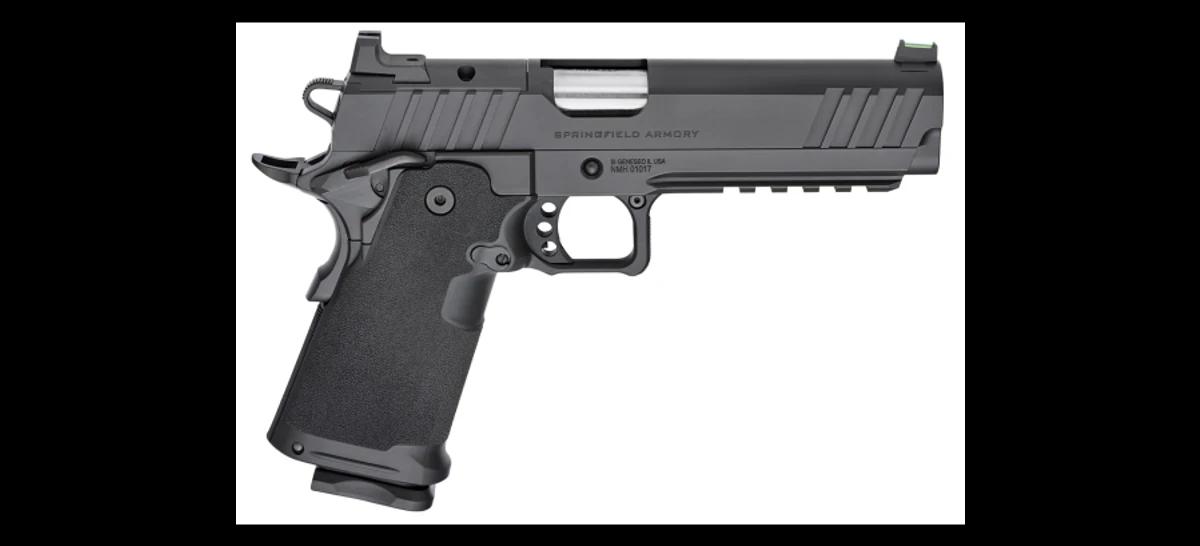
If the Staccato P is the platform’s duty benchmark, the Prodigy is the gun that got a lot of shooters through the door. When Springfield launched it in late 2022, the community called it the “Staccato killer.” First-generation guns didn’t live up to the name, with feeding, extraction, and slide-fit complaints circulating online.
Current production is a different story. Professional 3-gun competitor Kenzie Fitzpatrick bought both the 4.25- and 5-inch models for our full review. Both ran reliably after a 200-round break-in, and she now shoots the 5-inch in USPSA Limited Optics.
Barrel Length & Recoil
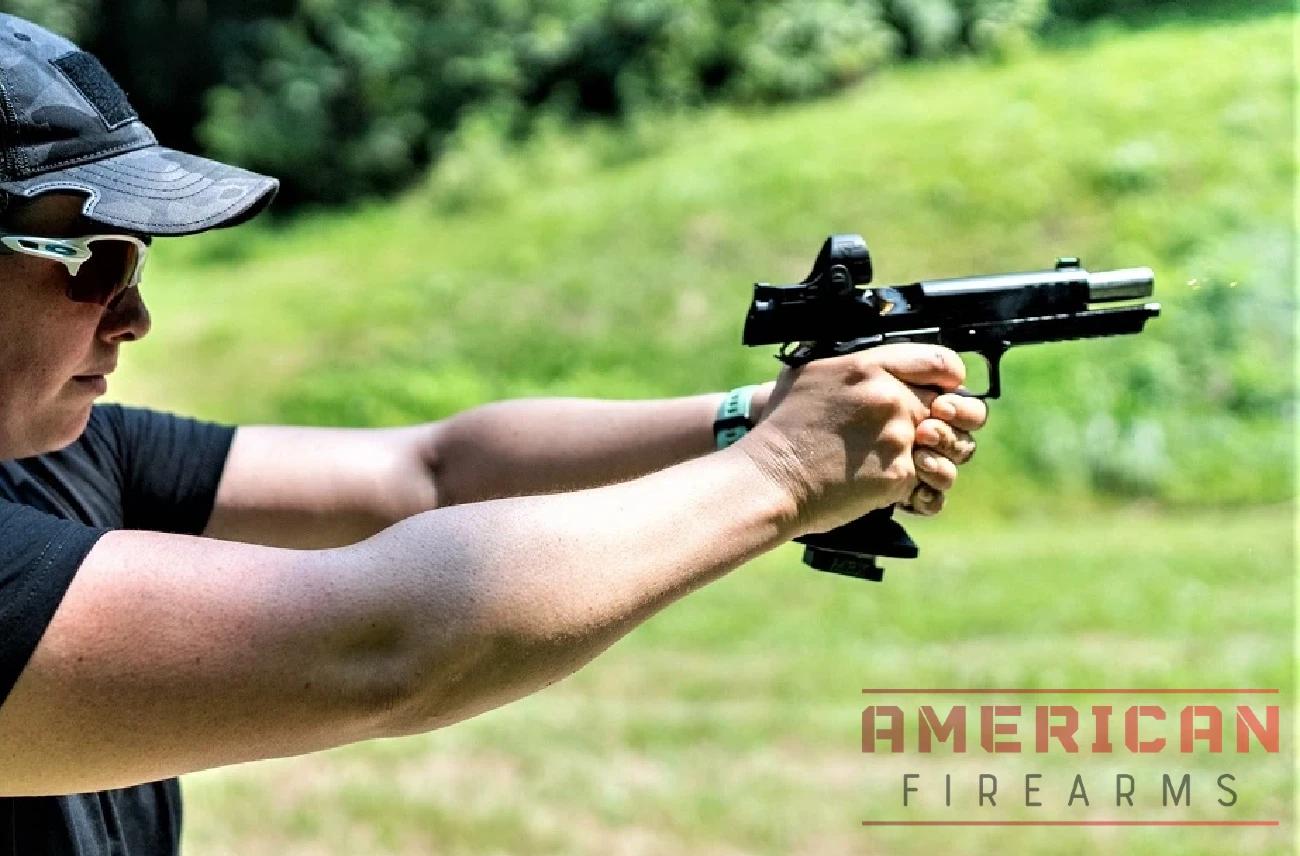
Both versions use a stainless, match-grade bull barrel with an 11-degree crown. The 5-inch model weighs 33 ounces and feels planted, with the sights settling before you’re ready for the next shot. The 4.25-inch model is half an ounce lighter and noticeably snappier. That makes it quicker on close-range transitions but a little less forgiving on longer shots.
That difference showed up at 25 yards:
- 5-inch: Federal Syntech 124-grain Training Match averaged 1.75 inches over three five-shot groups. FMJ range loads ran 2.00 to 2.50 inches.
- 4.25-inch: The same Syntech load averaged 2.25 inches.
Fitzpatrick admits the groups weren’t as tight as she wanted from a match bull barrel. If accuracy is the priority, get the 5-inch and feed it match-grade ammo.
Controls and Thumb Safeties
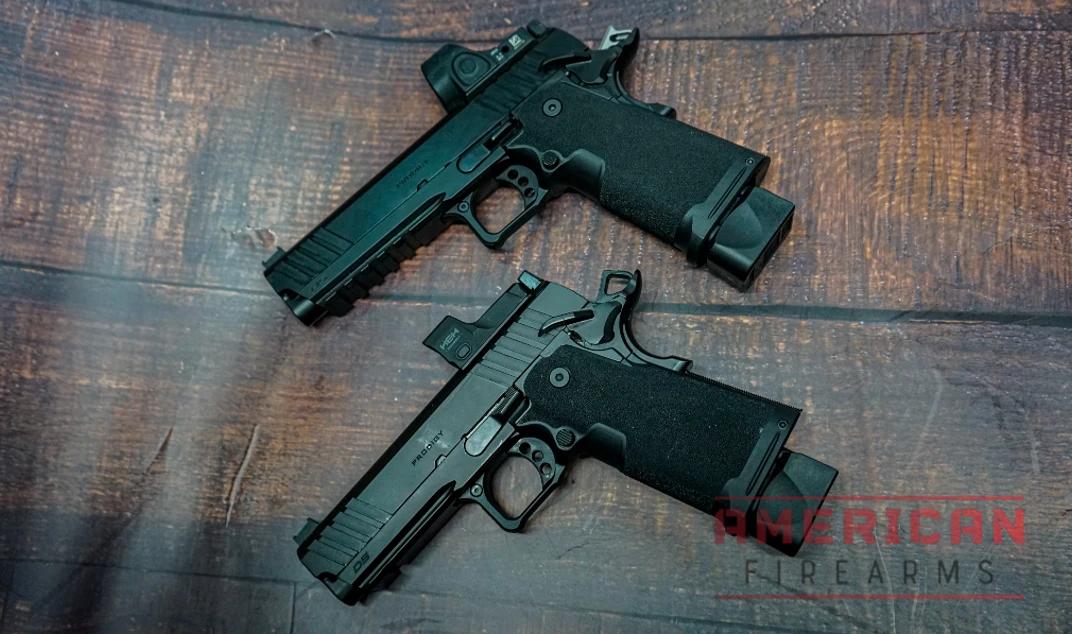
The Prodigy has an ambidextrous thumb safety, a beveled magwell, and forward cocking serrations, which help when a red dot blocks the rear of the slide. The trigger is curved and skeletonized and broke at about 4.5 pounds. That’s fine for most owners, but Fitzpatrick replaced it with a flat Red Dirt USA trigger for competition.
Springfield’s AOS plate system lets you change optics footprints. Co-witnessing your iron sights depends on the optic’s height, though: a Trijicon RMR co-witnesses easily, while the taller SRO on the same plate doesn’t.
What we learned on the range: The Prodigy’s biggest flaw is the stock slide stop.
- Slide stop: It sits so flush and slick against the frame that it’s nearly impossible to push up to lock the slide back. An EGW slide stop with a wider shelf was the first upgrade Fitzpatrick made.
- Balance: The polymer grip module, which has a smooth texture she compared to spray-in truck-bed liner, makes the gun feel nose-heavy when unloaded. She swapped it for a Phoenix Trinity Hero aluminum module.
- Magazines: Aftermarket MBX magazines ran flawlessly.
Test Results
| Category | Result |
|---|---|
Avg. group 25 yd (5″ best load) | 1.75″ (Federal Syntech 124 gr Training Match) |
Avg. group 25 yd (4.25″ best load) | 2.25″ (same load) |
Trigger pull | ~4.5 lb |
Reliability | 500+ rounds; every load fed and functioned after a 200-round break-in |
Durability | 50 Kydex holster cycles` |
Notable Pros
- Ran hollow points, FMJ, and coated bullets without issue after break-in
- Deep aftermarket support. It accepts standard 2011 parts, and $500 to $800 in upgrades still costs less than a stock Staccato.
- AOS plates, a Picatinny rail, and ambidextrous controls come standard.
Known Tradeoffs
- The stock slide stop is too flush for competition use.
- Accuracy is average with range ammo. It wants the 5-inch barrel and match-grade loads.
- The optics plates are expensive.
- At 32.5 to 33 ounces and 1.5 inches wide, it can carry OWB under a jacket at best.
Read our full Springfield Prodigy review.
4. Bersa M2XI — Mid-Price Surprise Performer
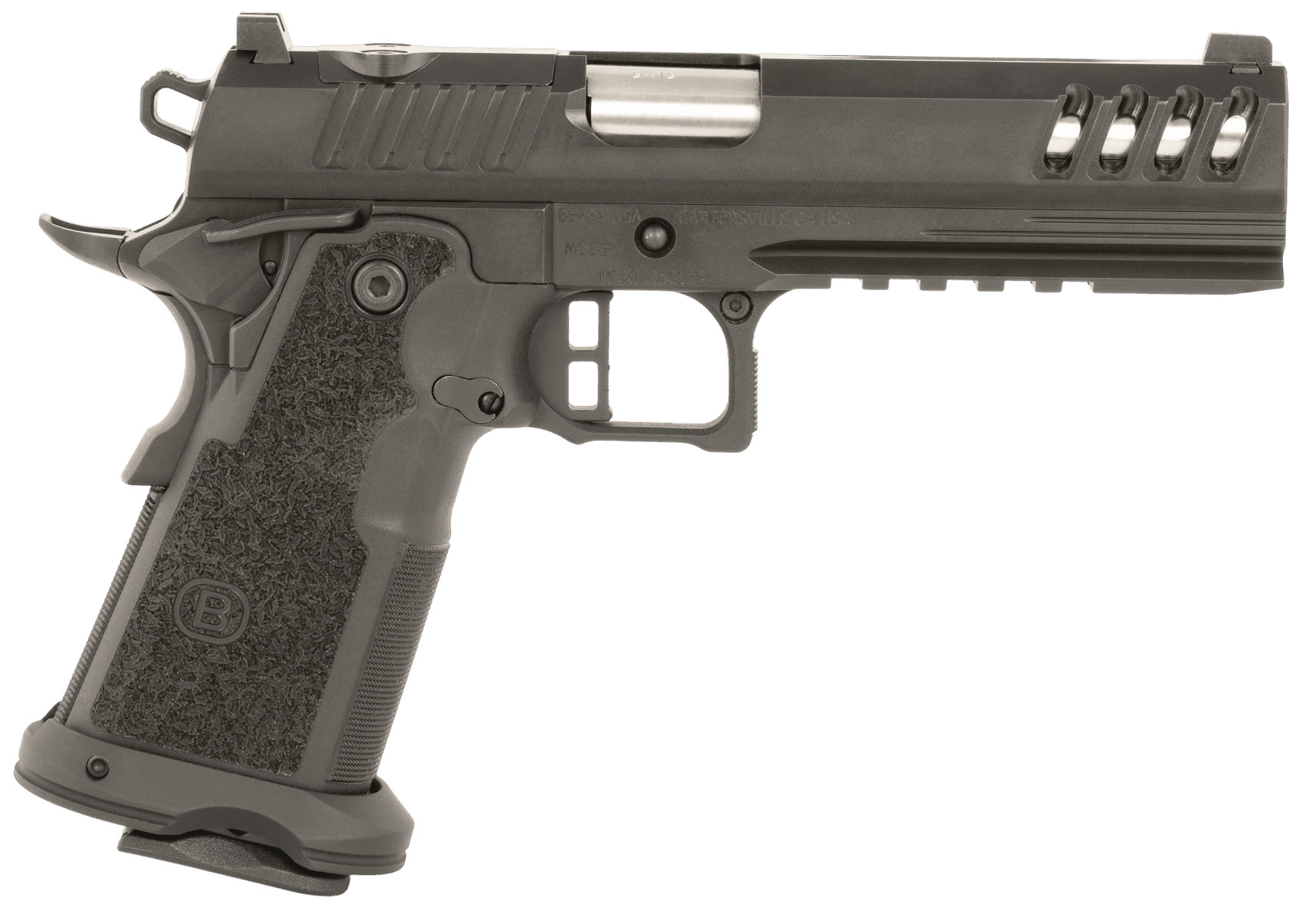
Bersa built its reputation on the Thunder .380, so a 2011 was the last thing most shooters expected from the brand. The M2XI is that 2011, and it’s built in Bersa’s Kennesaw, Georgia plant. The slide and grip frame are 416 stainless steel with a polymer grip module and a nitride finish. It ships with two 18-round magazines, and 23-round magazines are available.
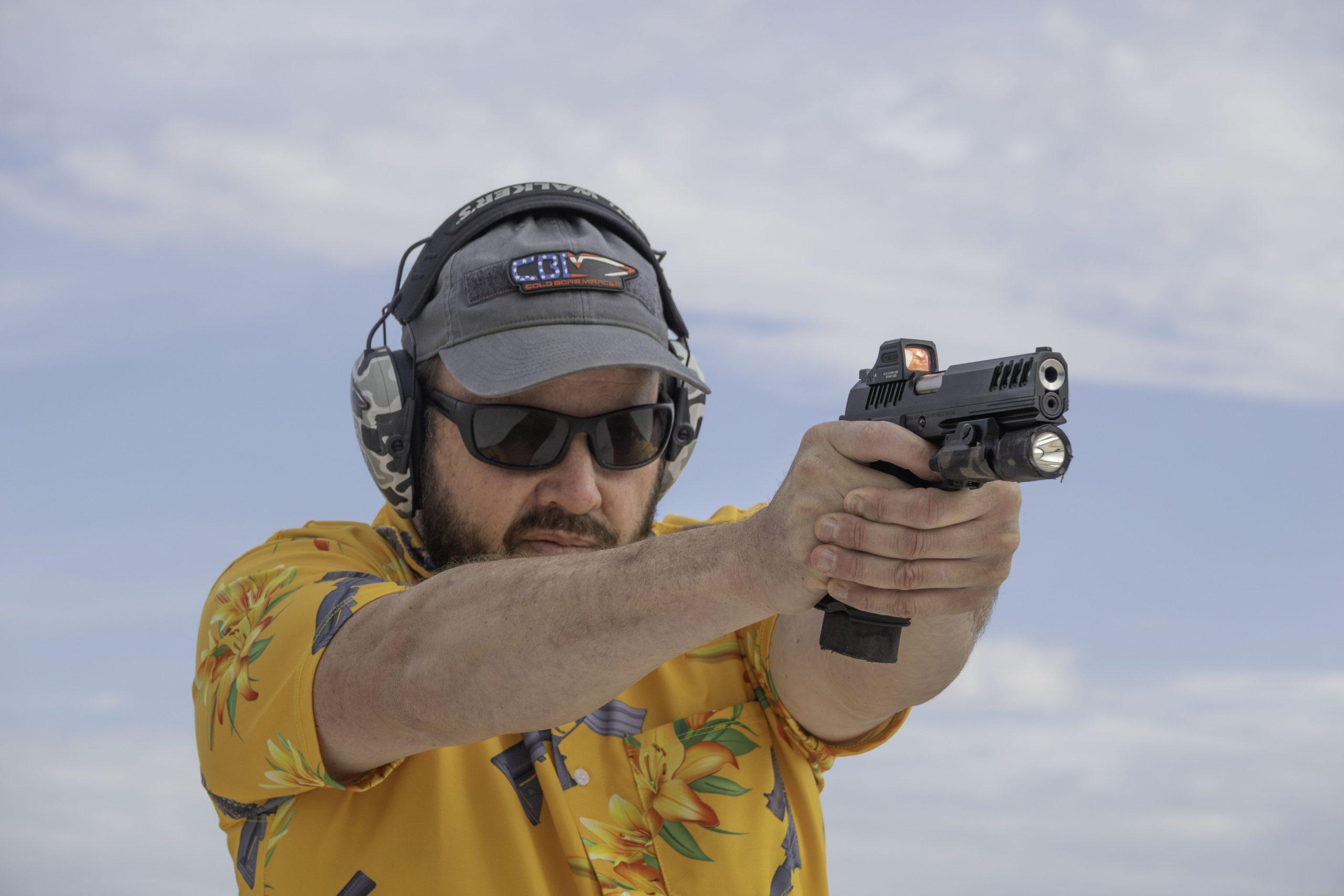
Jeff Wood (Coldboremiracle) carried and shot the M2XI for three months for our full review, putting more than 2,400 rounds through it. Three other shooters ran drills with it to make sure the results weren’t specific to his grip.
Barrel Length & Recoil
The 5-inch bull barrel is bushingless and has a Wilson/Nowlin-style feed ramp. Wood credits the ramp for some of the smoothest feeding he’s seen: he could ride the slide forward slowly and it still chambered a round. At 38.5 ounces, the M2XI is heavier than the Prodigy, and that steel soaks up 9mm recoil even with 124-grain loads.
From a sandbagged rest at 25 yards, groups averaged 1.25 inches across Federal Champion, Magtech, and PMC loads. Federal Champion 115-grain was the best at 1 inch.
Controls and Thumb Safeties
Bersa’s published trigger-pull figures have been inconsistent, so we measured it ourselves. Across 12 pulls on a Lyman digital gauge, the flat-faced trigger averaged 2.5 to 2.75 pounds, with a range of 2.3 to 3.1 pounds. The ambidextrous thumb safeties snap cleanly, with less wobble than on other 2011s Wood owns.
Barrel Length & Recoil
The 5-inch bull barrel is bushingless and has a Wilson/Nowlin-style feed ramp. Wood credits the ramp for some of the smoothest feeding he’s seen: he could ride the slide forward slowly and it still chambered a round. At 38.5 ounces, the M2XI is heavier than the Prodigy, and that steel soaks up 9mm recoil even with 124-grain loads.
From a sandbagged rest at 25 yards, groups averaged 1.25 inches across Federal Champion, Magtech, and PMC loads. Federal Champion 115-grain was the best at 1 inch.
Controls and Thumb Safeties
Bersa’s published trigger-pull figures have been inconsistent, so we measured it ourselves. Across 12 pulls on a Lyman digital gauge, the flat-faced trigger averaged 2.5 to 2.75 pounds, with a range of 2.3 to 3.1 pounds. The ambidextrous thumb safeties snap cleanly, with less wobble than on other 2011s Wood owns.
What we learned on the range: The extended ambidextrous slide release won Wood over.
- Slide release: He didn’t realize how much he wanted one until he could drop the slide without breaking his firing grip. None of his more expensive 2011s offer that.
- Slide finish: The nitride is slick enough that the aggressive front and rear serrations are a necessity, not decoration.
- Guide rod: The two-piece guide rod is fussy. It breaks loose with an Allen key, and you have to keep the spring assembly captured in your hand during disassembly and reassembly, or it’ll launch.
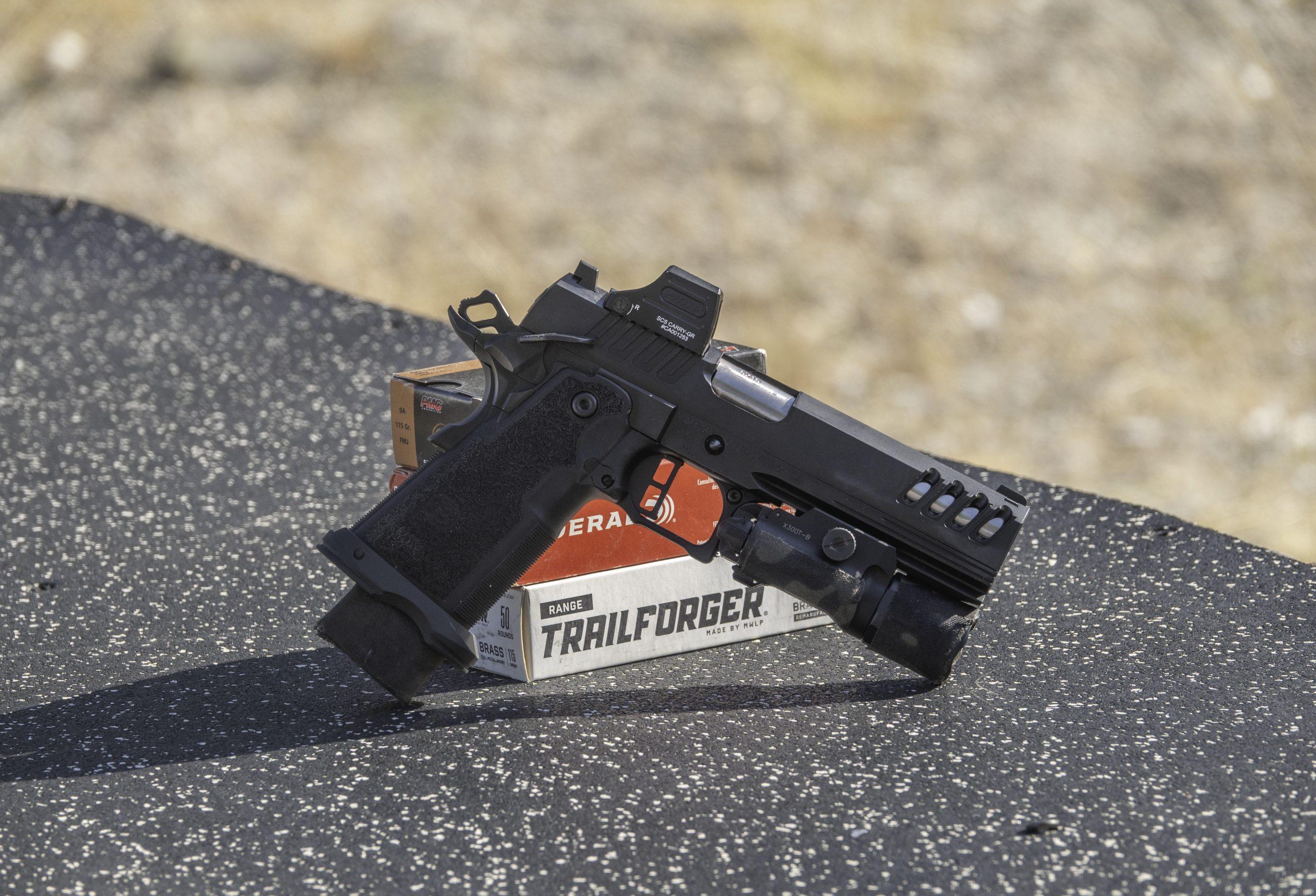
- Holster fit: A SureFire X300 fit his Safariland ALS holster, and the gun seated even better with the light mounted.
Test Results
| Category | Result |
|---|---|
Avg. group 25 yd (all loads) | 1.25″ |
Best load 25 yd | 1.00″ (Federal Champion 115 gr) |
Trigger pull (12-pull average) | 2.5–2.75 lb (range 2.3–3.1 lb) |
Rounds fired / malfunctions | 2400+ rounds; 2 malfunctions |
Shooters / test period | 4 shooters / 3 months including daily carry |
Notable Pros
- Only two malfunctions across more than 2,400 rounds
- The lightest trigger in this roundup, measured rather than estimated
- An extended ambidextrous slide release you won’t find on most competitors
- Tight slide-to-frame fit, plus a tritium front night sight and a full-length rail
Known Tradeoffs
- The slide is cut only for Holosun K-Series optics, so other red dots need an adapter.
- There’s no 4.25-inch Commander version yet.
- Guide rod reassembly takes care and a free hand.
- Bersa doesn’t yet have the multi-year 2011 track record of Springfield or Staccato.
Read our full Bersa M2Xi review.
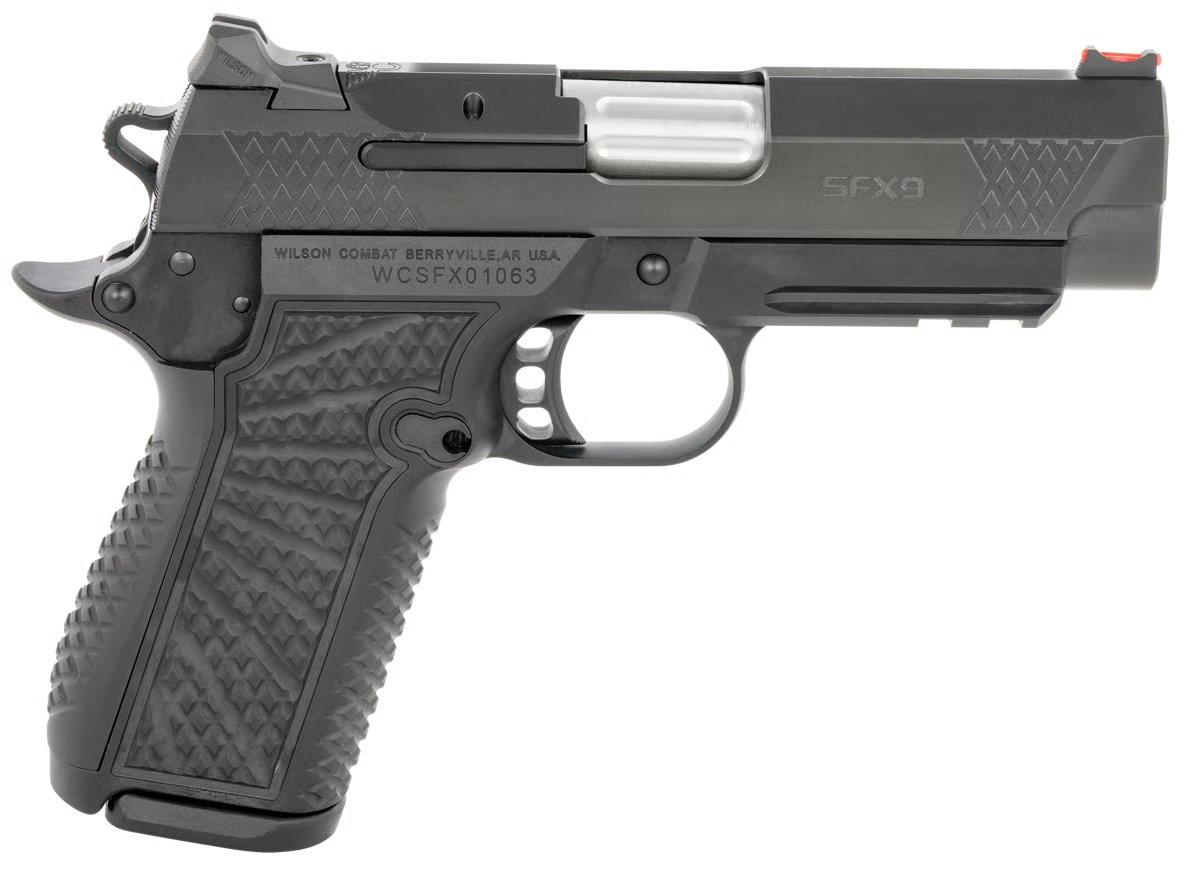
5. Wilson Combat SFX9 — Premium Carry Option
$349.99

29
AVERAGE
Performance Scores
Every gun above this one is built around a full-size or duty-length frame. The SFX9 isn’t. It’s Wilson Combat’s answer to whether a double-stack 1911 can actually disappear under a shirt, and the company’s hand-fitting reputation does a lot of the work in making that a yes.
Barrel Length & Recoil
Barrel lengths run from roughly 3.25 to 4 inches, depending on configuration. The SFX9 favors a short, carry-friendly package over the longer sight radius of the guns above it. That’s a real tradeoff, since felt recoil rises as barrel length and slide mass come down. It’s still the right tradeoff for a gun meant to ride appendix or strong-side under concealment rather than in a duty rig.
Controls and Thumb Safeties
Depending on the build, controls use a carry-oriented single-side or ambidextrous safety. The grip texture is aggressive but tasteful, so it stays controllable without printing through a cover garment.
Notable Pros
- Wilson’s fit and finish are a level few production guns can match.
- It has a strong reliability record among carry-focused reviewers and owners running high round counts.
- It was designed for carry from the start, not made by bolting a shorter barrel onto a full-size gun.
Known Tradeoffs
- At $3,700 and up, it’s priced well above the other four picks.
- Semi-custom production means waits that take patience, unlike buying a gun off the shelf.
Other 2011s Worth a Look
Staccato CS. If you want a carry-sized 2011 without leaving the Staccato lineup, look at the CS. It has a 3.5-inch barrel, 16+1 capacity, and an aluminum frame, which makes it one of the lightest guns Staccato builds. Its MSRP of about $2,499 costs well under the SFX9’s while keeping the drop-safety engineering of the duty models.
Girsan 2311 Match. At $1,079, the Girsan is one of the least expensive ways into the platform from an established import brand. We haven’t put it through our full protocol, but it’s a reasonable first 2011 for a shooter who’s curious about the platform and wants to save money for optics and magazines.
Tisas DS 1911. At $959, the Tisas was the cheapest gun tested. It posted a 1.28-inch group at 15 yards, slightly ahead of the Girsan. Its barrel lockup measured 0.044 inches, just under the 0.045-inch rule of thumb, but it still ran with zero malfunctions.
That supports the point that lockup predicts consistency, not whether the gun goes bang. For the money, the Tisas offers more bang for the buck than anything else on this page, as long as you accept that the rest of the list outshoots it.
What Competitive Shooters Need
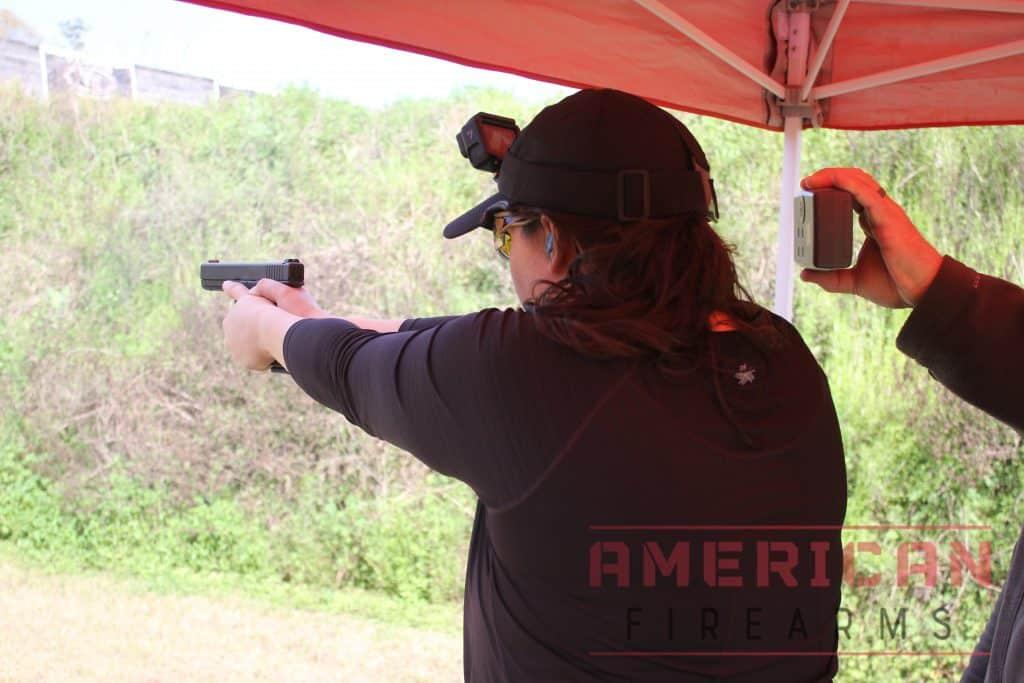
If you’re buying a 2011 specifically to compete, determine your division before you fall for a compensator. USPSA’s Open division allows compensated, ported barrels like the XC’s. Limited, Carry Optics, and Production don’t, which rules out an entire class of 2011s for shooters in those divisions, no matter how well the gun shoots.
Magazine length and capacity limits also vary by division. Check the current USPSA or IPSC rulebook rather than assuming a magazine that worked in one division carries over to another.
Most current 2011 slides ship cut for one of a handful of common red dot footprints. That helps, but “common” isn’t “universal.” Confirm footprint compatibility before buying optics separately to avoid an expensive mismatch. A full-size grip with a generously beveled magwell also matters more here than on a duty or carry gun. On a stage, shaving fractions of a second off a reload is often the actual difference between two competitors.
Thumb Safeties, Controls, and Ergonomics
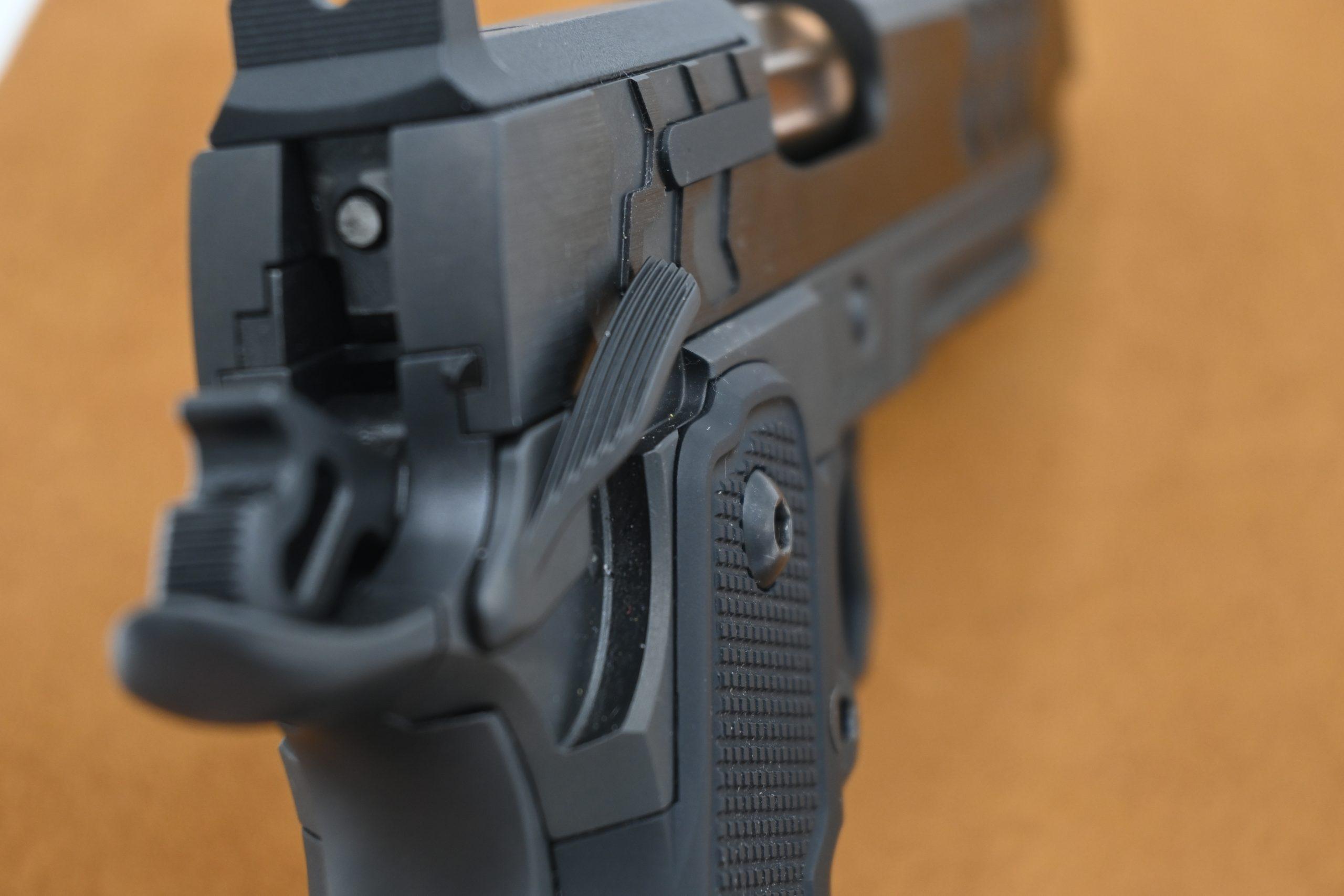
You can read a spec sheet all you want, but the real test of a thumb safety is whether your thumb can reach it and disengage it cleanly from your actual carry or competition grip. A safety that feels perfect on the XC’s full-size grip can be an awkward stretch on the SFX9’s shorter, concealment-oriented frame. Some safeties can be so pronounced they chew up the inside of your thumb.
That isn’t a flaw in either gun. It’s a reason to handle before buying rather than trusting a photo. The same applies if the gun will be shared at home: a grip that fits your hand may not fit your wife’s, or anyone else’s who’ll be shooting it.
Ambidextrous controls are worth the small added bulk and cost for left-handed shooters, full stop. Most of the guns above ship that way as standard rather than as an aftermarket afterthought.
Grip shape and backstrap geometry matter as much as the safety. They determine a 2011’s natural point of aim and how easily your trigger finger reaches the trigger face. That’s why the modular design has become such a selling point across the platform. Swappable polymer or aluminum grip modules bolt to a common frame, so you can tune fit without buying a new gun.
Barrel Length, Accuracy, and Recoil Management
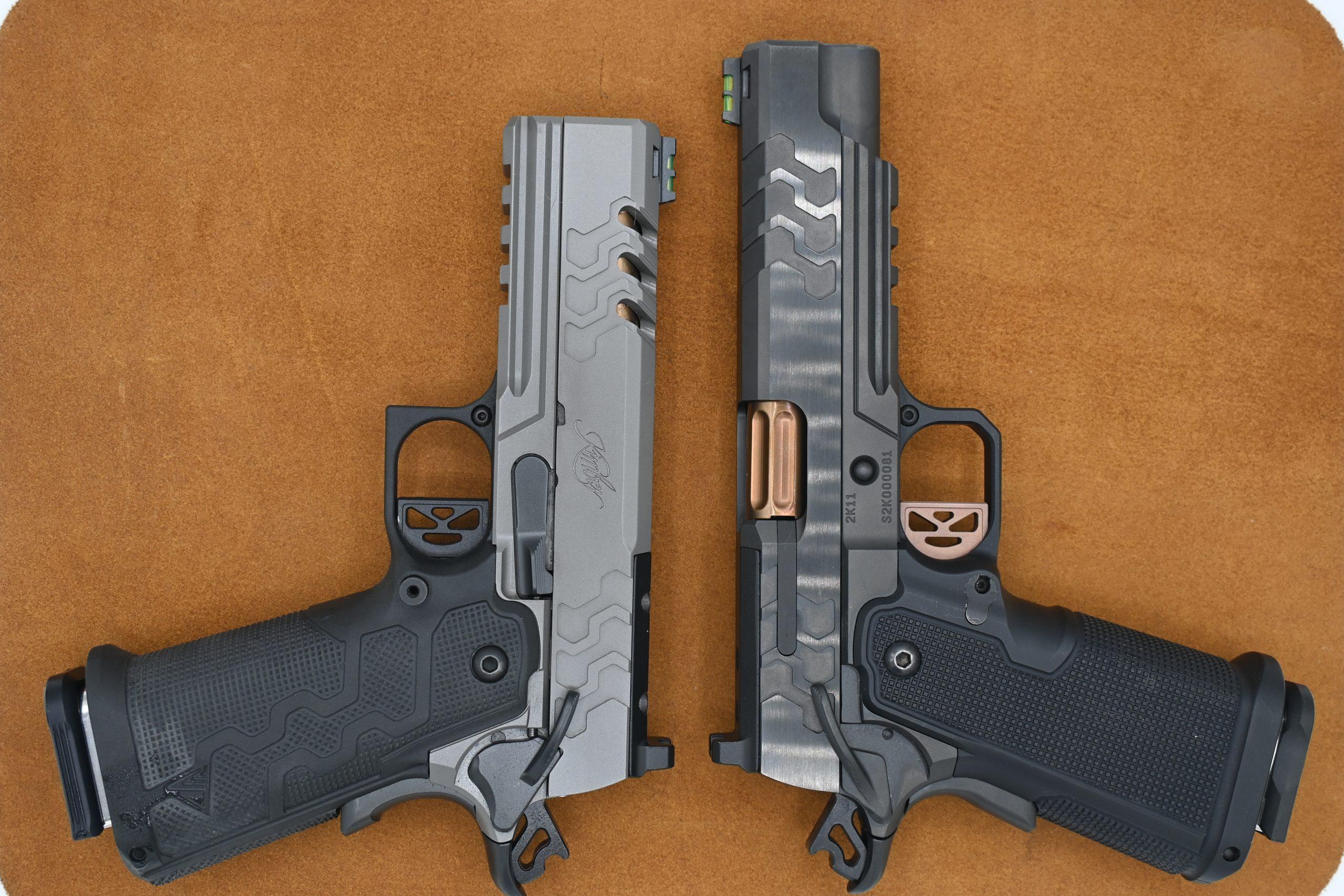
Barrel length does two jobs, and they sometimes pull in opposite directions:
- Sight radius. A longer barrel extends sight radius, which makes precise aiming easier at speed.
- Muzzle rise. Barrel length and slide mass together govern how much the muzzle rises between shots.
That’s the mechanical reason a 5-inch Prodigy and a 3.25-inch SFX9 feel like different animals in recoil, even with identical 9mm ammo. One is optimized for a longer, steadier sight picture. The other gives up some of that stability in exchange for concealment.
Barrel profile matters as much as length. A full-profile bull barrel like the Prodigy’s trades a little takedown ease for tighter, more consistent lockup. That’s likely why the Prodigy outshot three other guns in its price class in independent testing. A compensated barrel like the XC’s solves a different problem entirely: recoil-recovery speed, not raw accuracy.
Every buyer can also run a free diagnostic at the gun counter. Before handing over any money, check that the barrel locks up tight with no discernible play at full battery. A loose lockup at the counter tends to stay loose on the range.
The Big Difference: Custom Fit Versus Production Price
A fully custom 2011 from a top shop routinely runs past $5,000, more than three times the price of a Bersa or a Prodigy. The production guns in our testing already shot between 1 and 1.75 inches at 25 yards with their preferred loads, and the Kimber’s .45 ACP model averaged 1.41 inches.
For most buyers, that math argues strongly for a production gun. A $1,500 pistol with 0.047-inch barrel lockup and sub-1-inch groups at 15 yards is accurate enough for duty work, concealed carry, and club-level USPSA or IPSC competition. The accuracy gap to a custom gun mostly starts to matter at a level of shooting most buyers haven’t reached yet.
Gunsmithing or a semi-custom build tends to pay off in one of two situations:
- High-level competition, where a third of an inch genuinely decides matches.
- An experienced production owner who has put enough rounds through a production trigger and grip to know exactly what they’d change and why.
How To Choose the Right 2011 for You
Start with intended use. It eliminates more options, faster, than any spec sheet comparison. A duty or carry gun needs drop safety and a proven reliability record more than it needs a compensator. A competition gun needs to be legal for its division before anything else about it matters.
Pick 9mm unless you have a reason not to. It’s by far the most common caliber for modern 2011s. It’s favored for hit probability and for keeping practice ammo costs down, and that matters on a gun you’ll want to shoot a lot.
Weigh the magazine ecosystem. Some 2011-style designs accept Glock magazines, which can save real money over years of ownership. Others use proprietary or 2011-pattern magazines that cost more per spare, and the difference compounds the longer the gun stays in rotation. Confirm which one you’re getting before you buy.
Do your research on reliability and parts availability. Read owner posts and comment threads from community members who’ve put thousands of rounds through a specific model. Broken extractors, springs that wear early, and quality-control misses tend to show up there before they show up in a review. Most owners prefer to learn about those issues before buying rather than after.
Budget honestly. Most owners spend more on optics, holsters, and magazines over the life of a 2011 than the price difference between two comparable guns. As a rough framework, 2011s fall into three tiers:
- Entry-level: under $1,600 for a genuinely capable first 2011. Turkish imports start under $1,100.
- Mid-range and duty-grade: $2,000 to $3,000 for agency-proven reliability.
- Ultra-premium: $3,500 and up, where compensators and true competition fitting enter the picture.
Decision Shortcuts
- Choose the competition model if fast shot-to-shot recovery and a comp that’s legal in your division come first.
- Choose the duty model if hardened controls, drop safety, and an agency-proven reliability record matter more than anything else.
- Choose the entry-level model if budget and upgrade flexibility matter more than out-of-box polish. Both the Prodigy and the Bersa shot groups of 1 inch or tighter at 15 yards without a single failure in independent testing, which is a genuinely high bar for the price.
What's New for 2026
The 2011 market isn’t standing still. Three developments from this year’s SHOT Show are worth watching, even if you aren’t shopping today:
- Project Alias. Atlas Gunworks, whose guns are built for precision shooting and competition, teamed up with Agency Arms on “Project Alias.” It’s a hand-fitted, hand-assembled collaboration aimed at precision-focused shooters rather than the volume market.
- Bul Armory LINK trigger. Bul Armory introduced its LINK trigger system, which lets owners adjust trigger reach and feel with interchangeable components instead of sending the gun out for permanent gunsmithing.
- Alpha Foxtrot Romulus. Alpha Foxtrot expanded its Romulus line into larger calibers, pushing the platform beyond the 9mm-only assumption that has defined most entry-level 2011s.
Taken together, these point in one direction. Quality is improving at the entry-level, mid-tier, and premium ends of the market at the same time. The performance gap between a $1,500 gun and a $3,000 gun keeps narrowing rather than holding steady.
FAQs
What makes a pistol a "2011" instead of a wide-body 1911?
What is the best 2011 pistol for most buyers?
How much does a good 2011 cost?
Are 2011 pistols reliable enough for daily carry or duty use?
Can a 2011 use Glock magazines?
Are 2011 pistols legal for USPSA competition?
Closing Notes and Testing Checklist
Run through this short checklist before handing over money at the gun counter, or before your first range trip with a new 2011:
- Barrel lockup: Confirm the barrel locks up tight with no discernible play at full battery.
- Thumb safety: Dry-fire the safety a handful of times with your actual carry or competition grip to confirm that reach and engagement feel natural.
- Magazines: Check magazine compatibility and the street price of spares, since that cost adds up over years of ownership.
- Round count: Put at least 500 rounds through the gun, including a box or two of your carry ammo, before trusting it for duty or defensive use.
Budget for holsters, spare magazines, and service parts like springs and extractors as part of the true cost of owning a 2011, not as an afterthought once the gun is home.
Resist the urge to buy the most expensive gun on the shelf on day one. Personally, we’d argue the smarter path is a well-fitted production 2011 in the $1,500 range, which has proven capable of duty, carry, and club-competition accuracy in independent testing. For most owners, progressive upgrades to optics, triggers, and grip work are a better approach than starting at the top with nowhere left to go.
Meet the Experts


Edited By
Michael Crites
Licensed Concealed Carry Holder
- Founder of AmericanFirearms.org
- Licensed Concealed Carry Holder
Pistols & Revolvers
Further Reading
Sign up for our newsletter
Get discounts from top brands and our latest reviews!