Best Concealed Carry Holsters: IWB, OWB, AIWB Tested & Rated

Written By
Kenzie Fitzpatrick
Competitive Shooter

Edited By
Michael Crites
Licensed Concealed Carry Holder
Share:
Products are selected by our editors. We may earn a commission on purchases from a link. How we select gear.
Updated
Sep 2026
Somewhere between 20 and 22 million Americans carry concealed on a regular basis now, a number that’s grown by roughly a third since 2016, and every one of them eventually runs into the same problem we did: there are too many holsters, and almost none of the marketing copy tells you what you actually need to know before you clip one to your belt.
Every listing says “comfortable.” Every listing says “secure.” Almost none of them tell you how comfortable, or how secure, in numbers you can actually compare.
So we did it ourselves. Fourteen holsters, four carry-tested criteria apiece, a shot timer, a digital luggage scale, and a set of calipers. This guide covers the three carry methods that matter most — IWB (inside-the-waistband), OWB (outside-the-waistband), and AIWB (appendix inside-the-waistband), along with belly band, shoulder, and ankle rigs for the situations where none of those three fit the bill. Every holster below carries a rating built from our own bench testing, plus the specific numbers: draw time, retention force, and shell or leather thickness — that most “best of” roundups skip entirely.
I’ll admit some bias going into this one: I’ve got a drawer at home with four or five holsters in it that seemed perfect in the listing photos and turned out to be wrong for my build, my gun, or the way I actually dress most days. That drawer is basically the reason this guide exists in its current form — every product below had to earn its spot by surviving a full carry cycle, not just a photo shoot on a range bag.
In This Article
Quick Start: Holster Comparison
| Holster | Type | Price | Overall Rating |
|---|---|---|---|
IWB | $54.57 | ★★★★★ | |
IWB | $49.99 | ★★★★ | |
IWB | $45.99 | ★★★ | |
IWB | $34.95 | ★★★ | |
Hidden Hybrid Holsters Single Clip | AIWB | $89.00 | ★★★★★ |
Mission First Tactical Pro Series | AIWB | $59.99 | ★★★★★ |
OWB | $55.99 | ★★★★ | |
OWB | $42.49 | ★★★★ | |
Belly Band | $69.99 | ★★★★ | |
Belly Band | $36.95 | ★★★★ | |
$191.00 | ★★★★ | ||
Shoulder | $52.99 | ★★★ | |
$52.04 | ★★★★★ | ||
Ankle | $19.99 | ★★★ |
How We Test Concealed Carry Holsters
Comfort & Wearability
We wear each holster for a minimum of 30 consecutive days during normal daily activities, tracking comfort levels throughout extended wear periods of 8-12 hours.
Retention & Security
We conduct upside-down shake tests to verify the holster maintains secure retention without relying on external straps or secondary locks.
Draw Performance
We time multiple draw sequences from concealment to first shot, measuring both cold (first draw of session) and warm (after multiple repetitions) draw speeds.
Concealment
We photograph each holster under various clothing types including t-shirts, button-up shirts, light jackets, and athletic wear to document printing from multiple angles.
More on Our Testing Process
Why a Quality Holster Matters
It’s tempting to treat the holster as an afterthought to the gun — something you grab off the shelf at checkout because you need something to put the pistol in. That’s how most of the holsters in that drawer I mentioned above ended up there.
A quality holster does three jobs at once, and a cheap one usually fails at least one of them. First, safety: a holster that fully covers the trigger guard is the single biggest mechanical safeguard against an accidental discharge during normal daily movement — sitting down, bending over, getting in and out of a car — and it’s why most concealed carry courses won’t let you on the range without one.
Second, retention: a holster that doesn’t hold the gun securely under an inverted shake or a hard bump is a liability in a struggle, not a convenience.
Third, and the one most folks talk about least: compliance. A genuinely uncomfortable holster gets left in a drawer instead of worn, and an uncarried gun doesn’t protect anyone. Every product below had to clear all three bars before it earned a rating.
We’d add a fourth, less obvious one: consistency. Carrying the same holster, in the same position, day after day, builds the kind of muscle memory that actually matters if you ever need to draw under stress. Rotating between three different holster types depending on mood or outfit undermines that consistency more than most carriers realize — it’s part of why we structured this guide around picking one primary carry method rather than treating all six types as interchangeable options to mix and match freely.
What to Look For in a CCW Holster
Quality Signals (and What “Printing” Actually Means)
Every quality holster clears the same bar before anything else matters: nothing touches the trigger except your finger when you decide to fire, the gun stays put no matter how you move, and you can get a full firing grip the instant you draw. If a holster fails any of those three, the price tag and the brand name on the box don’t matter, and we’d rather tell you that up front than bury it in a pros-and-cons list.
That third point — a full firing grip on the draw — trips up more first-time buyers than either of the other two. A holster that technically covers the trigger but forces your hand into an awkward, partial grip on the way out means you’re drawing twice: once to clear the holster, and again to actually establish control of the gun. Every holster in this guide was specifically checked for a one-motion draw to a full grip during testing, not just trigger coverage in isolation.
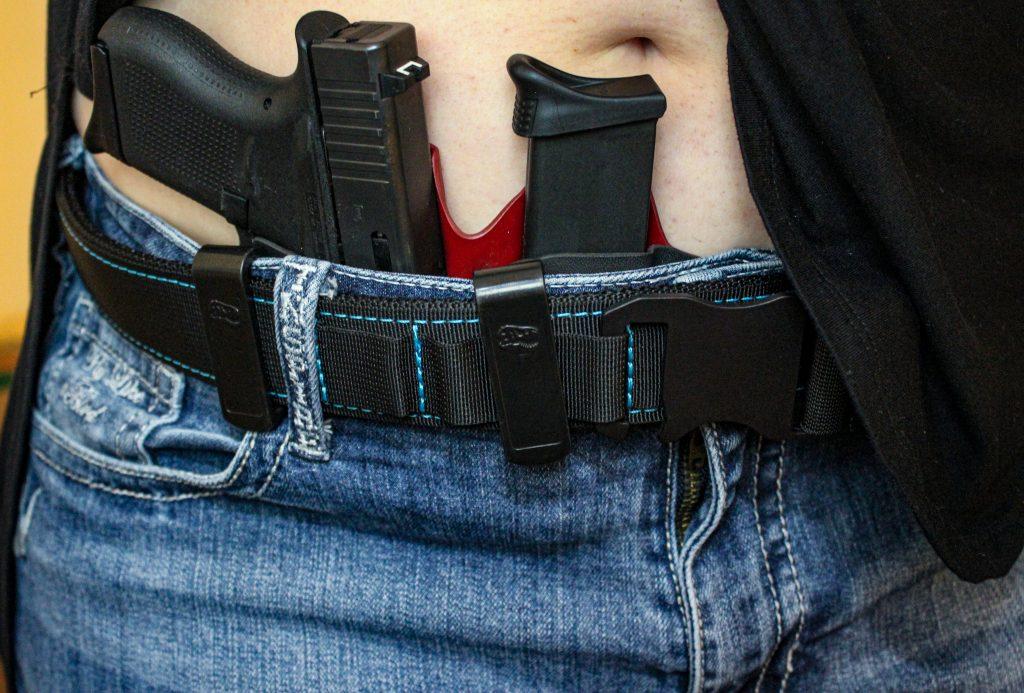
“Printing” is the term for what happens when all of that goes right mechanically but the holster still gives you away — the visible outline of the gun pressing through your shirt. A thick, poorly molded shell prints even under a loose cover garment; a well-molded one with a good ride height and the right cant can disappear under a plain T-shirt.
Printing is a fit-and-design problem, not just a “wear a bigger shirt” problem, and it’s the single biggest reason the same holster feels invisible on one body type and obvious on another. We flag printing behavior for every holster in this guide based on our own photography, not the manufacturer’s marketing copy.
Kydex vs. Leather vs. Hybrid Materials
Kydex is a rigid thermoplastic, and it’s become the default shell material for a reason: it holds a precise mold of your specific gun, retention stays consistent day after day, and it doesn’t degrade with sweat or moisture the way leather can.
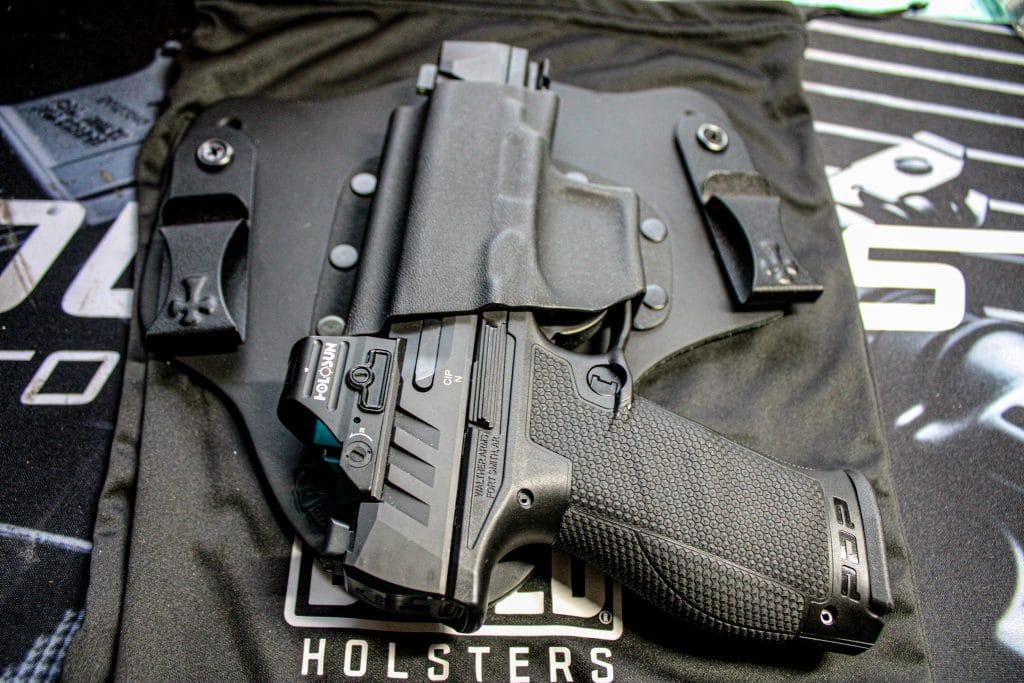
Standard Kydex shells run about 0.080 inches thick; a handful of duty-oriented holsters in this guide — the Safariland 578 among them — step up to 0.100 inches for extra rigidity. That thickness number is worth checking before you buy, since a thinner off-brand shell can flex enough under a hard draw to affect retention, and manufacturers don’t always volunteer it.
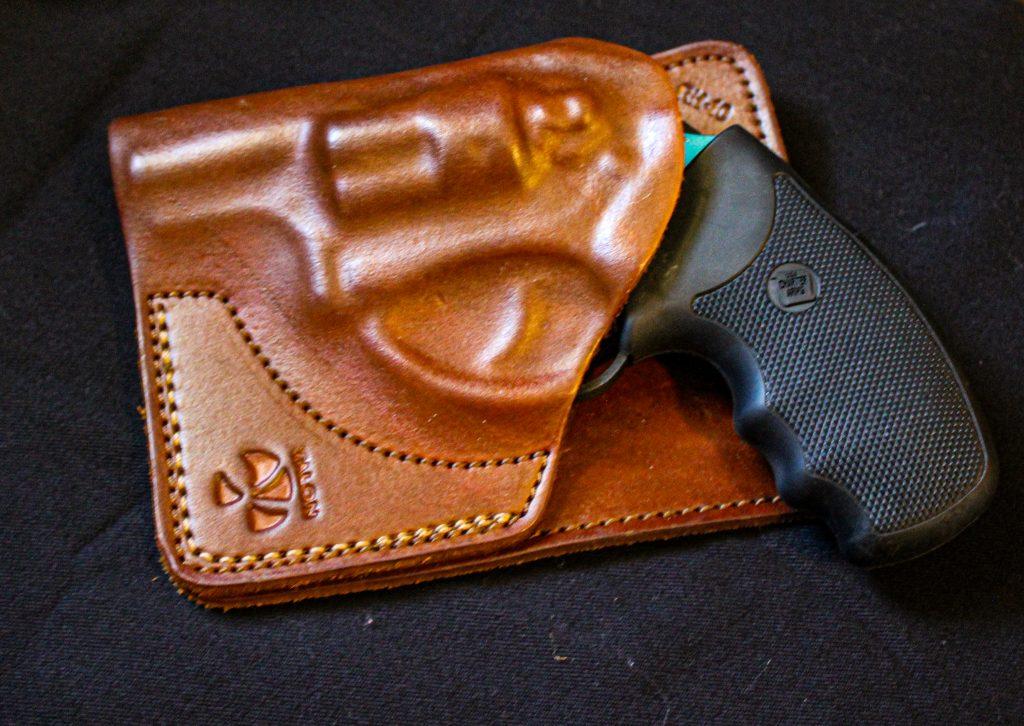
Leather is the traditional choice, and it still has a real advantage: it breaks in and molds to your specific pistol over time in a way Kydex never will, and a quality leather holster is genuinely more comfortable against bare skin for long wear.
The tradeoff is retention that loosens gradually as the leather breaks in, and a shell that can absorb sweat and lose shape faster in humid climates. Good CCW leather runs 8 to 9 ounces per square foot — thin enough to conceal, thick enough to hold its shape season after season.
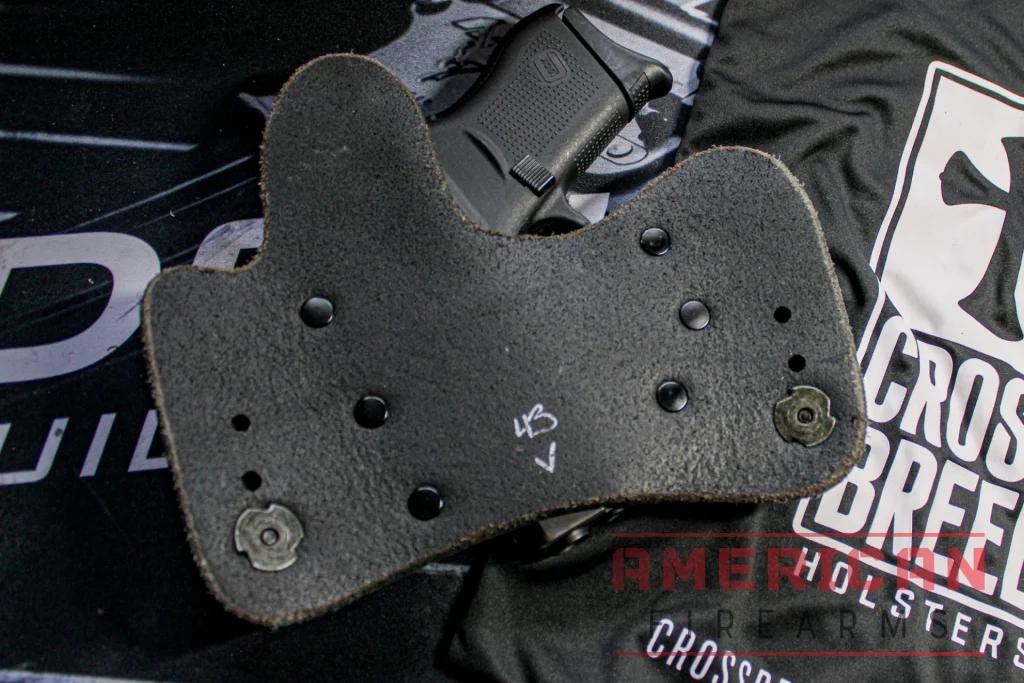
Hybrid designs split the difference: a Kydex shell for the retention and a leather or neoprene backing against the body for comfort.
Four of the fourteen holsters below use this construction, and it’s become the most common approach in the IWB and AIWB categories specifically because it solves Kydex’s one real weakness — an unpadded polymer shell riding directly against skin for 12 hours isn’t fun for anyone, no matter how good the retention is.
Cost tracks material choice fairly predictably: pure Kydex holsters in this guide run $35–$50, hybrids run $50–$90 once you’re paying for both a molded shell and a leather or neoprene backing, and full leather ranges from budget tuckable options in the mid-$30s up to premium harness systems well over $100.
Durability runs roughly the opposite direction of comfort — Kydex will outlast leather by years in most climates, but it’s leather and hybrid backings that testers reached for on the longest wear days.
Understanding Retention Systems: Passive vs. Active
Retention breaks down into two categories, and knowing the difference matters more than most buying guides let on.
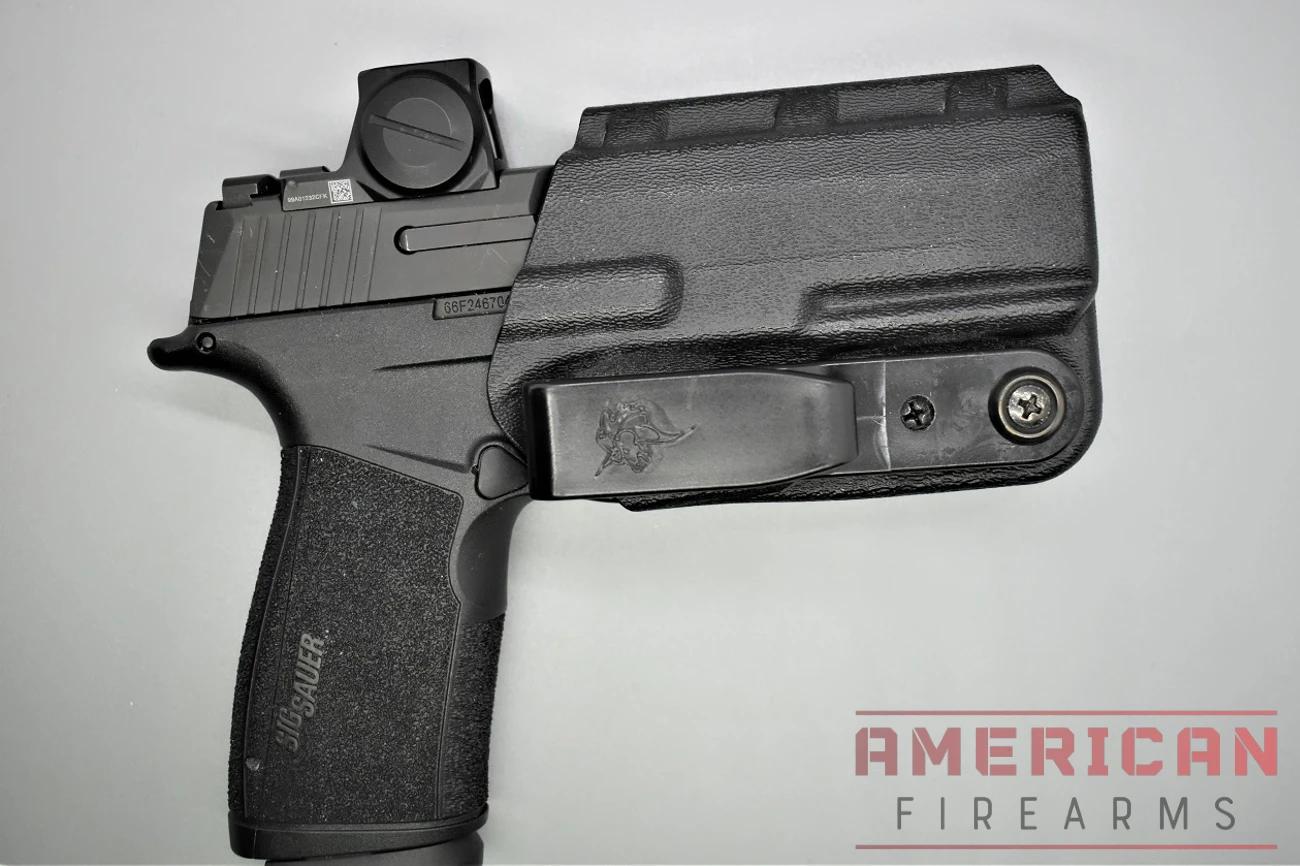
Passive retention comes from the mold itself — a well-fitted Kydex or leather shell grips the trigger guard and frame tightly enough that friction alone holds the gun in place. Nearly every holster in this guide relies primarily on passive retention, and most Kydex models let you fine-tune it with a retention adjustment screw near the trigger guard or muzzle.
Active retention adds a mechanical element on top of that — a thumb break strap, a locking lever, or a magnetic assist that has to be deliberately released before the gun comes free.
Safariland’s GLS (Grip Locking System), found on the 578 reviewed below, is a widely used example: a lever inside the trigger guard area that releases only when your middle finger presses it during a proper firing grip, so the draw stroke and the release happen in the same motion once you’ve trained it.
Older Safariland duty holsters use a similar system branded ALS (Automatic Locking System). A leather thumb-break strap, like the one on the Galco Miami Classic shoulder rig, is a simpler, older version of the same idea.
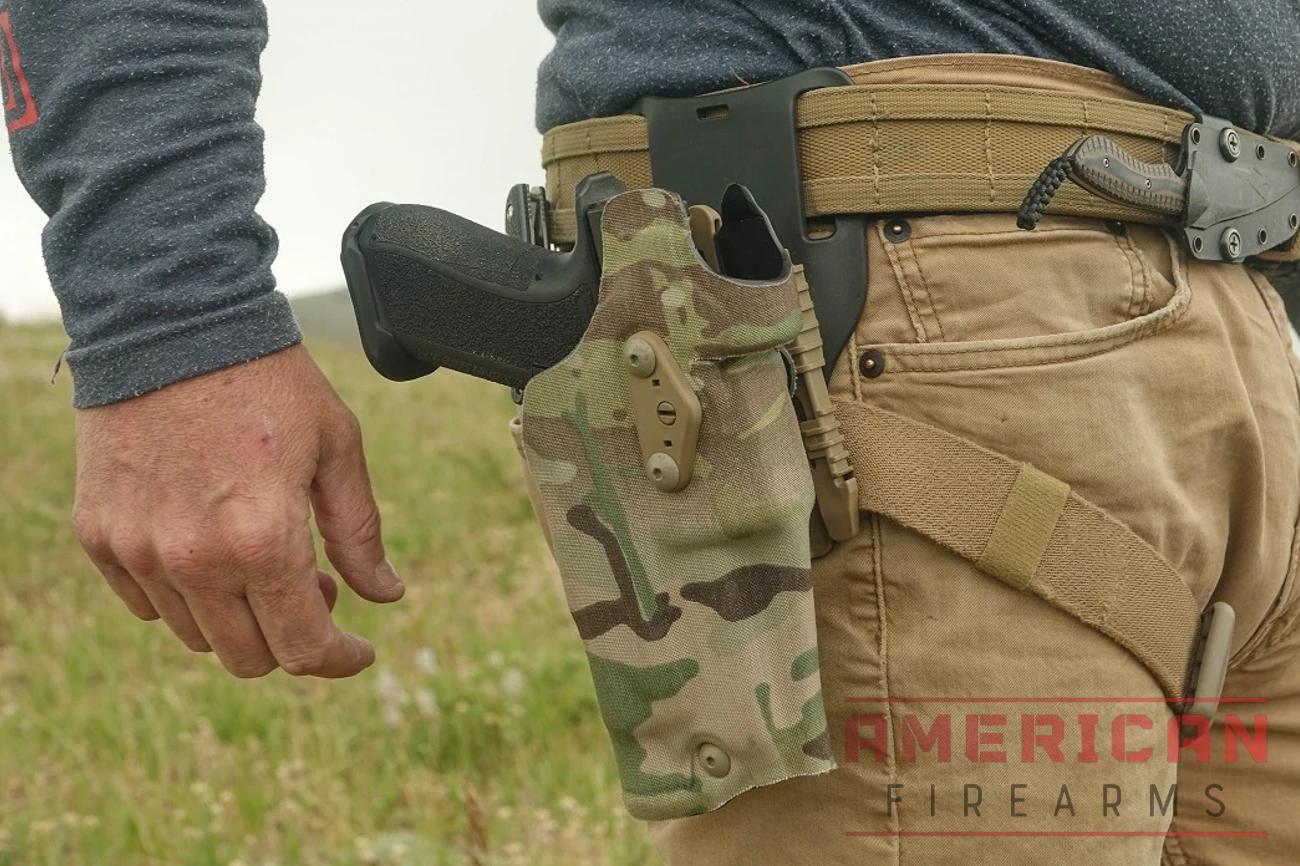
Active retention is standard on duty and shoulder holsters, where the gun rides in a more exposed position, and it’s becoming increasingly common on AIWB holsters as a backup to passive fit — the Mission First Tactical Pro Series reviewed below uses a magnetic-assist version of this concept, and we expect to see more of that specific approach across the AIWB category over the next couple of years.
Neither system is inherently “better” — a well-molded passive Kydex holster with correctly tuned retention screws is plenty secure for the overwhelming majority of concealed carriers, and it’s what nine of the fourteen holsters in this guide rely on exclusively.
Active retention earns its keep specifically in higher-exposure carry (OWB, shoulder) or for carriers who want a second, deliberate step between “holstered” and “drawn” as a matter of personal preference rather than necessity.
Fit, Cant & Belt Considerations
Cant is the angle the holster sits at relative to vertical — most IWB and OWB holsters offer some adjustability here, and a few degrees of forward cant (butt-forward) speeds up the draw for appendix and strong-side carry, while a neutral or slightly reverse cant suits cross-draw and some OWB setups better.
If a holster you’re considering doesn’t list cant adjustability at all, assume it’s fixed and check the default angle against your intended carry position before buying.
A holster is also only as good as the belt holding it up. A stiff, purpose-built gun belt — not a fashion belt — keeps a Kydex shell from rolling outward under the pistol’s weight, which is the single most common fix we’ve found for a holster that “prints too much” despite otherwise fitting well.
We tested every holster in this guide on a rigid, reinforced gun belt for that reason (we used a Kore Essentials Tactical Gun Belt for consistency across all fourteen products); results on a standard dress belt will be measurably worse across the board, especially for OWB and heavier steel-frame pistols. If you’re budgeting for a new holster, budget for a real gun belt in the same order — a great holster on a flimsy belt will still print and shift.
Quick Selection Checklist
Before you buy, confirm the holster on these five points:
- Gun-specific fit. It’s molded for your exact gun model, not sold as a “universal fit” — a universal holster is a compromise on retention, full stop.
- Full trigger-guard coverage. In every position you’ll actually carry it in, not just the one shown in the product photo.
- Adjustable retention, if it’s Kydex or hybrid — a fixed-tension shell can’t be tuned as it breaks in.
- Carry-position match. IWB, OWB, or AIWB should match how you actually dress and move day to day, not the position that looked best in a review.
- Real-world testing behind it. Reviewed or tested by someone who actually carried it for an extended period, not just photographed it next to a flashlight and a knife for an affiliate post.
How to Break In a New Holster
Kydex needs almost no break-in — what you buy is close to what you’ll carry with for years. Leather is a different story: a new leather holster will feel tighter than it should for the first one to two weeks of regular wear, which is normal and by design, since a too-loose leather holster on day one would be dangerously loose by month three.
Work the holster with an unloaded, cleared firearm — insert and remove it slowly, dozens of times, before you ever carry it loaded — and avoid the temptation to force a stiff leather holster with the loaded gun to “speed up” the process.
Common Fit Mistakes to Avoid
A few issues show up repeatedly with new carriers, and none of them are about the holster itself being defective.
Wrong ride height — a holster that sits too high or too low relative to the belt line — is the most common cause of printing complaints on an otherwise well-reviewed holster, and it’s usually fixable by adjusting the clip position rather than buying a different product.
Ignoring cant for your carry position shows up as a slow, awkward draw that testers initially blame on the holster when it’s really a mismatch between the holster’s fixed angle and how the carrier actually presents the gun.
Buying a “universal” holster for a specific carry position — trying to make one belly band or one soft holster work for both gym sessions and business-casual days — usually means it does neither job particularly well.
And skipping the belt upgrade while buying a premium holster is, in our testing, the single most common reason a good holster still prints; see the belt note above.
Holster Accessories Worth Adding
Two accessories consistently improved real-world performance across our testing panel, beyond the belt already covered above.
A concealment claw — a small clip-on wedge that attaches to the holster near the belt line and pushes the grip inward against the body — measurably reduced printing on every IWB and AIWB holster we tried one with, since it rotates the exposed grip closer to the body instead of letting it stick straight out.
A spare magazine carrier, worn opposite the primary holster, is worth adding for any carrier running a single-stack or micro-compact pistol with limited factory capacity — several testers who initially skipped one added it partway through testing once they’d spent a few weeks actually carrying daily.
Training Recommendations
A five-star holster in the wrong hands is still a liability. Every carry position in this guide requires a small amount of dry-fire practice — drawing, presenting, and reholstering slowly, with an unloaded firearm and no ammunition in the room — before it should be trusted in daily use, and appendix carry in particular deserves extra reps given how much closer the muzzle direction sits to the body during the draw stroke.
If your range or a local instructor offers a concealed carry or CCW-specific course, take it before you take a new holster out the door for the first time, regardless of how many stars it earned in this guide.
On-Body vs. Off-Body Carry
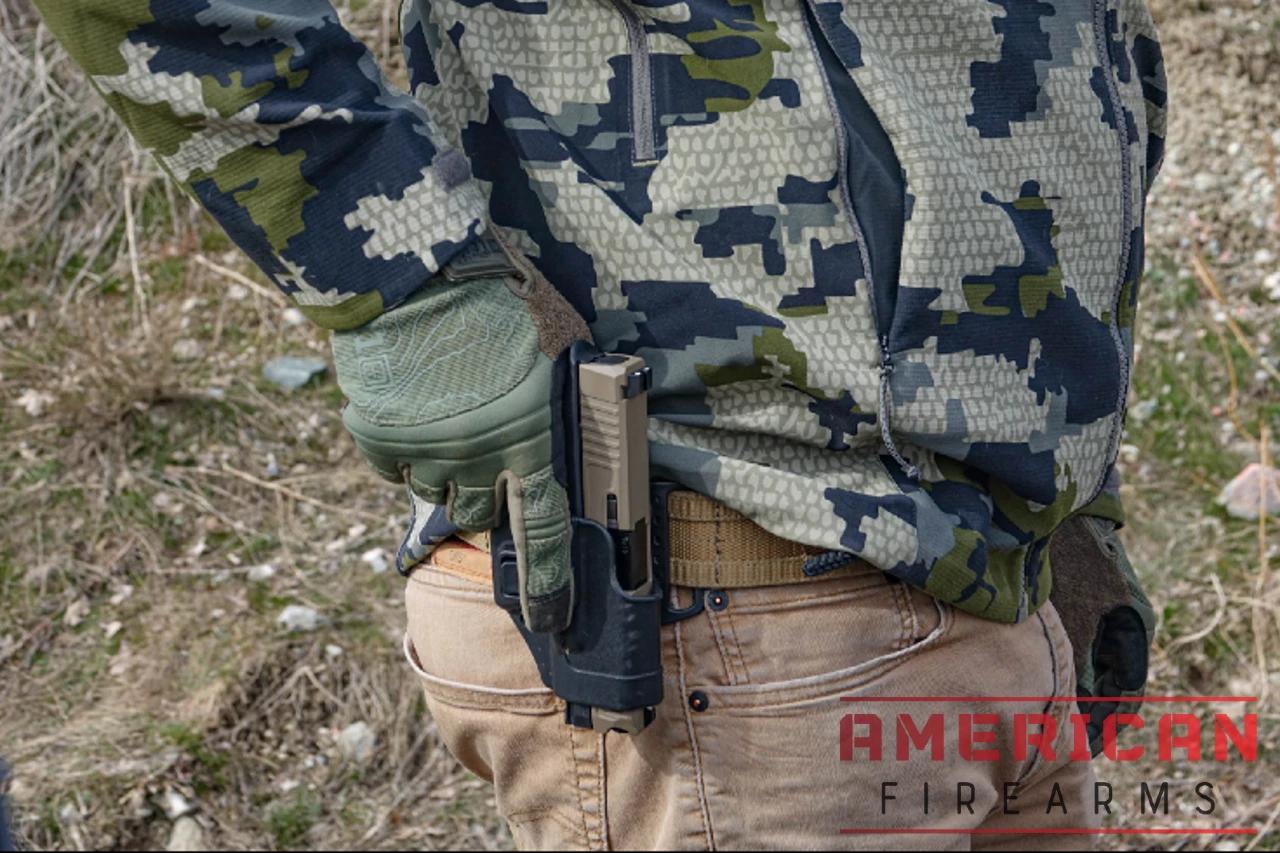
Everything reviewed in this guide is on-body carry — the holster attaches directly to your body or clothing.
Off-body carry, using a dedicated concealment bag, purse, or fanny pack, is a real alternative for situations where on-body carry genuinely isn’t practical — certain workwear, some medical or mobility considerations, or simply a wardrobe that doesn’t accommodate a waistband holster that day — but it comes with a meaningful tradeoff: the gun is no longer physically attached to you, which means a dropped or set-down bag is a dropped or set-down firearm, and retrieval under stress is measurably slower than a practiced on-body draw.
We treat off-body carry as a supplement to a good on-body holster, not a substitute for one, and it deserves its own dedicated guide rather than a few paragraphs tacked onto this one.
Understanding Carry Positions: The Clock System
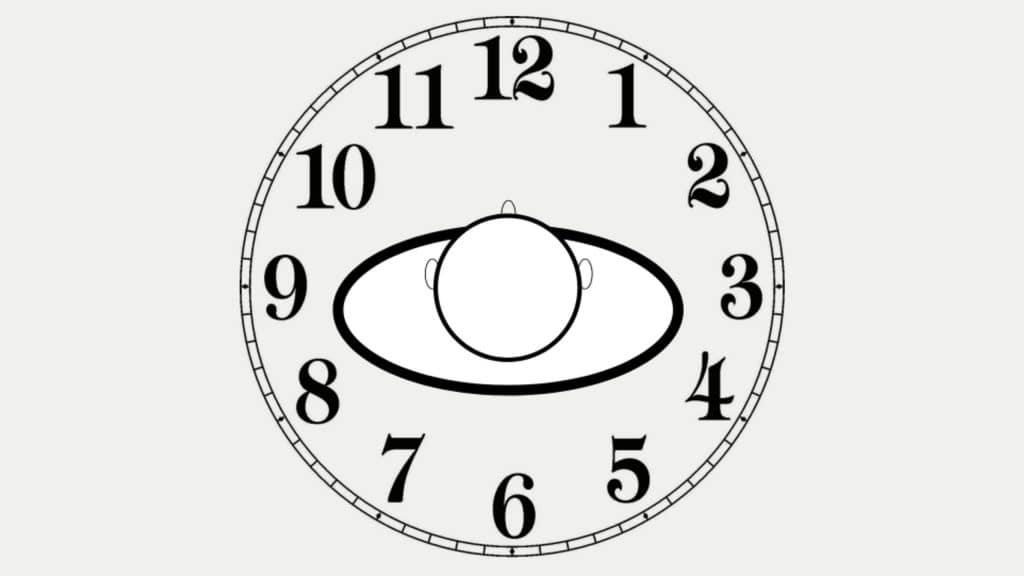
Concealed carriers describe holster position using a clock face wrapped around the waist, with 12 o’clock at the navel.
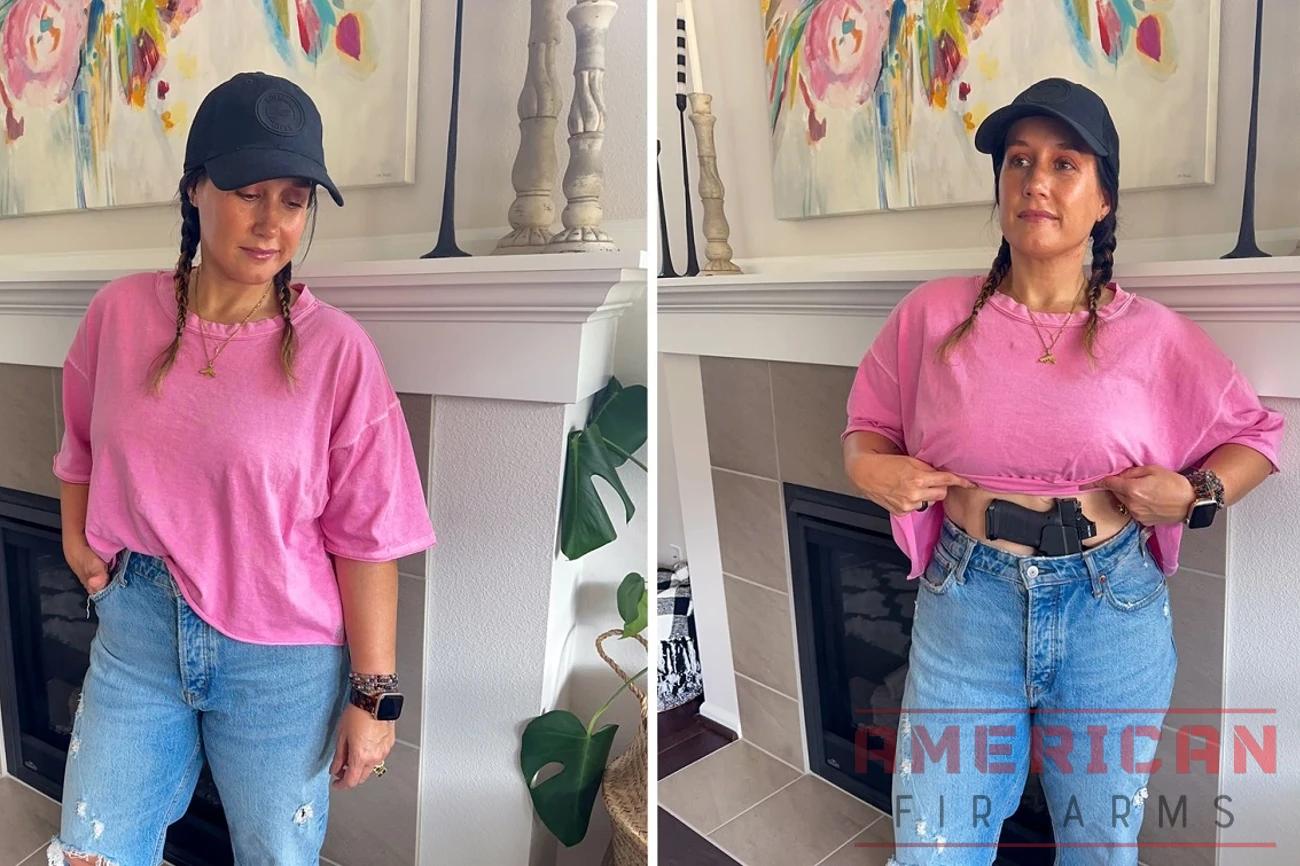
Strong-side hip carry sits at 3 o’clock (right-handed) or 9 o’clock (left-handed) and is the most common starting position for new carriers, since it’s the most forgiving to learn on.
Appendix carry (AIWB) moves the gun to 1 or 2 o’clock, in front of the hip — the fastest position to draw from, and the one that demands the most consistent muzzle discipline in return.
Kidney carry sits at 4 to 5 o’clock, slightly behind the hip, splitting the difference between strong-side and small-of-the-back.
Small-of-the-back (SOB) carry sits dead center at 6 o’clock; it conceals well but is generally discouraged for anyone who might end up on their back unexpectedly, since the gun ends up directly under the spine.
Cross-draw flips the holster to the opposite side, around 10 to 11 o’clock, for a draw with the support-side hand — useful for seated carry (driving, at a desk) but slower for most people than a same-side draw.
None of these positions is objectively “correct” — they’re a set of tradeoffs between draw speed, concealment, and comfort for a specific body and a specific daily routine, and most experienced carriers end up using more than one depending on the day’s clothing and activity.
A carrier who drives for a living, for instance, often finds that their ideal seated position (cross-draw or a slightly rotated strong-side) differs from what feels fastest standing at a range. We reference these positions throughout the reviews below, since carry position and holster type are really two halves of the same decision, not two separate ones.
| Holster Type | Average Draw Time | Range | Best For |
|---|---|---|---|
Strong Side IWB (3-4 o'clock) | 1.2-1.5 seconds | 1.0-1.8 sec | General carry & experienced users |
Appendix IWB (12-1 o'clock) | 1.0-1.3 seconds | 0.9-1.6 sec | Competition & dedicated practitioners |
Strong Side OWB (3 o'clock) | 0.8-1.1 seconds | 0.7-1.4 sec | Open carry & duty use |
Shoulder Holster | 1.8-2.5 seconds | .5-3.0 sec | Seated positions & formal wear |
Ankle Holster | 3.0-4.5 seconds | 2.5-5.0 sec | Backup gun & seated access |
What impacts draw speed?
Positive Impact:
- Quality holster with proper retention
- Consistent daily practice
- Proper clothing selection
- Optimal carry position for body type
- High-quality gun belt
Negative Impact:
- Excessive clothing layers
- Poor holster fit
- Inadequate practice
- Wrong carry position for situation
- Cheap or poorly designed holster
What are some good performance goals?
- Sub-1.5 Second Goal: Achievable with appendix and strong-side IWB with dedicated training
- Consistency Matters More Than Speed: A reliable 1.8-second draw beats an inconsistent 1.2-second attempt
- Practice from Concealment: Training only from open carry doesn’t translate to concealed performance
Best IWB Holsters
Inside-the-waistband carry is where most people start, and for good reason — it tucks the gun between your body and pants at 3, 4, or 5 o’clock, giving you real concealment without needing a jacket.
The tradeoff against AIWB (below) is a slightly slower draw, since the gun sits farther around the hip and typically requires a bit more of a lift-and-clear motion to get to a full grip.
Compared to OWB, an IWB holster also asks more of your pants — you’ll generally need to size up half an inch to a full inch at the waist to accommodate the holster comfortably, which is worth knowing before you assume a listed size will fit the same way it does bare.
1. CrossBreed SuperTuck IWB
Scores:
- Best Overall IWB
- Comfort: ★★★★★
- Retention: ★★★★
- Draw: ★★★★
- Concealment: ★★★★★
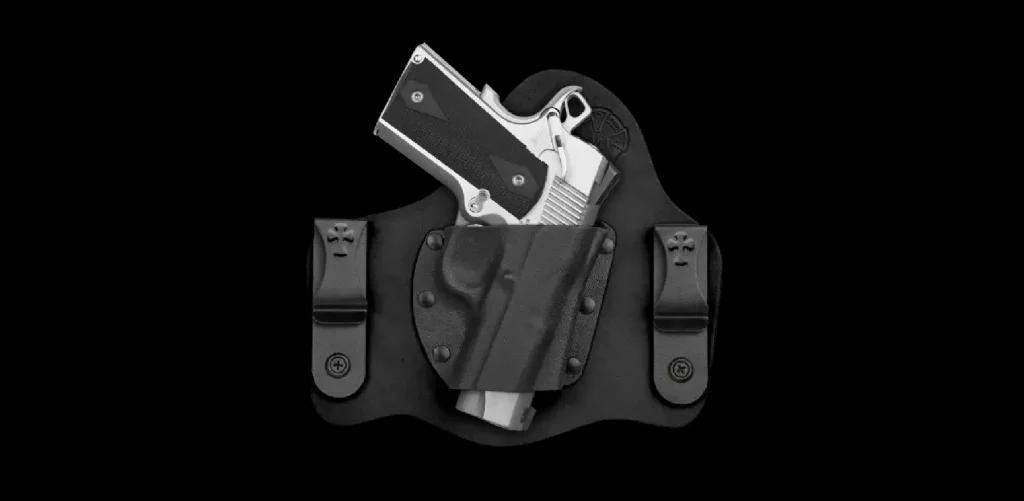
The SuperTuck has been CrossBreed’s flagship for a reason: a hand-molded 0.080-inch Kydex shell riding on an 8-ounce leather backing that curves away from the body at the belt line specifically to reduce printing.
On the bench, it pulled 4.5 pounds of retention force on average and produced a 1.35-second warmed-up draw — competitive with holsters costing twice as much. Thirty days of wear turned up zero hot spots, even worn directly against skin under a t-shirt, and it was the one holster in the IWB category every tester on our panel independently ranked in their personal top two, regardless of body type.
If we had to hand a first-time IWB buyer one holster off this entire list, this is it.
- Pros: hand-molded fit per gun model; leather backing eliminates hot spots over long wear; adjustable retention; available in light-bearing/optic-ready variants.
- Cons: leather backing needs occasional conditioning; break-in period of a few days before the leather fully relaxes against the body.
Best for: a first-time IWB buyer who wants one holster to get right without a lot of trial and error.
3. We The People IWB Holster
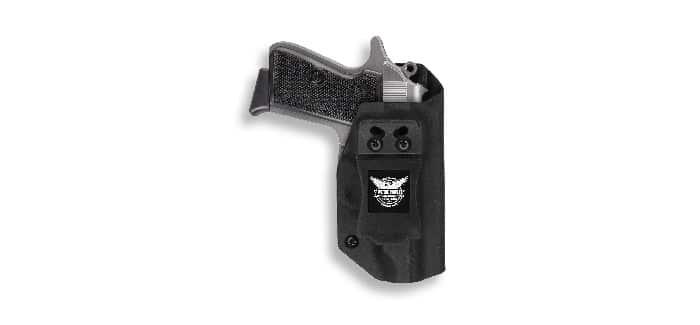
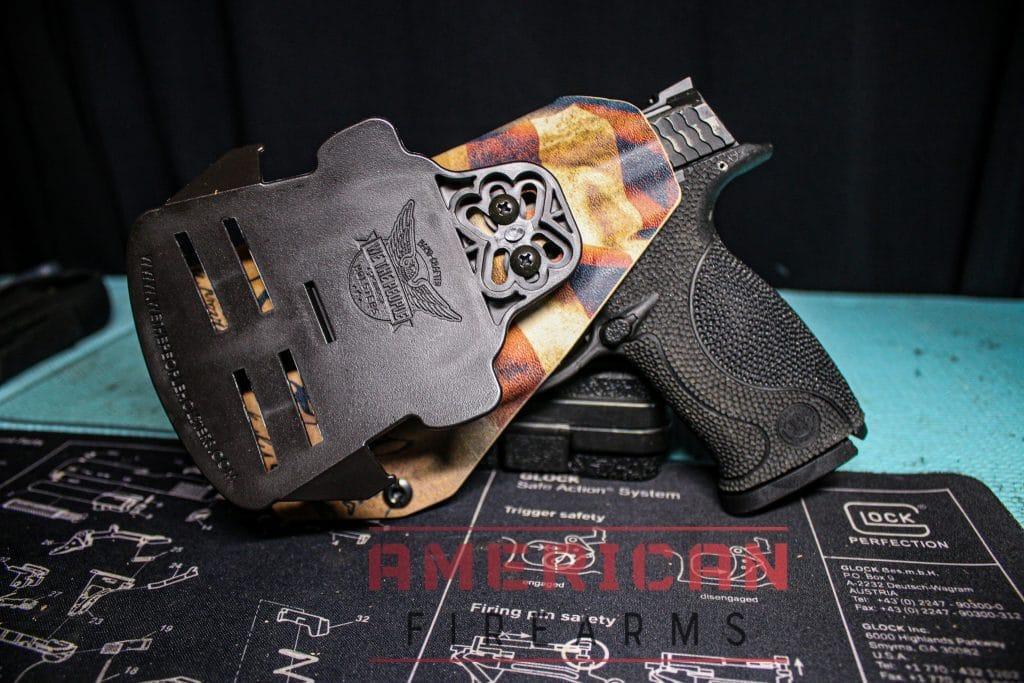
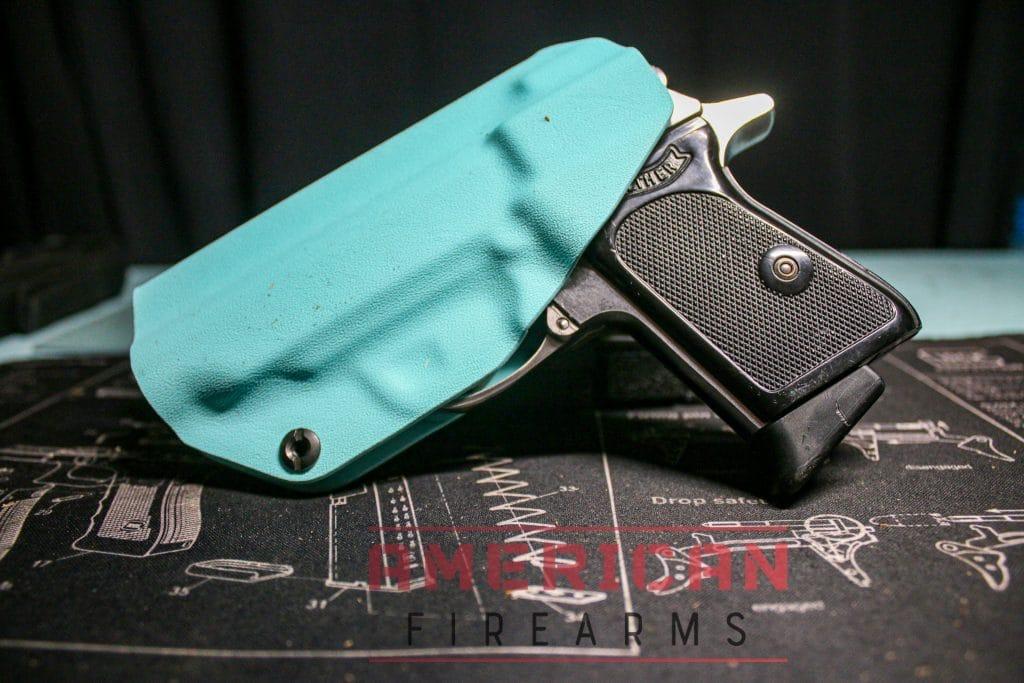
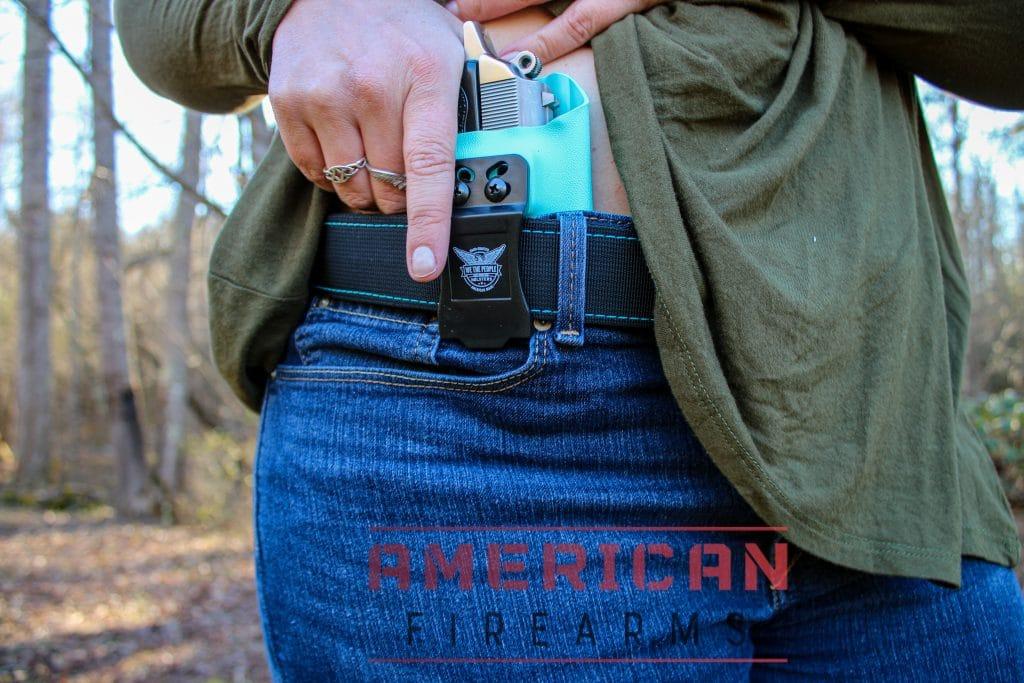
The IWB holster from We The People offers a lightweight easy-to-run holster with solid retention and a secure clip that fit my .380 PPK perfectly. The adjustable tension enables you to tune it to your draw strength, which helps accommodate different hand sizes and draw preferences. It’s super easy to set up for your preferred draw position.
Plus the adjustable clip gives you lots of options for ride and cant.
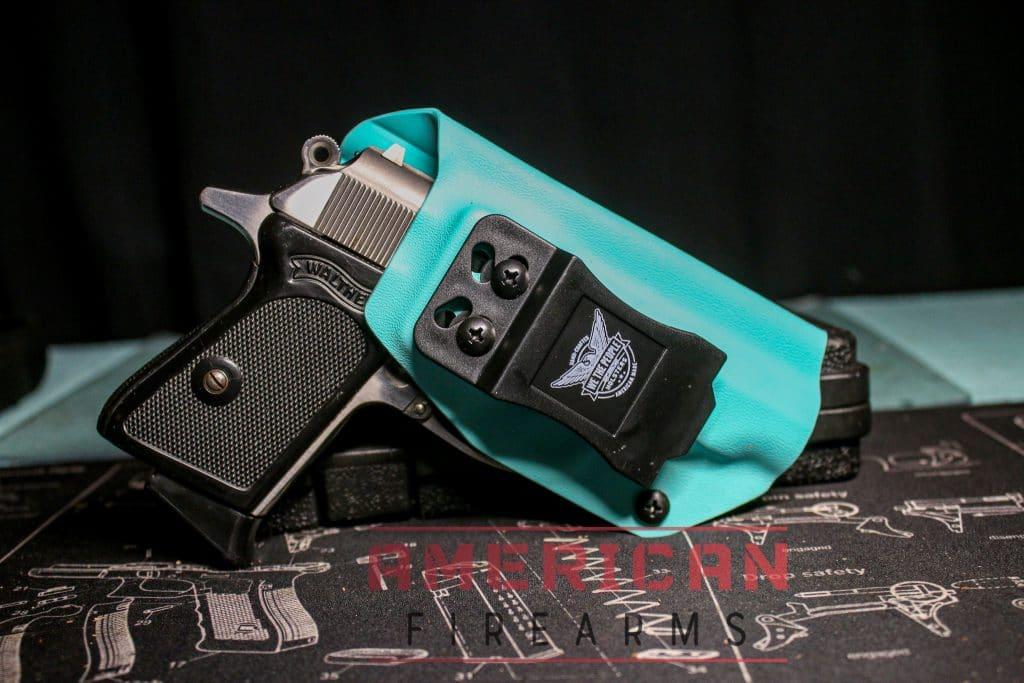
TFor those who prefer to get their sweat on, the We The people IWB holster includes a protective sweat guard, so no fear hitting the gym or heading out for a run — your pistol — and hip — is protected.
2. Alien Gear Shapeshift Holster
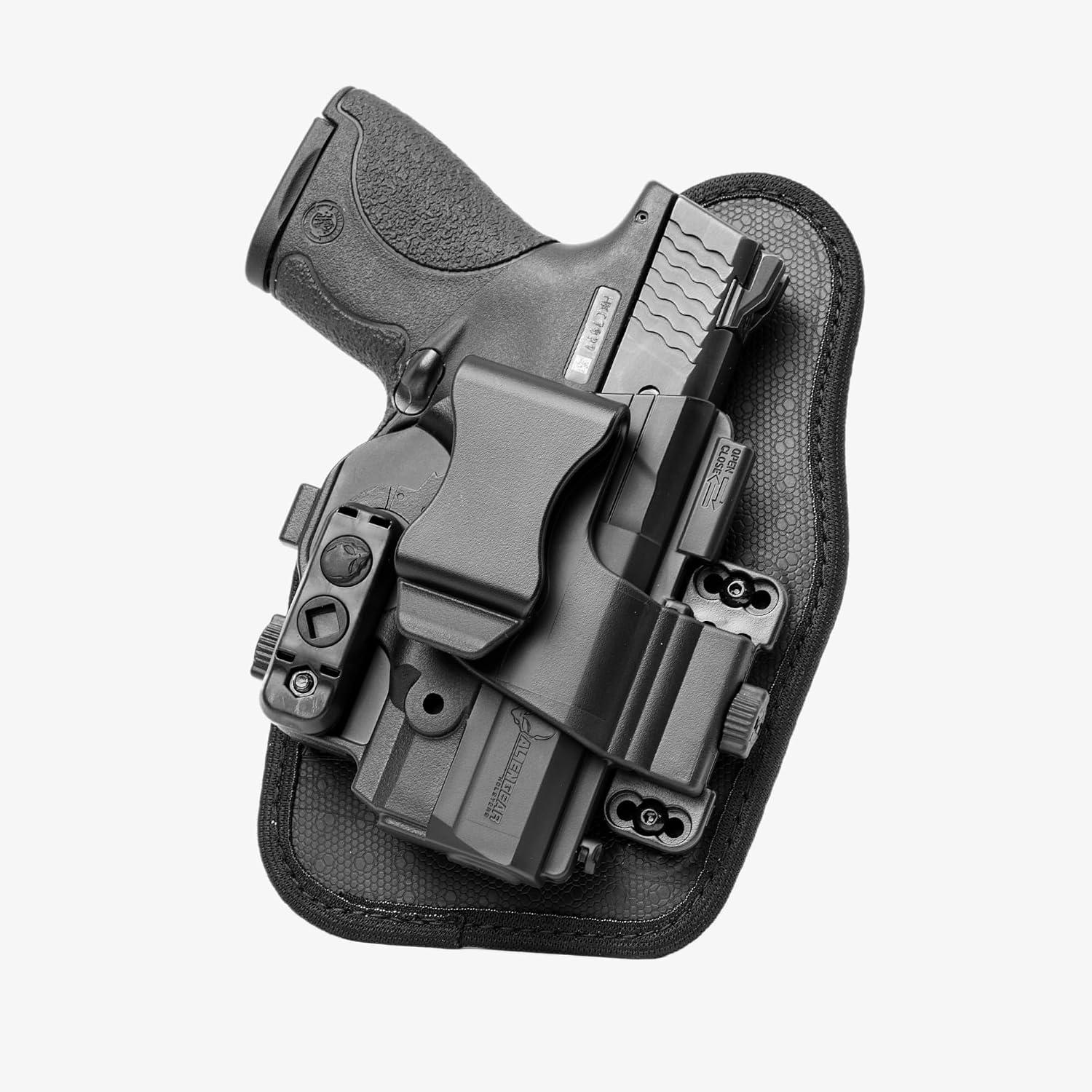
The ShapeShift’s 0.093-inch shell is noticeably stiffer than the SuperTuck’s, and it showed in testing — 5.8 pounds of retention force, the highest of any IWB holster here, with a positive, audible click when the gun seats fully.
The system’s modular base lets you swap the same shell between IWB, OWB, and a paddle attachment, which is a genuine value proposition if you’re outfitting more than one carry style on a budget rather than buying three separate holsters. Draw time came in at 1.42 seconds, and the stiffer shell means it holds its shape better than the SuperTuck if you’re rotating it between multiple belts or configurations throughout the week.
The Shapeshift design was made so the carrier can easily swap out their current holster for a different carry configuration, such as shoulder or a belt slide. The Alien Gear clock tuck IWB is an additional option that may be comfortable for you.
- Pros: modular shell swaps between IWB/OWB/paddle; strongest retention of any IWB tested; budget-friendly for the versatility offered.
- Cons: stiffer shell is slightly less comfortable bare-skin than a leather-backed hybrid; click-in retention takes a few uses to trust by feel alone.
Best for: a carrier who wants to try multiple carry styles without buying three separate holsters.
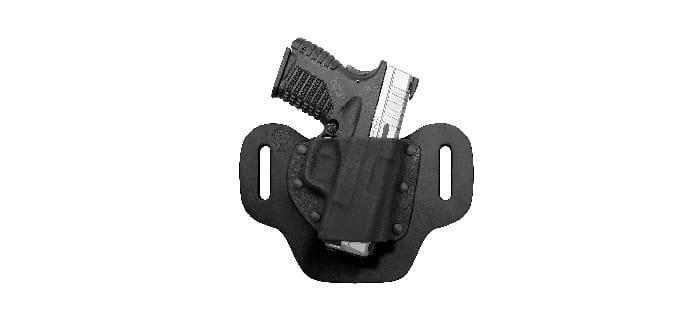
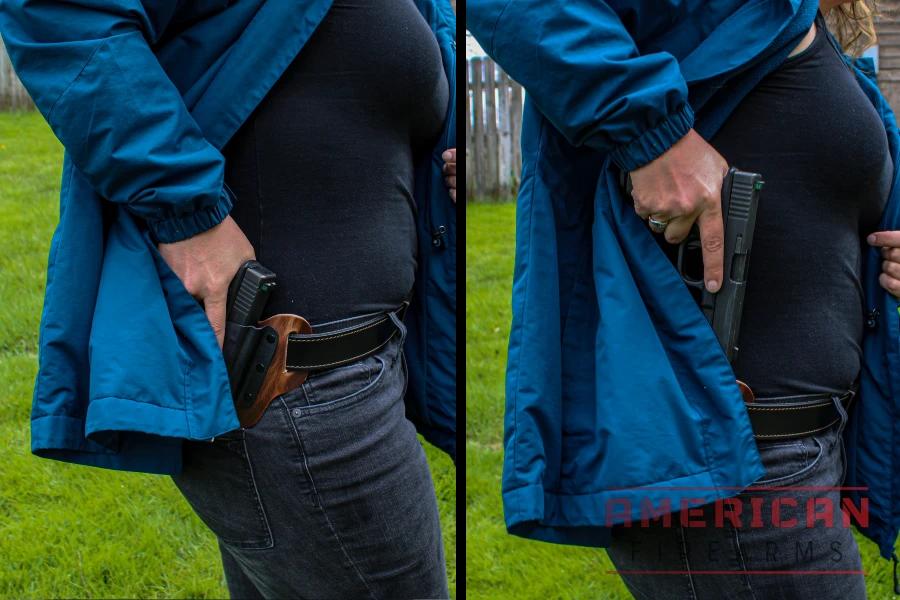
CrossBreed Holsters designed the DropSlide holster for easy access to the grip when drawing your pistol.
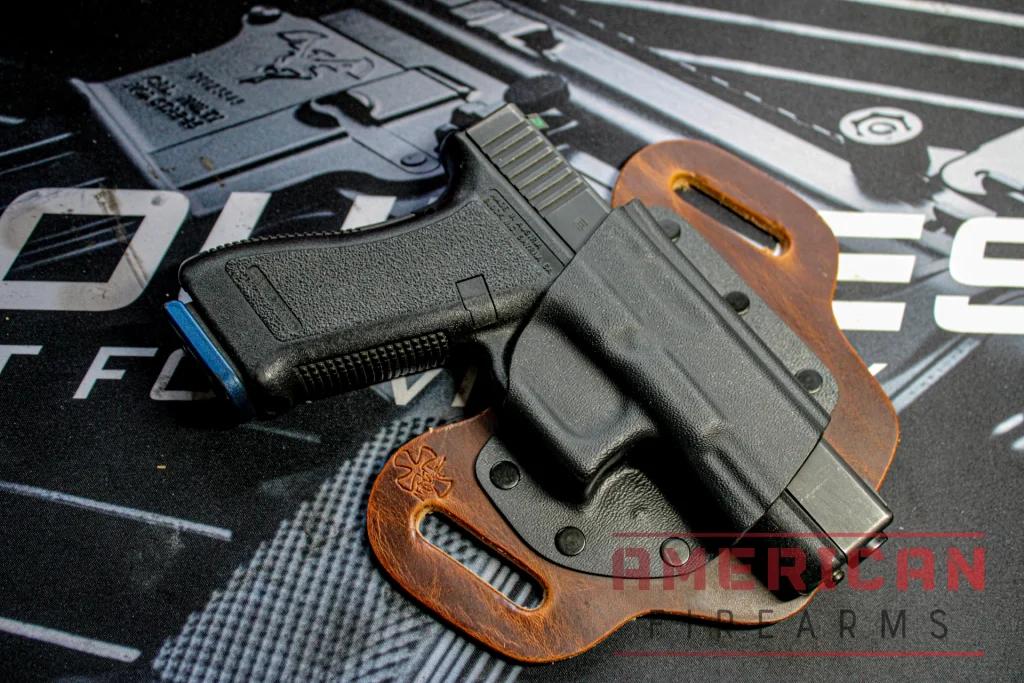
This holster is designed for use outside the waistband and is an option for open carry. These holsters are made from Kydex and are custom-fitted to your specific gun model. When ordering, be sure to choose the gun model and right-hand or left-hand draw.
The belt required to carry this holster needs to be a 1 ¼” or 1 ½” width.
3. CrossBreed Modular Belly Band Holster System
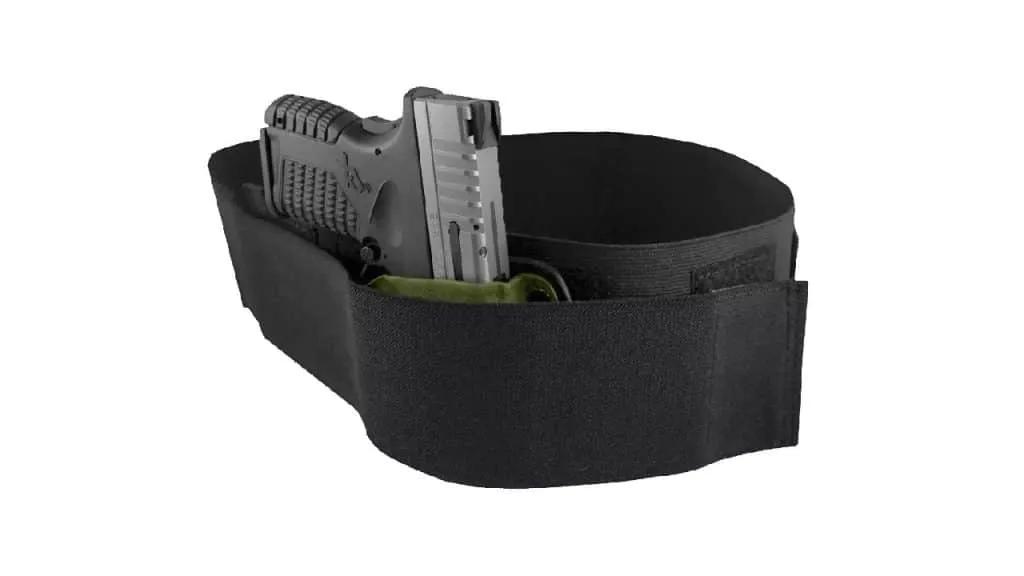
Most belly band holsters are little more than an elastic band with a sewed-in “holster” that’s essentially a pocket with a retaining strap. The CrossBreed Modular Belly Bandholster pairs the flexibility of the elastic band with the security of a molded Kydex holster.
The form-fitting Kydex holster insert secures to the belly band holster via Velcro, then a retaining strap holds the holster in place.
This mix gives you the best of both worlds — comfort and security — and eliminates the retaining strap often seen with other belly band holsters, which can speed the draw. It’s also consistently atop our list of the best belly band holsters.
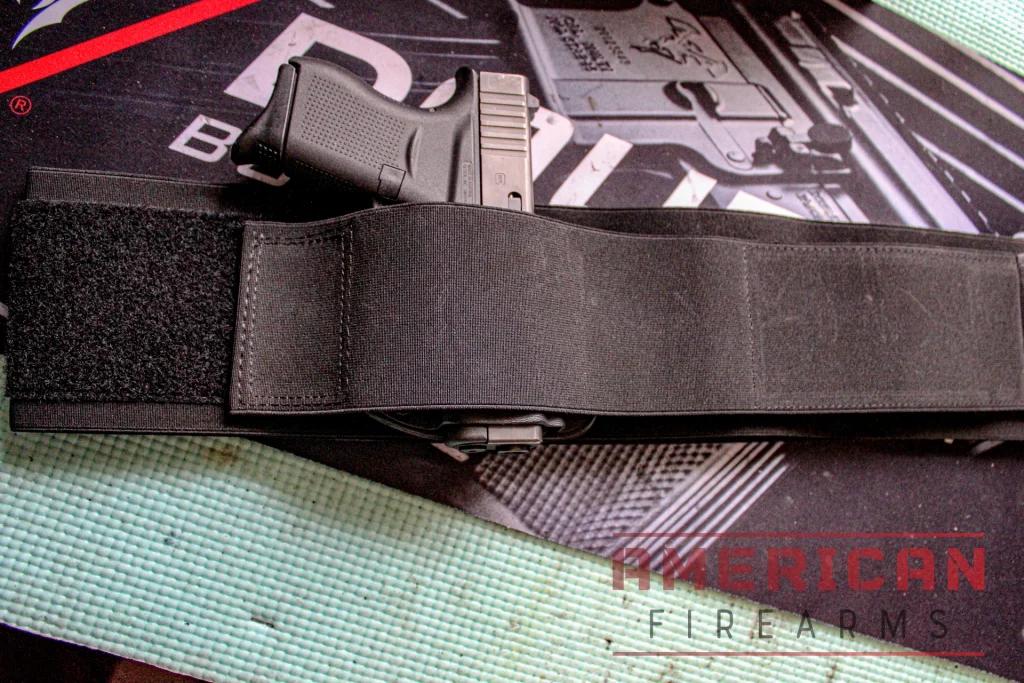
Also, beyond an on-body carry, CrossBreed offers various mounts for other applications — purses, bedside mounts, backpacks, and vehicle mounts — which all use the same Velcro format, taking the CrossBreed from a holster to a true system.
5. Blackhawk! Nylon Horizontal Shoulder Holster
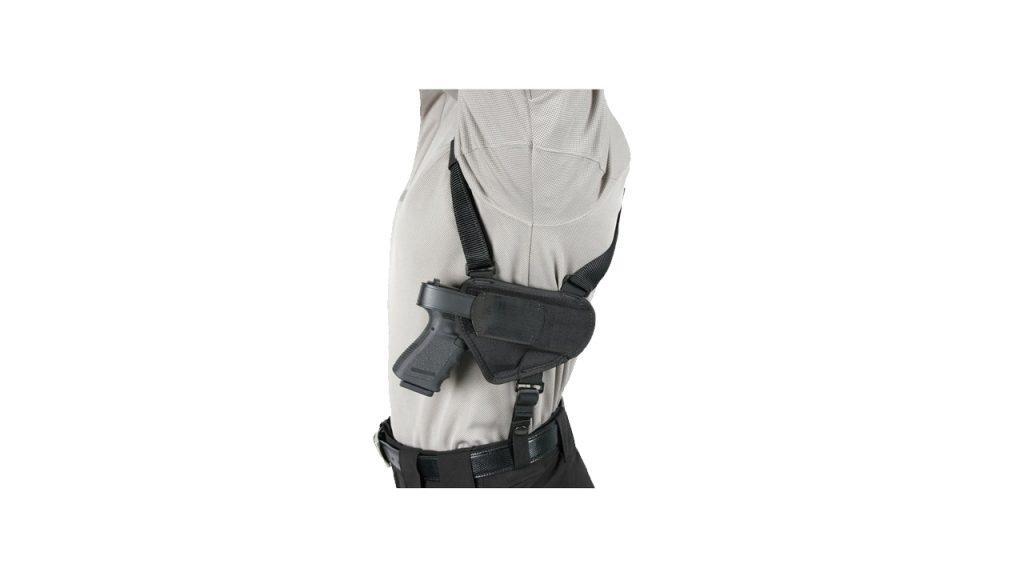
The Blackhawk! Nylon Horizontal Shoulder Holster is designed to fit any 4.5 – 5-inch large semi-automatic pistol. The setup is ambidextrous, so you can adjust the gun to your right or left side depending on your dominant shooting hand.
To keep your gun from flopping around, a strap was made to loop around your belt as a mounting point from your shoulder to your hip to keep the gun steady.
6. Safariland 578 OWB Paddle Holster
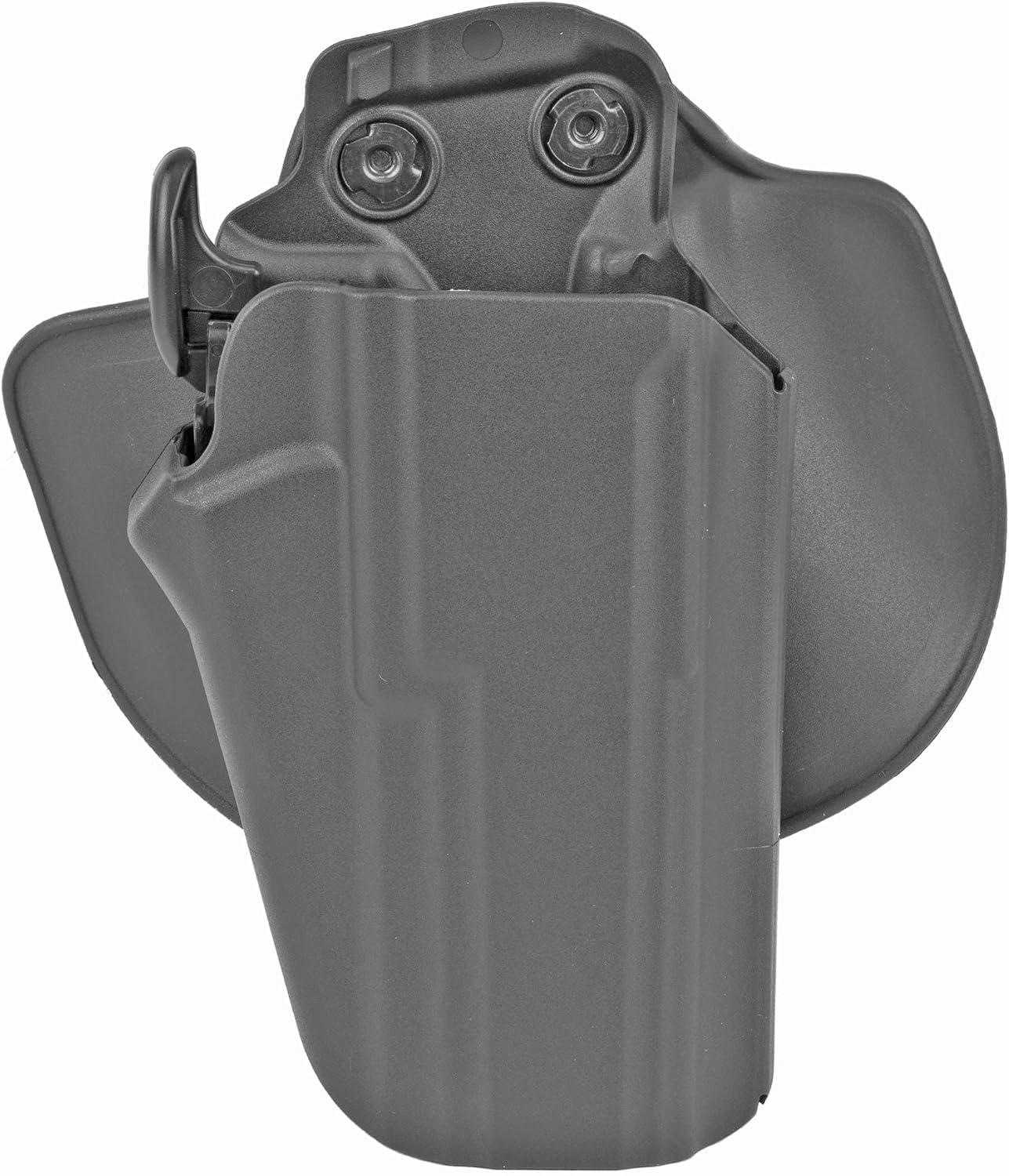
Safariland makes some of the sturdiest holsters around due to their work with the military and LEOs. This OWB holster is set up for right-handed shooters and for use only with the M&P Shield 9mm, .40 cal, or 45. The holster is made from a nylon blend material that tolerates extreme high or low-temperature conditions.
This holster is mounted to a paddle design, which is easy to tuck into the inside of your pants and supported by your belt in between.
7. Galco Ankle Band Holster
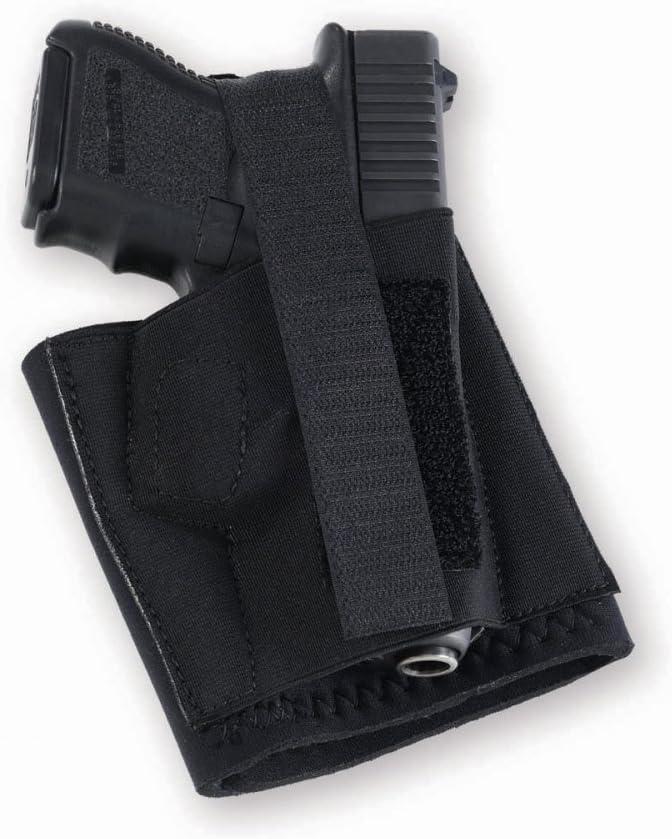
This Galco Ankle Band Holster is for use with a Glock 26, Ruger LCP, or Walther PPK. When checking out, be sure to choose right or left hand. This holster features a Velcro strap that goes over the back of your grip once the gun is inside the holster.
The material is neoprene allows the holster to breathe and wick moisture away.
8. Galco Classic Shoulder Holster
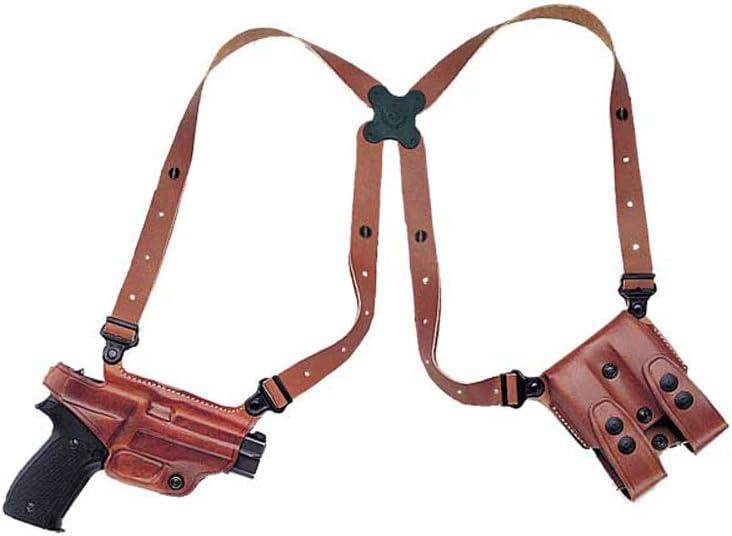
The Miami Classic Shoulder Holster is designed to fit models from 1911s to full-size Glocks. This shoulder holster has two spare magazine pouches built so you can be ready for a gunfight.
This is one of the more unique shoulder holsters made completely out of leather connected with Galco’s trademark Flexalon swivel backplate.
9. Sticky Holsters
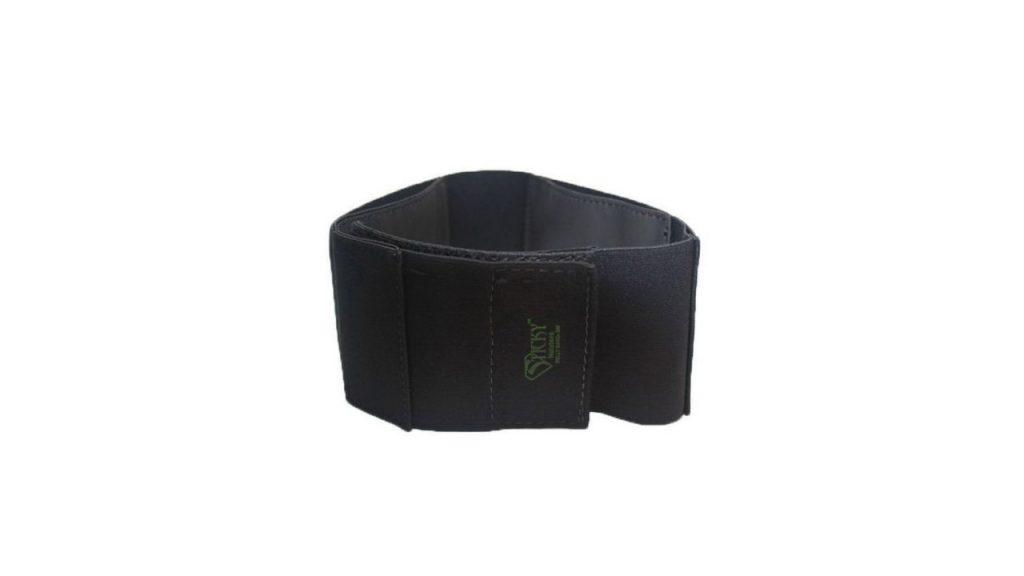
This belly band works with an actual Sticky Holster so be sure to purchase both the band and holster for your specific firearm. The band is modular so you can rotate it to mount the pistol where you want it on your waist.
This band features extra pockets to store backup magazines, folding knives, a cell phone, and more.
10. Universal Ankle Holster
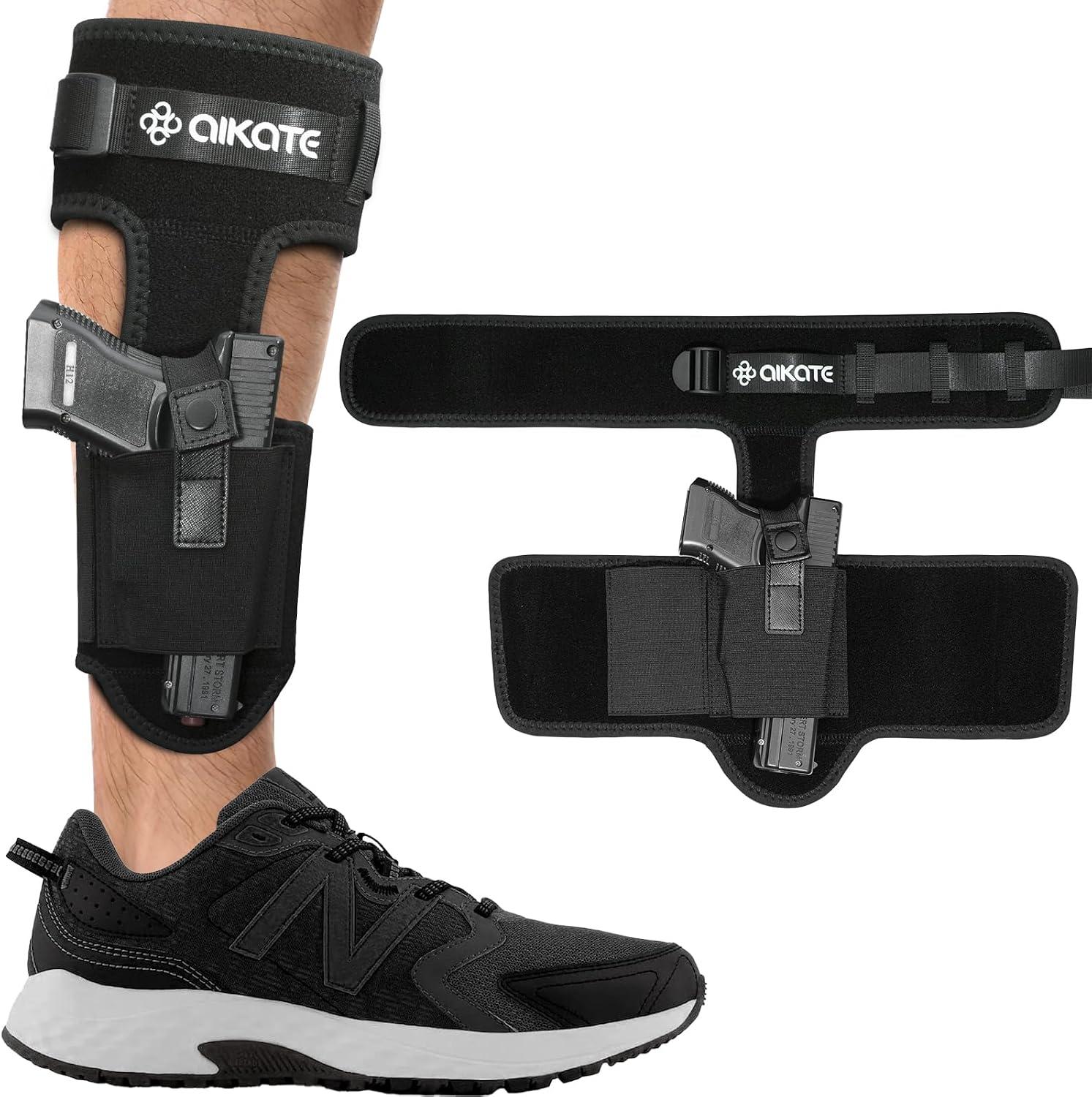
This universal ankle holster is a compact gun holster that fits most small models such as a Glock 43 or 42, Smith and Wesson’s Shield model, and even the Ruger LCP handgun.
This holster is ambidextrous so lefties are in luck. The neoprene holster offers a lot of comfort because the material is moisture-wicking and dries quickly. The most important thing to note about this ankle holster is the additional support from the strap above the actual holster. This allows for the gun to stay upright and be supported from higher up on the leg. Best part? BlitzShot makes this holster in the good ole US of A.
11. Talon Tuckable IWB Holster
Talon Tuckable IWB Holster
Other Sellers:



Talon Holsters are American made with Hermann Oak American steer hide leather. The Talon Concealed Carry Tuckable IWB Leather Holster model fits the Beretta Nano 9mm. Be sure to choose right or left hand at checkout. This IWB holster is fitted with an external clip made tight to the holster for excellent concealed carry.
Concealed Carry Holsters & Women
Concealed carry for women presents unique challenges that most holster manufacturers—and frankly, most holster reviews—completely ignore. Body shape differences, clothing variations, and comfort considerations that work perfectly for male carriers often fail spectacularly for women.
As a female member of our testing team who has reviewed feedback from hundreds of women carriers throughout my training courses, I’ve learned that holster selection for women requires addressing factors that never cross most men’s minds.
The reality is that most holsters are designed by men, tested by men, and marketed with men in mind. Hip flare, bust size, shorter torsos, and dramatically different clothing options all impact holster selection in ways that standard reviews don’t address. Let’s fix that.
The Core Challenges Women Face
Body shape and holster positioning create the first major hurdle. Women’s hip flare often pushes IWB holsters away from the body at the 3-4 o’clock position, creating printing issues that don’t occur on straighter male frames. What conceals perfectly on a man’s body can stick out noticeably on a woman’s curves.
Shorter torso length means less real estate between hips and ribs for holster placement. AIWB carry that works comfortably for a 6-foot-tall man might dig into a 5’4″ woman’s ribs when sitting. The distance from belt line to bottom of ribcage matters enormously, and women typically have 2-3 inches less space to work with.
Bust size impacts printing in ways male reviewers never consider. A holster that disappears under a loose T-shirt on a flat-chested tester might print obviously under the same shirt on a woman with a larger bust that pulls fabric tighter against the body.
Clothing diversity is where women’s carry challenges really diverge from men’s. While men typically carry in jeans or pants with sturdy belts, women navigate dresses, skirts, leggings, yoga pants, professional attire, and athletic wear—often without belt support. A holster solution that works in jeans becomes useless when wearing a dress to a wedding or leggings to the gym.
Our Top Pick for Women: Crossbreed SuperTuck or Alien Gear Cloak Tuck 3.5
BEST OVERALL FOR WOMEN: After extensive testing and feedback from our female team members, hybrid holsters like the CrossBreed SuperTuck or Alien Gear Cloak Tuck 3.5 consistently earn top marks for women’s concealed carry. The leather backing spreads pressure across a larger area (critical for hip carry on curvier frames), while the Kydex shell maintains reliable retention.
The wide backing helps bridge the gap created by hip flare, keeping the firearm closer to the body for better concealment.
Both holsters offer adjustable cant and ride height, allowing women to dial in positioning that accommodates their specific torso length and body shape. The leather backing also provides enough cushioning to remain comfortable during 8+ hour wear periods, which matters more for women who typically have less body mass to cushion holster pressure points.
Price: CrossBreed SuperTuck ~$75-85, Alien Gear Cloak Tuck 3.5 ~$45-50
Position-Specific Recommendations for Women
Appendix Carry (AIWB) for Women
Appendix carry works exceptionally well for many women, particularly those with shorter torsos or significant hip flare that makes strong-side carry print more noticeably. The flatter front profile of most women’s bodies often conceals appendix-carried firearms better than the curved hip area.
Best for AIWB: PHLster Enigma (Universal System) or Tier 1 Concealed Axis Elite
The PHLster Enigma deserves special mention because it’s genuinely revolutionary for women. This belt-less system attaches to your body rather than your pants, meaning it works with dresses, skirts, yoga pants, and any other clothing without belt loops. One of our female testers called it “life-changing” for her ability to carry in professional attire.
The system uses a leg leash to prevent the holster from shifting, and the face plate adjusts to accommodate different body shapes. Yes, there’s a learning curve to set it up initially, but once dialed in, it enables carry in clothing that previously required off-body options.
Considerations for women in AIWB:
- Sit down while trying the holster—many women find AIWB digs into their lower abdomen more than men experience
- Adjust ride height carefully; women’s shorter torsos mean less room for error
- Consider going one holster size smaller than you think you need; women often carry slightly smaller guns that benefit from more compact holsters
Strong-Side Carry (3-4 o’clock) for Women
Strong-side carry presents the hip flare challenge, but it remains viable with the right holster selection.
Best for strong-side: Hybrid holsters with wide backing (CrossBreed SuperTuck, Alien Gear, StealthGear Ventcore)
The key is choosing holsters with wide leather or synthetic backing that bridges the gap created by hip curves. Our female testers consistently report that narrow Kydex-only holsters at the 3-4 o’clock position print noticeably, while hybrid holsters with 3-4 inch wide backing conceal much better.
Fit considerations:
- Forward cant (15-20 degrees) often conceals better on women’s hip flare than neutral cant
- Ride height matters more—too high, and it digs into ribs; too low, and it prints below the belt line
- Test while sitting; hip flare increases when seated and can push the holster away from the body
Off-Body Carry: Purses and Bags
I’m generally skeptical of off-body carry, but I also recognize that sometimes it’s the only viable option for certain clothing situations. If you’re going to carry in a purse or bag, do it right.
Best dedicated concealed carry purse: Gun Tote’n Mamas or Galco holster handbags
CRITICAL SAFETY WARNINGS for purse carry:
- The holster compartment must be completely separate from the main bag—never let your gun share space with keys, pens, or other objects
- Never set your purse down in public restrooms, shopping carts, or restaurant tables
- Consider a cross-body bag with a locking concealed carry compartment
- Keep the bag on your body at all times—purse snatching puts a gun in criminal hands
- Practice drawing from your purse; it’s significantly slower than body carry and requires different technique
Better alternative to purse carry: If you’re considering purse carry solely because your outfit lacks a belt, look at the PHLster Enigma or belly band options first. Off-body carry should be a last resort, not a first choice.
Belly Bands for Women
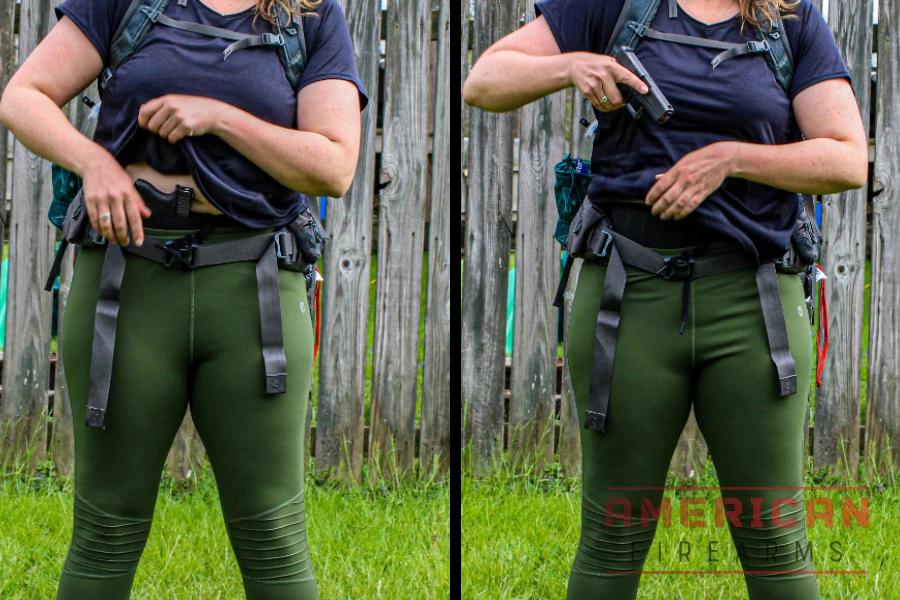
Belly bands excel for athletic wear, dresses, and any clothing without belt support. They’re also excellent for women who change outfits multiple times during the day and want one holster solution that transfers between clothing types.
Best belly band: ComfortTac Ultimate Belly Band or Crossbreed Modular Belly Band
Our female testers appreciate that quality belly bands include a built-in Kydex trigger guard or hard holster insert—essential for safety. The elastic band itself doesn’t protect the trigger; you need a rigid component.
Belly band considerations for women:
- Position matters enormously—experiment with placement above hips, below bust, or at natural waist
- Tighter elastic provides better retention but can be uncomfortable during long wear
- Works exceptionally well under flowy dresses or athletic wear
- Not ideal for very small guns (LCP-sized) which can shift in elastic holsters
- Practice drawing; the grip angle is different than belt-mounted holsters
Thigh Holsters
Thigh holsters remain controversial and niche, but they solve specific problems for women wearing dresses or skirts.
Best thigh holster: Can Can Concealment Hip Hugger or Dene Adams Corset Holster
These designs attach to your thigh with elastic bands and sit high enough to remain concealed under knee-length or longer dresses. Drawing requires reaching under your skirt, which is neither quick nor subtle, but it beats being unarmed at formal events.
Reality check on thigh holsters:
- These are “better than nothing” solutions for specific clothing situations, not everyday carry recommendations
- Drawing is slow and obvious
- Comfort during extended wear is questionable
- Only viable for small, lightweight firearms (J-frame size or smaller)
- Consider if formal dress events are rare enough that off-body carry in a clutch might be more practical
Bra Holsters
The Flashbang bra holster gets mentioned frequently in women’s carry discussions. Having asked female testers for honest feedback, the consensus is: it’s an extremely limited-use option.
Flashbang Bra Holster considerations:
- Only works with specific bra styles (traditional underwire)
- Extremely uncomfortable for extended wear
- Printing is difficult to avoid with larger firearms
- Drawing requires significant practice and is very slow
- Best suited for tiny .380s or small 9mms only
- Our testers describe it as an “emergency backup gun” rather than primary carry
Most women who try bra holsters end up abandoning them within a few weeks. Belly bands or the Enigma system work better for the same clothing situations.
Firearm Size Considerations for Women
While this is a holster article, I’d be remiss not to address the elephant in the room: women are routinely steered toward tiny .380 pocket pistols when they could comfortably carry more capable firearms with proper holster selection.
The assumption that women need the smallest possible gun because of smaller hands or frames is outdated and often wrong. Many women carry Glock 19s, Smith & Wesson M&P Compacts, or even full-size 1911s concealed effectively with proper holster selection and positioning.
Don’t assume you need the smallest gun. Instead:
- Try multiple firearm sizes with proper holsters before deciding
- Consider that slightly larger guns often shoot more accurately and comfortably
- Remember that holster quality matters more than gun size for concealment
- Test carry positions with different gun sizes—AIWB often conceals larger guns better than hip carry for women
Clothing Modifications That Can Help
Several of our female testers have found simple clothing modifications that dramatically improve concealment without requiring completely new wardrobes:
Belts matter enormously. A proper gun belt (1.5″ width, reinforced) makes hip carry viable in jeans or pants where fashion belts fail. Consider investing in a quality belt before buying multiple holsters.
Structured fabrics conceal better than clingy materials. Cotton button-ups conceal better than form-fitting knits. Blazers and cardigans create excellent concealment layers.
Buy pants one size larger if you carry IWB. The extra room in the waistband accommodates the holster and gun without printing or discomfort.
Undershirts create a moisture barrier between Kydex holsters and bare skin while also reducing printing under outer garments.
Practice and Training
Women face unique drawing challenges based on clothing types and holster positioning. What you wear dramatically impacts your draw stroke.
Practice drawing while wearing the actual clothing you’ll carry in—not just jeans and a t-shirt at the range. If you’ll carry in professional attire, practice drawing while wearing a blazer. If you use belly bands under dresses, practice that specific draw stroke.
Consider taking a women’s-specific concealed carry class where instructors understand the unique challenges and clothing considerations women face. Mixed-gender classes often focus on male-typical carry methods that don’t translate well.
The Bottom Line for Women
Concealed carry for women requires more experimentation and flexibility than for men, but effective solutions exist for virtually every clothing situation and body type. The key is refusing to accept that you must carry tiny, difficult-to-shoot pistols in uncomfortable holsters just because that’s what gets marketed to women.
Start with a quality hybrid holster (CrossBreed SuperTuck or Alien Gear Cloak Tuck 3.5) for traditional belt-supported clothing. Add a belly band (ComfortTac or CrossBreed Modular) for athletic wear and belt-less options. If you regularly wear dresses or skirts, invest in the PHLster Enigma system—it’s expensive ($85-100), but it genuinely solves problems no other holster addresses.
Avoid the temptation to go straight to off-body carry in a purse. While it’s sometimes necessary, it’s also the slowest, least secure, and most theft-vulnerable carry method. Explore body-worn options thoroughly before defaulting to purse carry.
Finally, ignore anyone who tells you that you “have to” carry a specific gun size or use a specific position because you’re a woman. Body shape matters, clothing matters, and comfort matters—but none of these factors are determined solely by gender. Find what works for your specific body, clothing, and lifestyle through experimentation and testing.
Additional Resources
- SSRN, John R. Lott, Rujun Wang, Concealed Carry Permit Holders Across the United States, September 21, 2020
- Google Books, Brad Fitzpatrick, Shooter’s Bible Guide to Concealed Carry, 2nd Edition, January 15, 2019

Updated
December 27, 2025 — Added new “How We Test” section detailing 30-day testing protocols, draw performance metrics, and team credentials; and “Material Guide: Kydex vs. Leather vs. Hybrid” comparing materials with pros/cons, climate considerations, and maintenance requirements.
Sign up for our newsletter
Get discounts from top brands and our latest reviews!
View by Category

In-Hand Reviews

Firearm News

Featured Comparisons

Firearm & Ammo Reviews

Popular Guides & Stats

Range Gear & Accessories

Gun & Ammo Safes