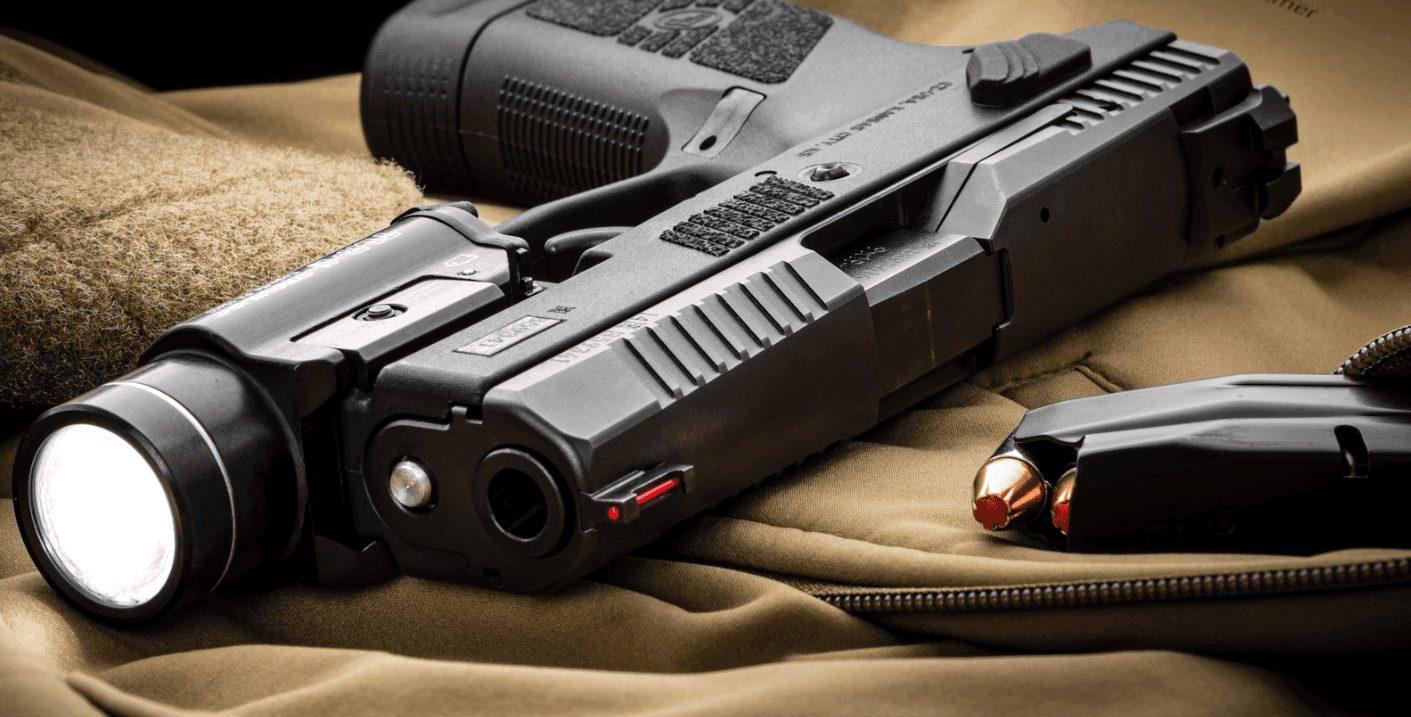
Glock 45 Gen 6 Review: Range-Tested and Ready for Duty
We put the Glock 45 Gen 6 through its paces with live fire, optics testing, and holster checks. Here's what has actually changed — and whether it's worth the upgrade.

Written By
Michael Crites
Licensed Concealed Carry Holder
Reviewed by
Editorial Team
Learn About The Editorial Team
Share:
Products are selected by our editors. We may earn a commission on purchases from a link. How we select gear.
Updated
Apr 2026
We put the Glock 45 Gen 6 through its paces with live fire, optics testing, and holster checks. Here’s what has actually changed — and whether it’s worth the upgrade.
In This Article
The New Glock on the Block
Glock has been in the game since the early 1980s, and its pistols have gone through five generational evolutions since then. The Gen 5 guns first hit the market in 2017, one of the bigger generational upgrades in the company’s history, bringing something on the order of 40 internal and external modifications over the pre-2017 Gen 4 standard.
That generation also ushered in the G45, a crossover 9mm that pairs a full-size G17 frame with a compact 4-inch G19-length barrel and slide. It was a smart design from day one, and law enforcement agencies and duty carriers picked up on it quickly.
Then came what I’d call the great Glock Schism of 2025 — the quiet elimination of 26 models and 100 SKUs in March, followed by an October announcement that nearly everything outside the rimfire G44 and the slim single-stacks G43 and G48 would be discontinued, replaced by a cryptically named V Series.
The V Series had the same general Gen 5 profile but modified slide geometry — interpreted by most of the industry as a move to block conversion switches in response to California’s AB 1127. Reception was chilly.
It all made sense in December 2025 with the announcement of the new Gen 6, timed to coincide with Glock USA’s 40th Anniversary and officially landing on dealer shelves January 20, 2026. The launch included three 9mm models — the G17, G19, and G45 — all carrying the same $745 MSRP as the preceding Gen 5 MOS series, but with a substantial list of changes under and on top of the skin.
I had the Glock 45 Gen 6 on hand for an extensive evaluation, and after field testing, what I found was a pistol with meaningful refinements that address a decade of user feedback without disturbing the famously reliable core of the platform.
This review covers ergonomics, trigger, optics system, internals, range performance, and carry practicality — everything you need to decide whether this is your next Glock.
So, What’s New?



Best For
- Factory flat face trigger that rivals aftermarket upgrades
- Best-in-class Glock ergonomics with RTF-6 texture and integrated beavertail
- Direct-mount ORS optics system with lower height-over-bore than MOS
- Proven Gen 5-level reliability with meaningful Gen 6 refinements
- Full-size 17+1 capacity in a shorter, faster-clearing crossover package
Considerations
- Internal parts (barrel, extractor, trigger housing) not compatible with Gen 5 or earlier
- Suppressor-height sights required for optic co-witness in most configurations
- Integrated beavertail may require holster re-evaluation for AIWB carry
- Aftermarket Gen 6-specific components (triggers, internals) still arriving
- Only three 9mm models at launch — no sub-compacts or alternate calibers yet
Who Should Buy a Gen 6 Glock:
- First-time Glock buyers who want the best factory version of the platform available
- Duty and law enforcement buyers who have standardized on the G45 crossover configuration
- Red dot users frustrated by the MOS plate system’s height-over-bore and four-screw complexity
- Gen 5 owners whose primary complaint was ergonomics, grip texture, or the MOS optics setup
- Competitive and practical shooters who want factory thumb ledges and a flat trigger without the aftermarket spend
Who Should Skip It:
- Current Gen 5 G45 owners with a well-running pistol, quality aftermarket trigger, and acceptable optics setup — the upgrade case is real but not urgent
- Shooters with a deep Gen 5 spare parts inventory who need internal cross-compatibility
- AIWB-focused deep concealment carriers who haven’t yet verified holster fit with the new frame geometry
- Buyers specifically seeking sub-compact or non-9mm Glock options — those Gen 6 variants aren’t here yet
Test Scores
So… how does the Gen 6 G45 stack up on our 60-point scale?
Accuracy: 10/10
Best-load groups came in under 2 inches at 25 yards from a bench rest, with the Federal HST and Black Hills JHP both printing 1.8–1.9 inches. Consistent with the Marksman Barrel’s established standard and competitive with any factory service pistol in this class.
Ergonomics: 10/10
Easily the most ergonomic factory Glock ever produced. The RTF-6 texture, integrated beavertail, deeper trigger guard undercut, and built-in thumb ledges work together as a cohesive system rather than a checklist of features. Shooters across hand sizes reported immediate improvement in control and comfort over Gen 5.
Fit and Finish: 9/10
Tight construction, quality materials, and clean execution throughout. The ORS insert system is a step up from MOS plates aesthetically and functionally. Minor deduction for the co-witness situation that requires suppressor-height sights most buyers will need to purchase separately.
Features: 9/10
Direct-mount ORS optics system, factory flat face trigger, integrated beavertail, ambidextrous slide stop, sealed extractor channel, and thumb ledges on both sides of the frame — all at the same MSRP as the Gen 5 MOS it replaces.
Held back slightly by limited launch model selection and Gen 6-specific aftermarket still catching up.
Reliability: 10/10
Zero malfunctions attributable to the pistol across nearly 1,000 rounds spanning 115 to 147 grain loads, multiple JHP defensive rounds, and +P ammunition.
The Gen 6 meets the reliability standard Glock’s reputation demands, and the sealed extractor channel addresses the one MOS-era failure mode that was user-generated rather than pistol-generated.
Value: 9/10
Matched MSRP to the Gen 5 MOS at $745 with a substantial list of improvements — flat trigger, better optics mount, refined ergonomics, and sealed extractor channel included as standard.
The only meaningful value caveat is that shooters planning to run optics will need suppressor-height sights, and Gen 6-specific aftermarket components carry a first-mover premium until supply catches up.
At a Glance
Specifications & Pricing
| Specification | Details |
|---|---|
Caliber | 9mm |
Capacity | 17+1 |
Barrel Length | 4.02 inches |
Overall Length | 7.44 inches |
Weight | 23 oz. (empty magazine) |
Trigger Pull | 5.8 lbs. average |
Optics Footprints | RMR C-More DPP/Holosun K (3 inserts included) |
MSRP | $745 |

What Actually Changed from Gen 5
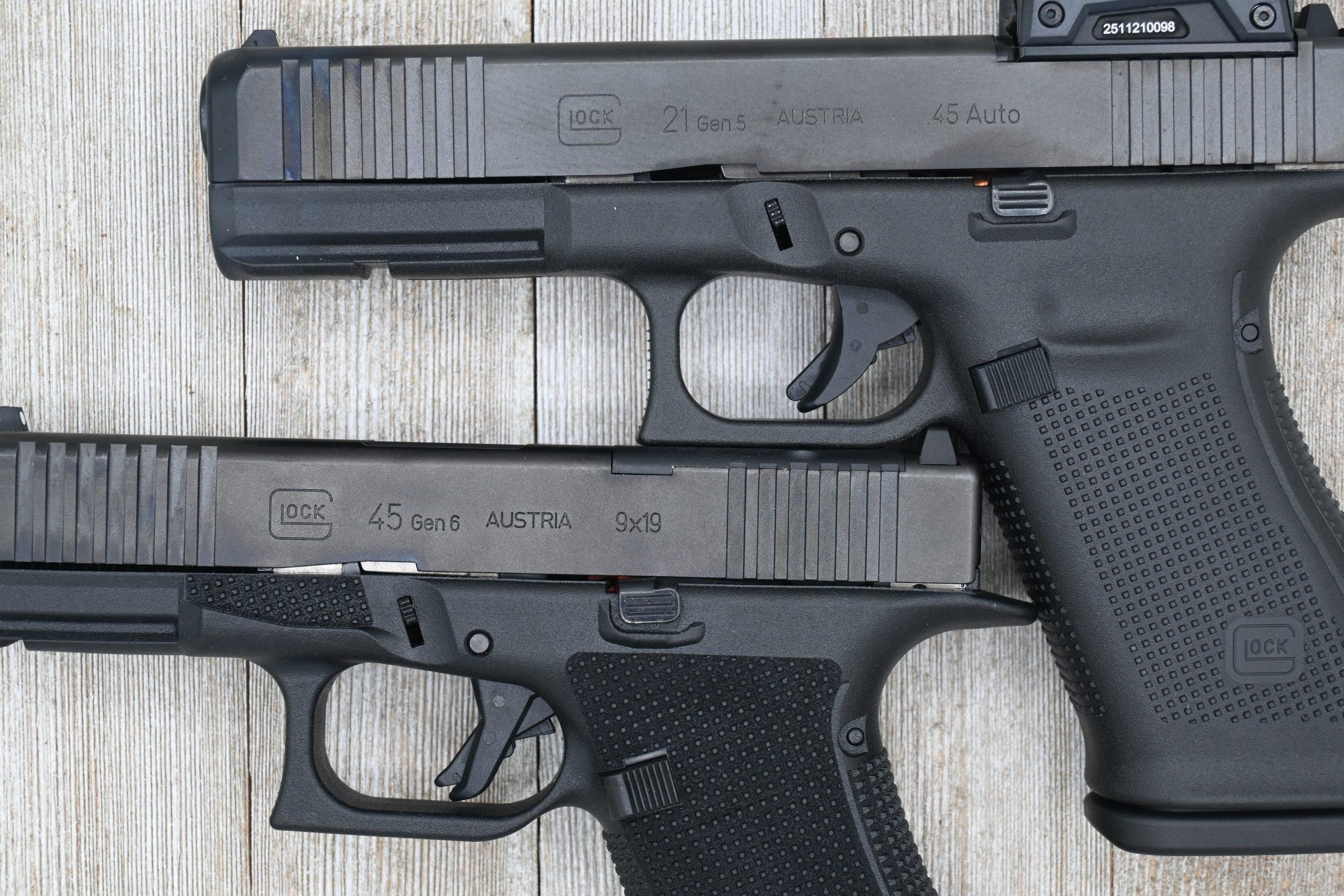
The headline changes are a new trigger, redesigned slide architecture, revised frame geometry, and an entirely new optics mounting system. Legacy double-stack 9mm magazines and factory sight footprints remain backward compatible back to Gen 3/4/5, while Glock’s hallmark “Safe Action” tabbed trigger striker-fired operating system and field-strip procedure remain standard.
Most internal parts, however, including the barrel, extractor package, and striker assembly, do not interchange with Gen 5 or earlier handguns. That’s a notable break from tradition and worth understanding before you commit.
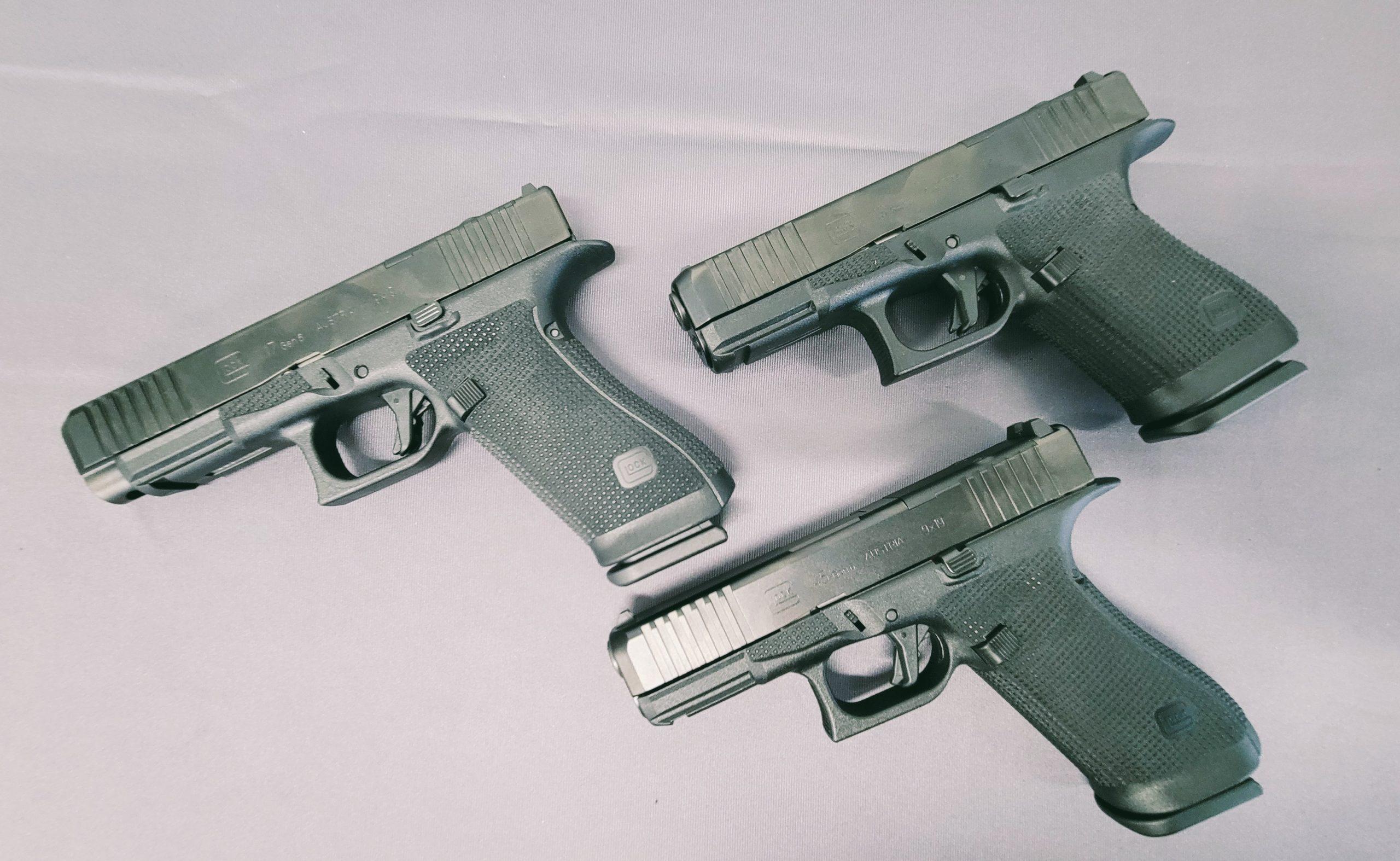
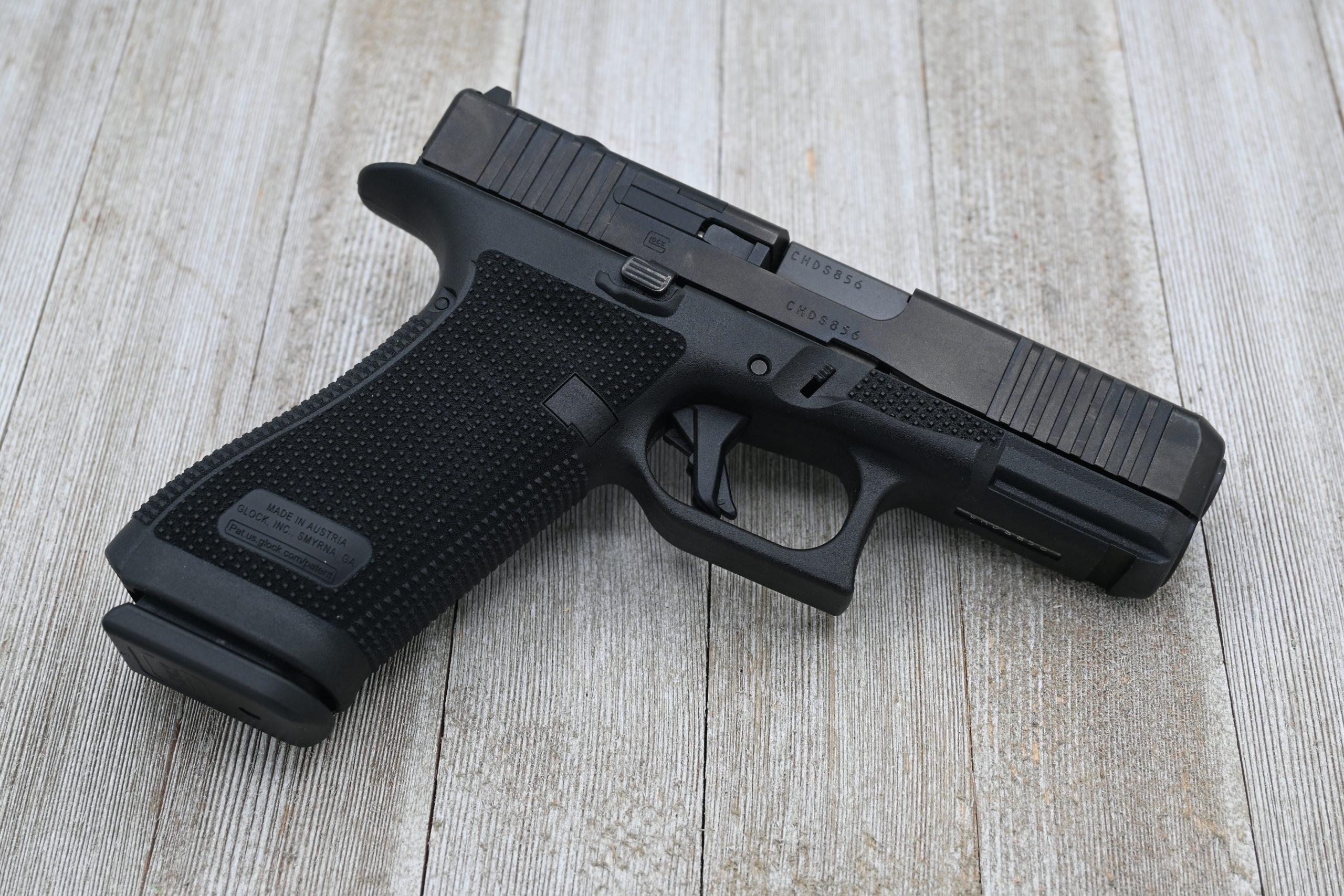
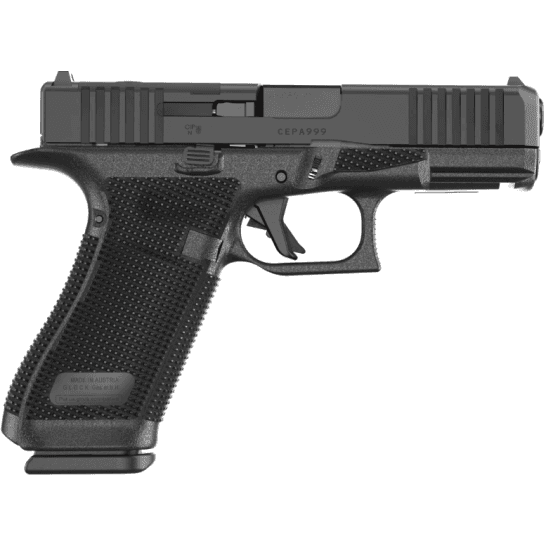
On the ergonomics side, the Gen 6 introduces the new RTF-6 grip texture, an integrated beavertail, an undercut trigger guard, and what Glock calls “thumb ledge” shelves forward of the trigger guard on both sides of the frame — a nod to the competition-shooter “gas pedal” concept.
The single captured recoil spring on a polymer rod also makes a comeback, replacing the dual spring setup introduced with the Gen 4. Glock told us their testing showed the dual spring just isn’t needed, especially on 9mm pistols.
How We Test
Feel & Accuracy
We fire four 5-round groups from a bench at 7 to 25 yards to evaluate accuracy, measure group sizes, assess trigger pull with a Lyman trigger scale, and evaluate reset distance and feel.
Reliability
We rapidly fire a minimum of one full magazine of both FMJ and hollow point defensive rounds, documenting any feeding, ejecting, or jamming issues. We also run at least 500 rounds of mixed loads through each pistol — including +P ammunition where appropriate — before rendering a reliability verdict.
Ergonomics & Carry
We assess grip texture, trigger reach, and control layout across multiple testers with varying hand sizes. For carry-capable pistols, we test concealment in IWB, OWB, and AIWB configurations using multiple holsters across t-shirts, button-down shirts, jackets, and athletic wear.
Optics Compatibility
We mount at least one red dot optic per pistol reviewed, zero it at 15 yards, and confirm zero stability over 100+ rounds. We also confirm co-witness height with factory and suppressor-height sights.
Features
Ergonomics and the New Grip
RTF-6 Texture and Palm Swells
The Rough Textured Frame, or RTF, used on Glock’s pistols over the generations have divided the community into acolytes for each style. The RTF-2 (circa 2009) was aggressively coarse — like sandpaper on a polymer brick.
The RTF-4 of the Gen 4 era brought the raised “polymid” squares. Neither was perfect. With the new Gen 6s come its corresponding RTF-6 grip texture, which the company has described as hybrid blending the old (circa 2009) coarse sandpaper substrate felt on the early Gen 3’s RTF-2 with the raised “polymid” squares of Gen 4’s RTF-4.
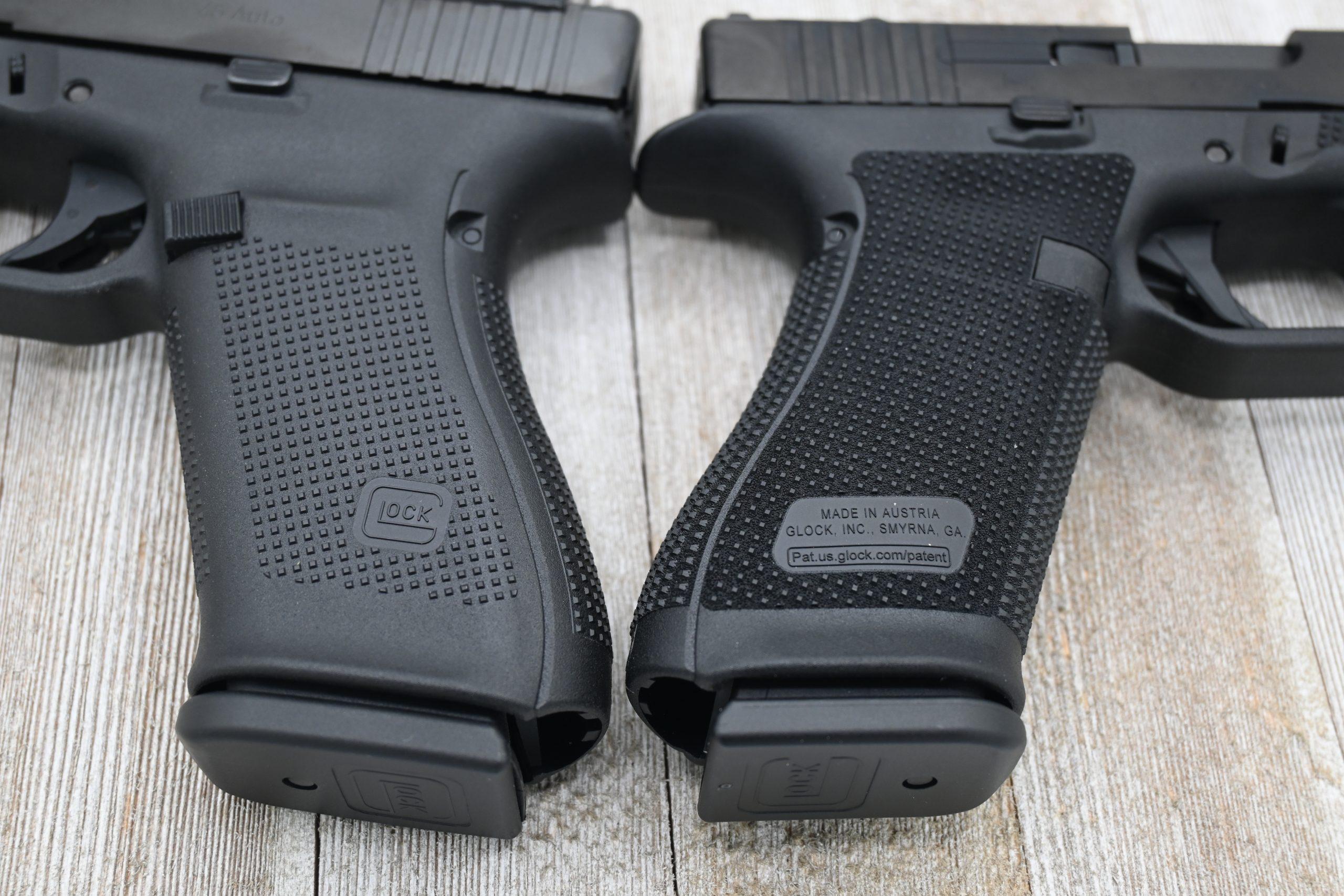
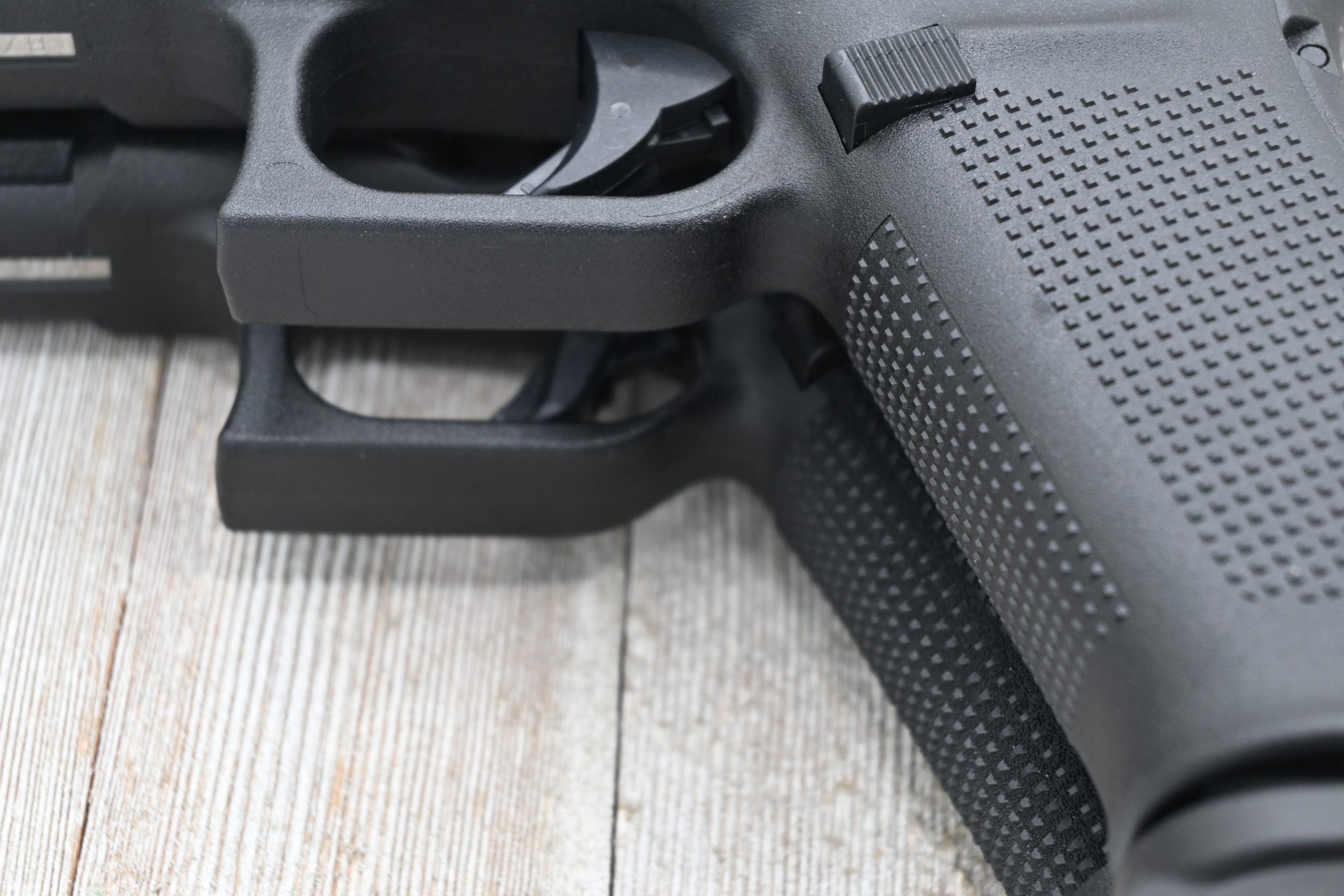
Putting grip nerdery to the side for a moment, the next texture extends further up the frame — all the way to the ambidextrous slide stop rather than stopping below the magazine release as in previous generations — which translates to measurably more purchase under recoil.
After years of shooting Gen 3s, 4s, and 5s, we found the texture on the new Gen 6 to “stick” better to the palm, more akin to the sort of texture felt on hockey tape and Goon tape minus the glue.
In short, if you always find yourself adding tape or adhesive Talon style grips to past Glock generations, that could be in the past with the Gen 6.
To develop the new grip profile, the company reportedly built up a database of hot points across thousands of users’ palms and, using subtle bilateral contours, produced a grip that gives a less blocky feel than in previous generations without altering the all-important 22-degree grip angle.
The result is a Gen 6 grip that’s noticeably less “blocky” than what we’ve known, with subtle bilateral palm swells that give it a more ergonomic feel without altering the signature 22-degree grip angle. The improved grip fits better in both smaller and larger hands than Gen 5.
Glock debuted interchangeable palm swell inserts into their guns with the Gen 4, but many users found them to be mildly different in use. Those interchangeable backstraps remain, but the Gen 6 ships with two fewer than the Gen 5’s four.
The reason: two of those legacy backstrap options included beavertail extensions, which are now built directly into the frame. So the math still works out.
Beavertail, Undercut Trigger Guard, and Slide Bite
The original Glock P80, as its name would imply, dates to the early 1980s and it was developed with feedback from that era. This included shooting via a single-hand Olympic/bullseye stance and transitioning to a (sort of) two-handed Weaver style stance, both of which catered to a lower grip on a handgun with a strong hand.
Modern shooting techniques have evolved to teach and incorporate a more instinctive two-handed isosceles style stance with both palms balanced in establishing and maintaining a natural grip.
The latter technique lends better to a high grip, which helps smooth out the recoil and increases control. However, such a grip can lead to slide bites.
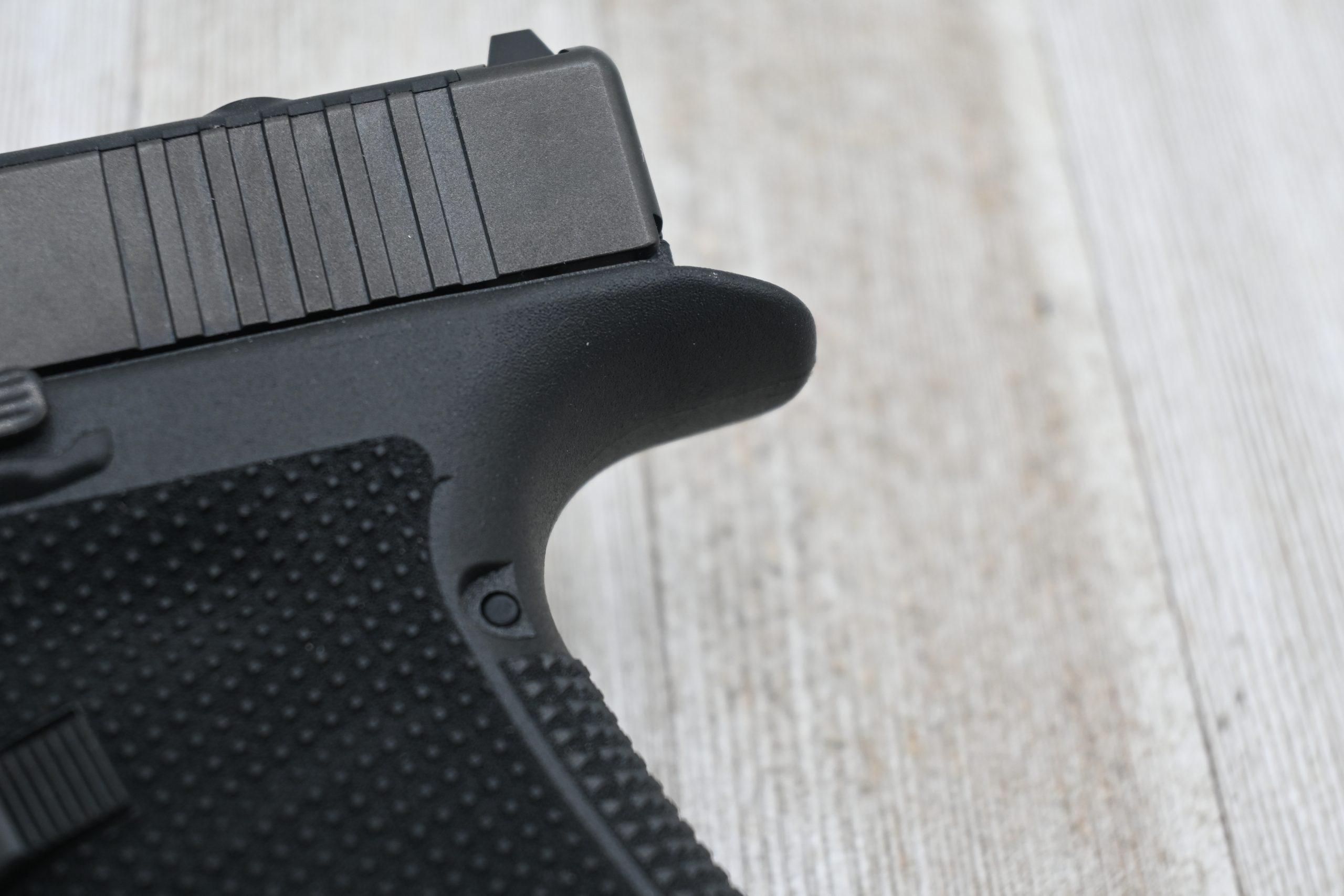
Listening to feedback from modern shooters, Glock introduced a factory-standard replicable extended beavertail palm insert in 2013. Today, the Gen 6 comes standard with an integrated extended beavertail instead of the swappable component. This is not your grandpa’s Glock from 1980!
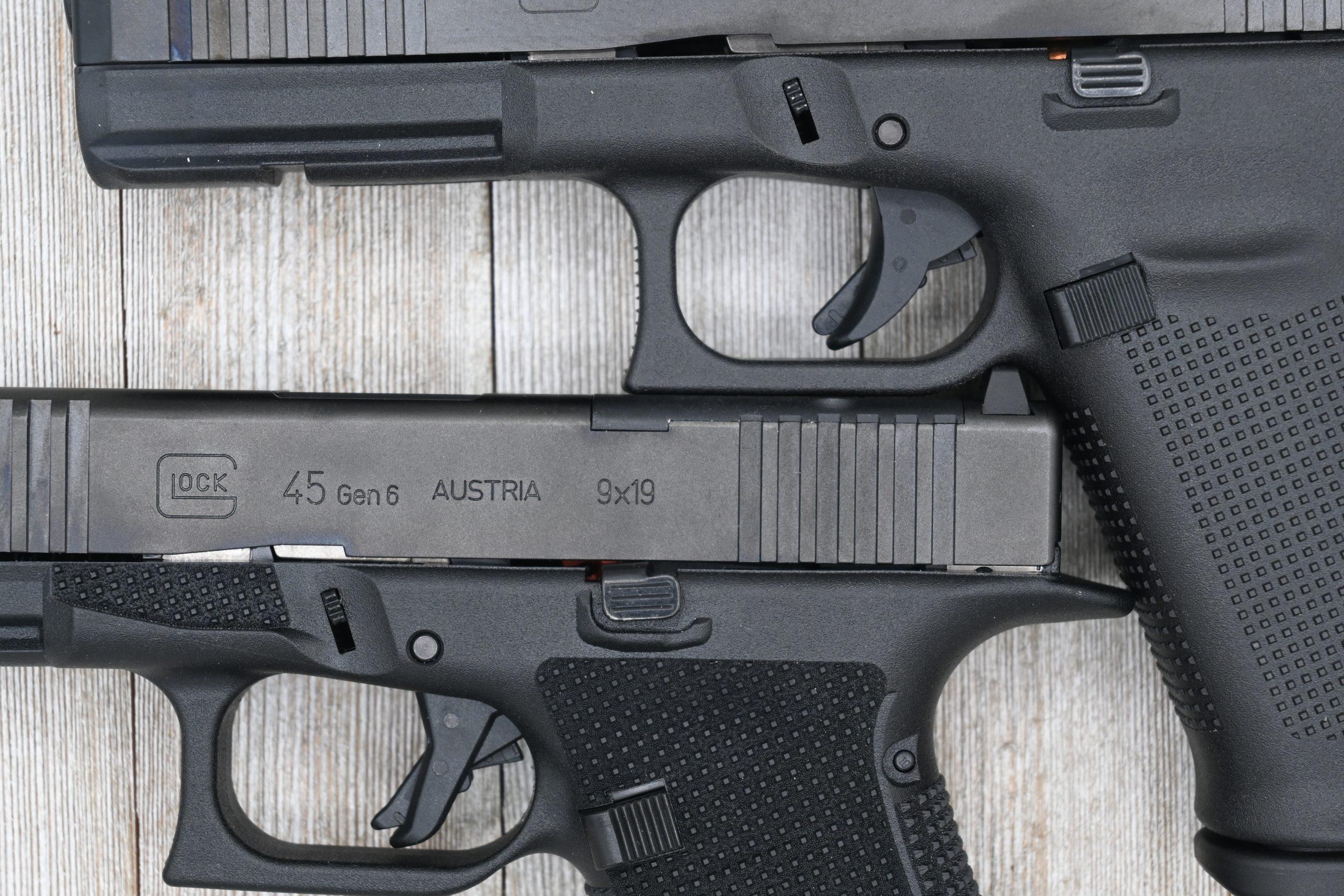
Further, the factory frame of the Gen 6 cuts deeper into the front strap junction than previous models, which, coupled with the undercut trigger guard, lowers the bore axis slightly and allows the user to get the web of the hand closer to the barrel centerline.
Talking about backstraps. The Gen 6 includes two extra straps versus the four often seen on the Gen 5 models. The reason for that is because, with the molded extended beavertail already part of the frame on the Gen 6, those two beavertail straps included with the legacy guns are no longer needed.
Gas Pedal Thumb Ledges and Ambidextrous Controls
Competition shooters have been running thumb ledges — what the competitive world calls “gas pedals” — on custom and production competition guns for 30 years.
The concept is simple: a raised shelf forward of the trigger guard on the support side allows the support thumb to apply counter-pressure to the frame, reducing muzzle rise and managing recoil more efficiently. SIG has done it on the X5 Legion, CZ on TS competition guns, and Walther on the PDP Match line.
Springfield Armory’s Echelon brought the concept to a duty-rated carry pistol. Glock’s Gen 6 version is subtler, building up and scalloping the forward thumb pad on both sides of the frame just short of a true competition gas pedal — but it works. The first time you grip a Gen 6, your thumbs find those ledges instinctively.
The ambidextrous slide stop levers from the Gen 5 carry over, now housed under an enlarged protective U-shelf to prevent snags and hot spots on clothing. The magazine release remains reversible.
The Flat Face Trigger: Glock’s Factory Upgrade
The single most common first modification on new Glocks for the past decade has been a trigger upgrade, and the most common aftermarket choice has been a flat-faced trigger shoe from the likes of Agency Arms, Apex, or ZEV Technologies.
Prices for those packs typically run $100–$150 out the gate. With the Gen 6, Glock has effectively cut out the middleman by shipping the pistol from the factory with a flat face trigger.
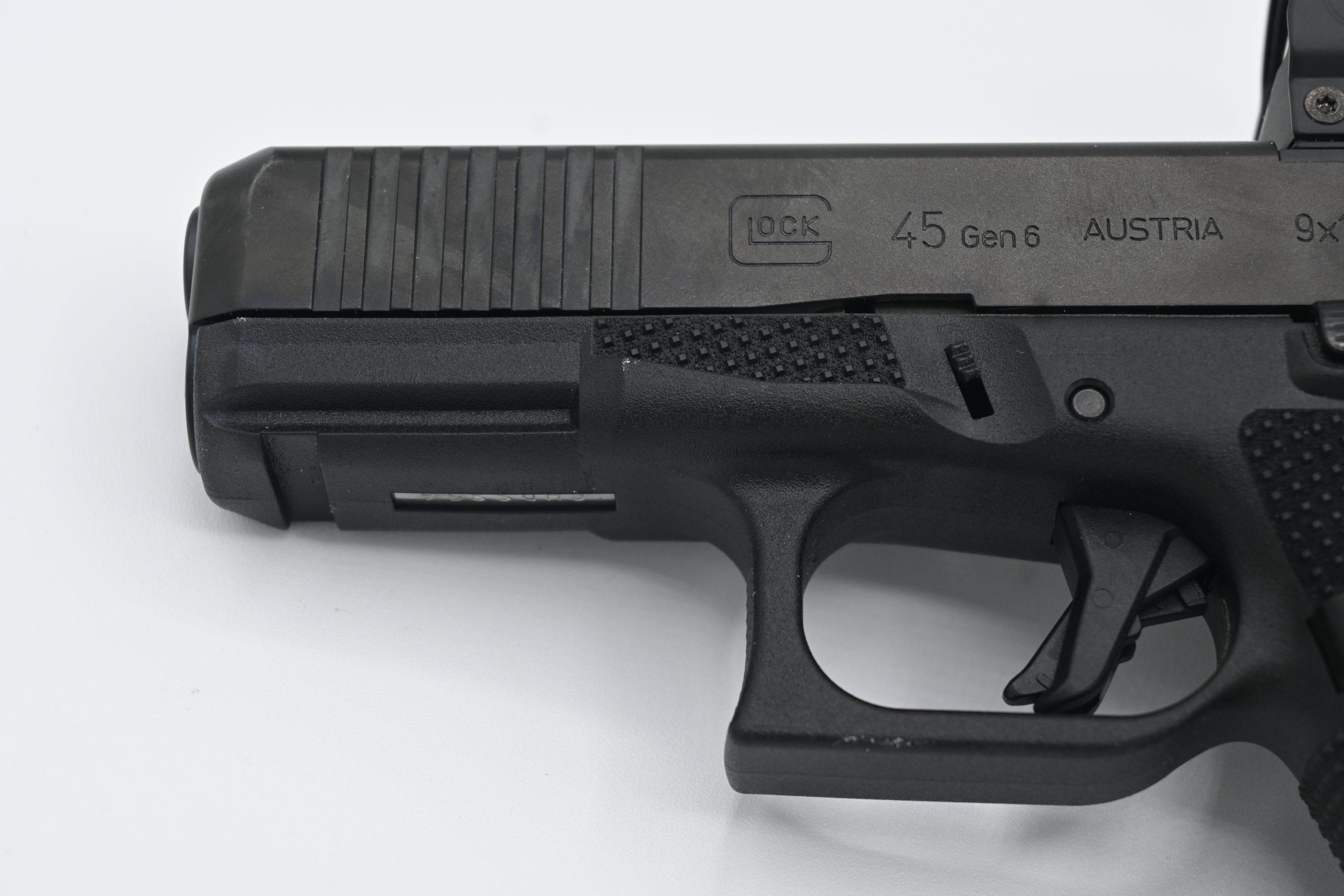
The flat face replaces the traditional curved shoe and produces a slightly shorter trigger reach — what Glock describes as a slightly shorter trigger reach from backstrap to trigger face — which matters for shooters with smaller hands and for achieving a cleaner, more consistent pull geometry.
The measured trigger pull weight remains in Glock’s historical spec at around 5.8 pounds, but the flat face changes the perceived feel substantially. There’s less take-up before the wall, and the break feels crisper than the same spec number on a Gen 5 curved shoe.
The redesigned trigger safety lever also recesses fully into the shoe on actuation rather than protruding into the trigger finger as it did on previous designs. It’s a small change with a noticeable ergonomic payoff. Reset is short and positive — consistent with Gen 5 feel, which is a good thing.
One note for those arriving with a box of Gen 5 aftermarket trigger components: the Gen 6 trigger housing dimensions are unique to the new pistol and are not reverse compatible with earlier generations.
Aftermarket support is coming — companies like Agency, Apex, and ZEV are almost certainly already developing Gen 6-specific packs — but it won’t be there on day one for most buyers.
If you want to go deeper on the aftermarket trigger ecosystem for Glock pistols generally, our Best Glock Triggers roundup covers the top options across pull weight, reset, and reliability for Gen 3–5 platforms, most of which will serve as the starting reference point for Gen 6-specific products as they arrive.
Optics Ready System: Direct Mount Done Right
How the ORS Replaces the MOS
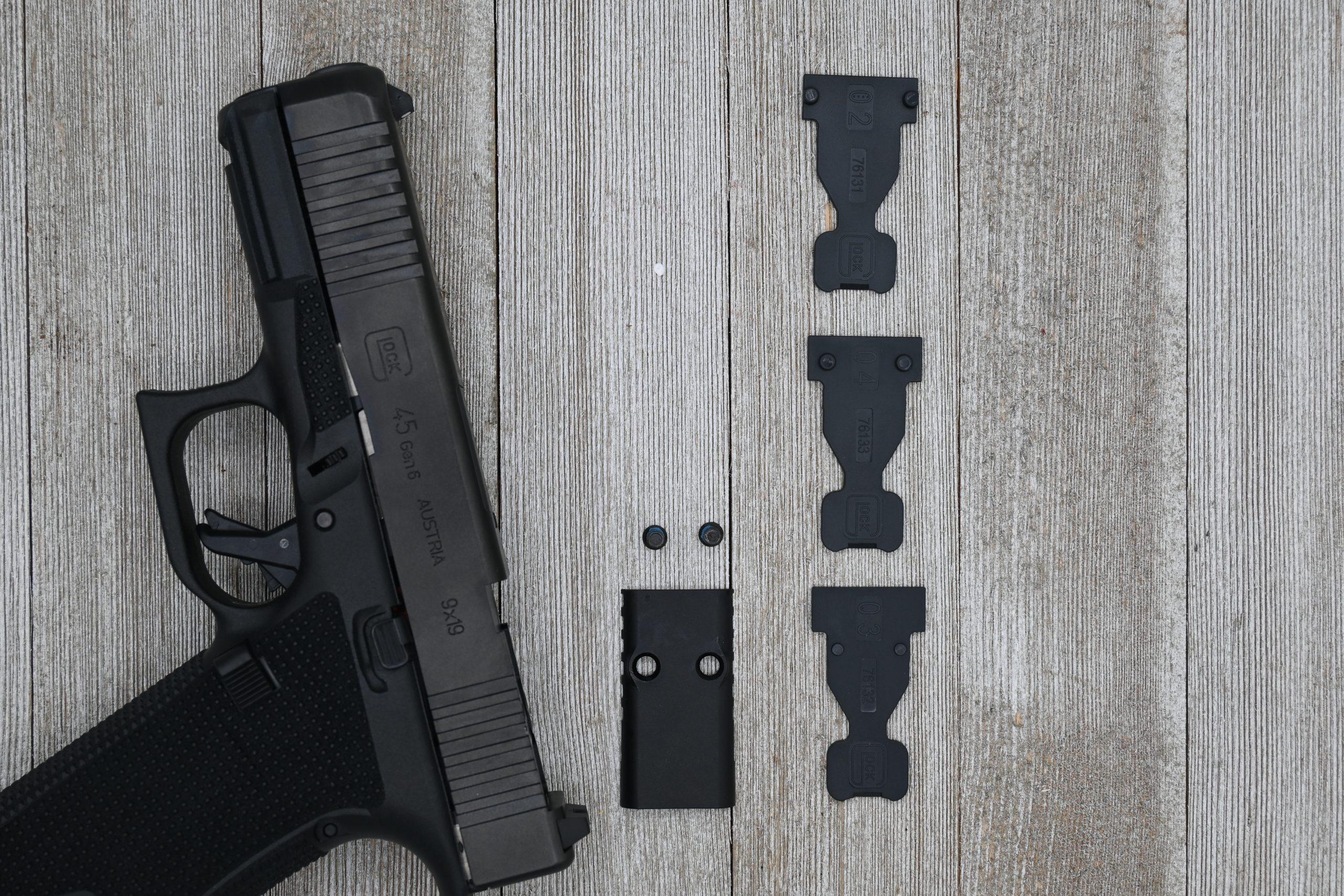
If you’ve run a Glock MOS optic setup, you’re familiar with the process: select a metal adapter plate for your footprint, torque it to the slide with two screws, then mount the optic to the plate with two more screws. Four-screw system total, with all the wobble risk and height-over-bore penalty that comes with a bridge-mount approach. The Gen 6’s new Optic Ready System (ORS) does away with all of that.
The Gen 6 slide is directly milled to accept optic footprints, with only two screws needed — from the top of the optic down directly into the slide itself.
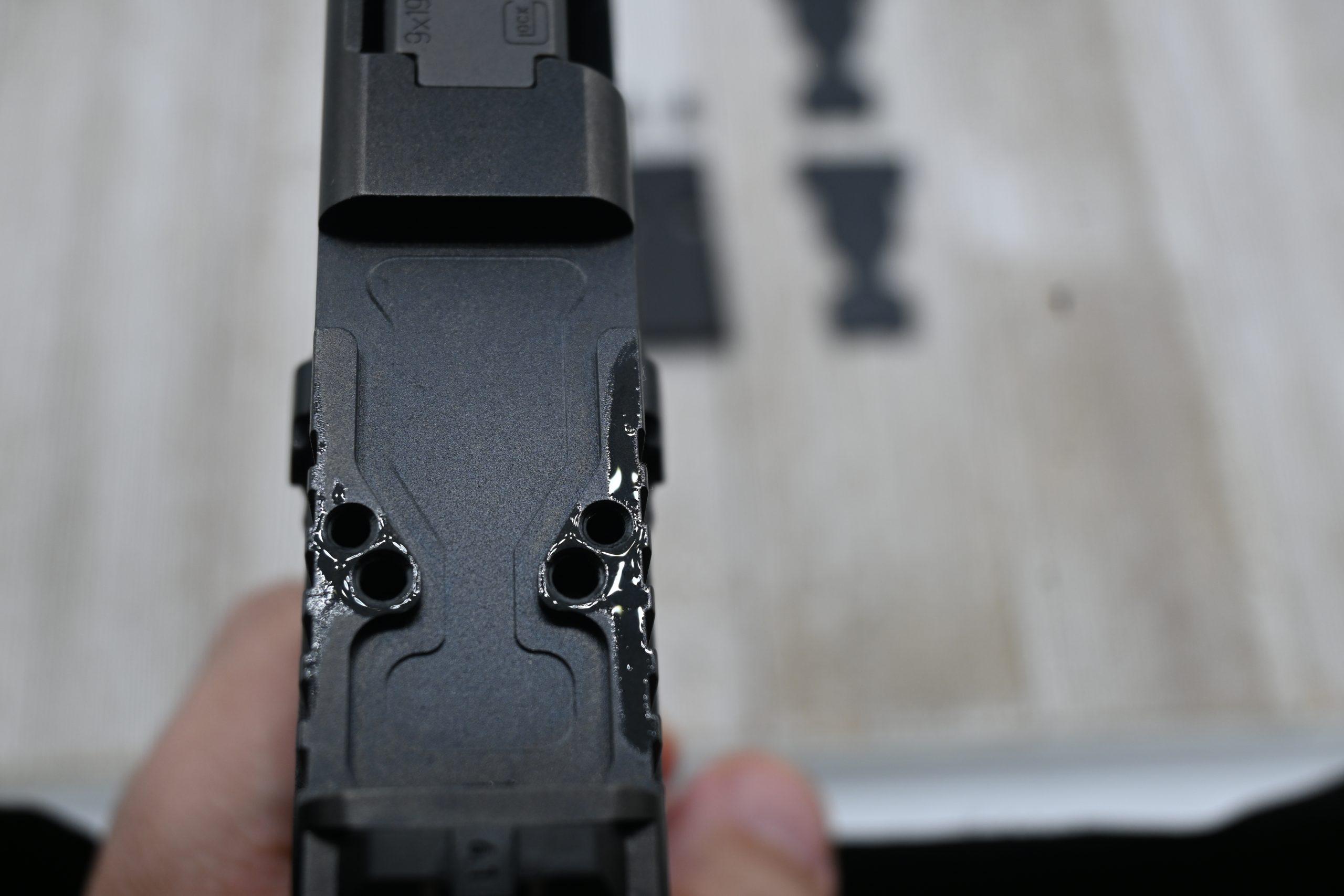
The three polymer ORS “plates” included with the pistol are better described as screw-pattern alignment inserts than traditional adapter plates; they locate the optic’s screw holes over the appropriate pre-tapped positions in the slide while blanking over unused holes. They’re closer in function to a crush washer than a traditional steel optics plate.
To free up the internal real estate needed for this architecture, Glock redesigned the slide’s internal geometry — which is also why the extractor and striker assembly don’t carry over from Gen 5.
Height-Over-Bore and the Sealed Extractor Channel
The practical advantage of ditching the bridge-mount system is lower height-over-bore — the optic sits measurably closer to the bore axis, which improves natural point of aim and reduces the point-of-impact shift at close distances that red dot users deal with at 5–7 yards.
For a service pistol or duty carry setup, this is a legitimate improvement over MOS plates that makes a real difference in fast, close-range target acquisition.
One of the more quietly significant improvements is the sealed extractor channel. On Gen 5 MOS builds, excess thread lock compound applied during DIY optic installs could seep into the extractor and firing pin channel, leading to light strikes or extraction failures. It’s a well-documented issue in the Glock MOS community.
The Gen 6 design seals that channel, making the optics mounting system genuinely user-proof in a way the MOS system was not.
Supported Optics and Co-witness
The three included ORS inserts support the following footprints:
- Insert 02: Trijicon RMR, RCR, SRO; Holosun 508T, 407C, 507C; CHPWS footprint
- Insert 03: C-More Optics
- Insert 04: Vortex Defender ST/XL, EOTech EFLX, Leupold DeltaPoint Pro
A separate Aimpoint COA cut for the compact enclosed emitter optic has been announced but won’t reach the market until later in 2026.
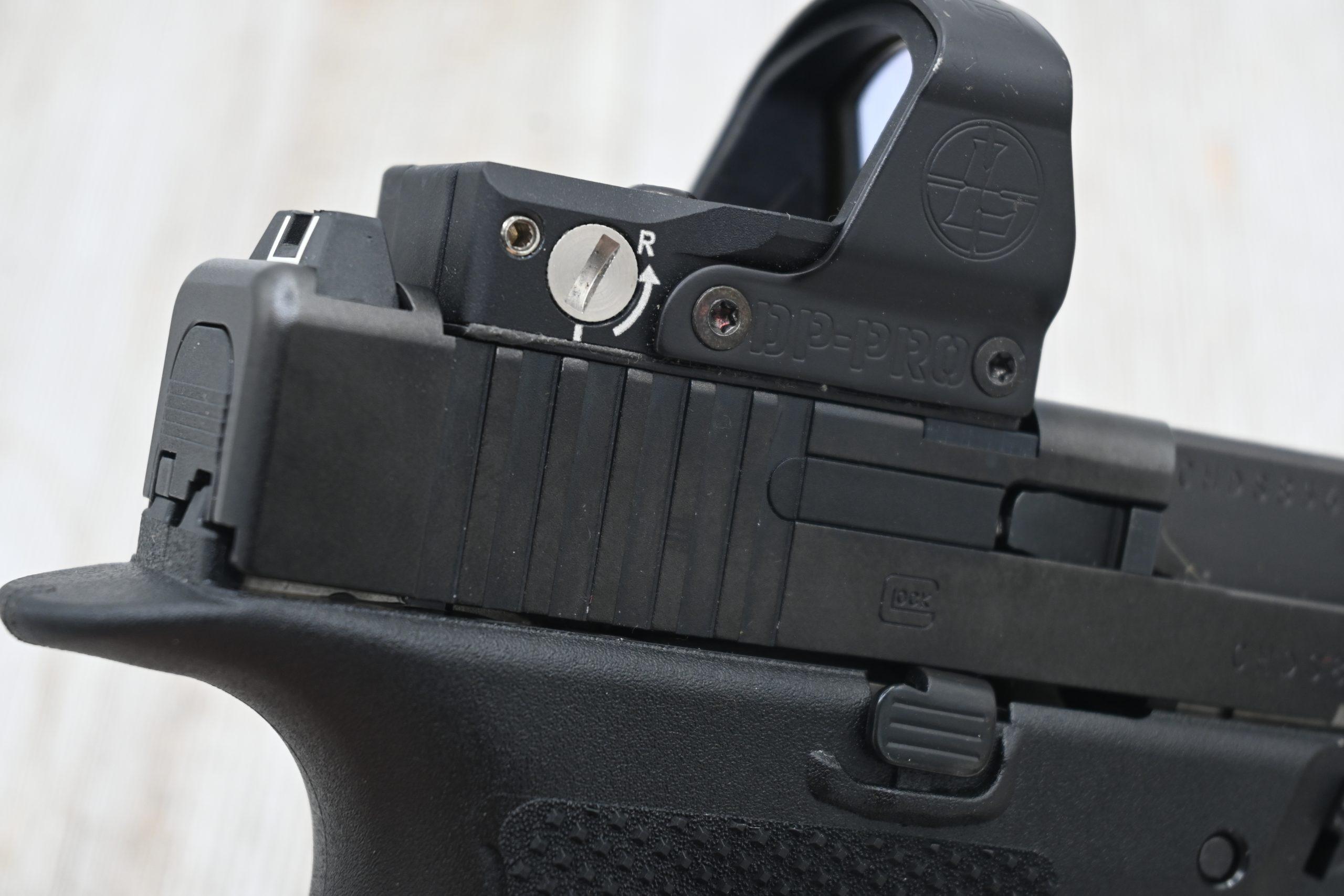
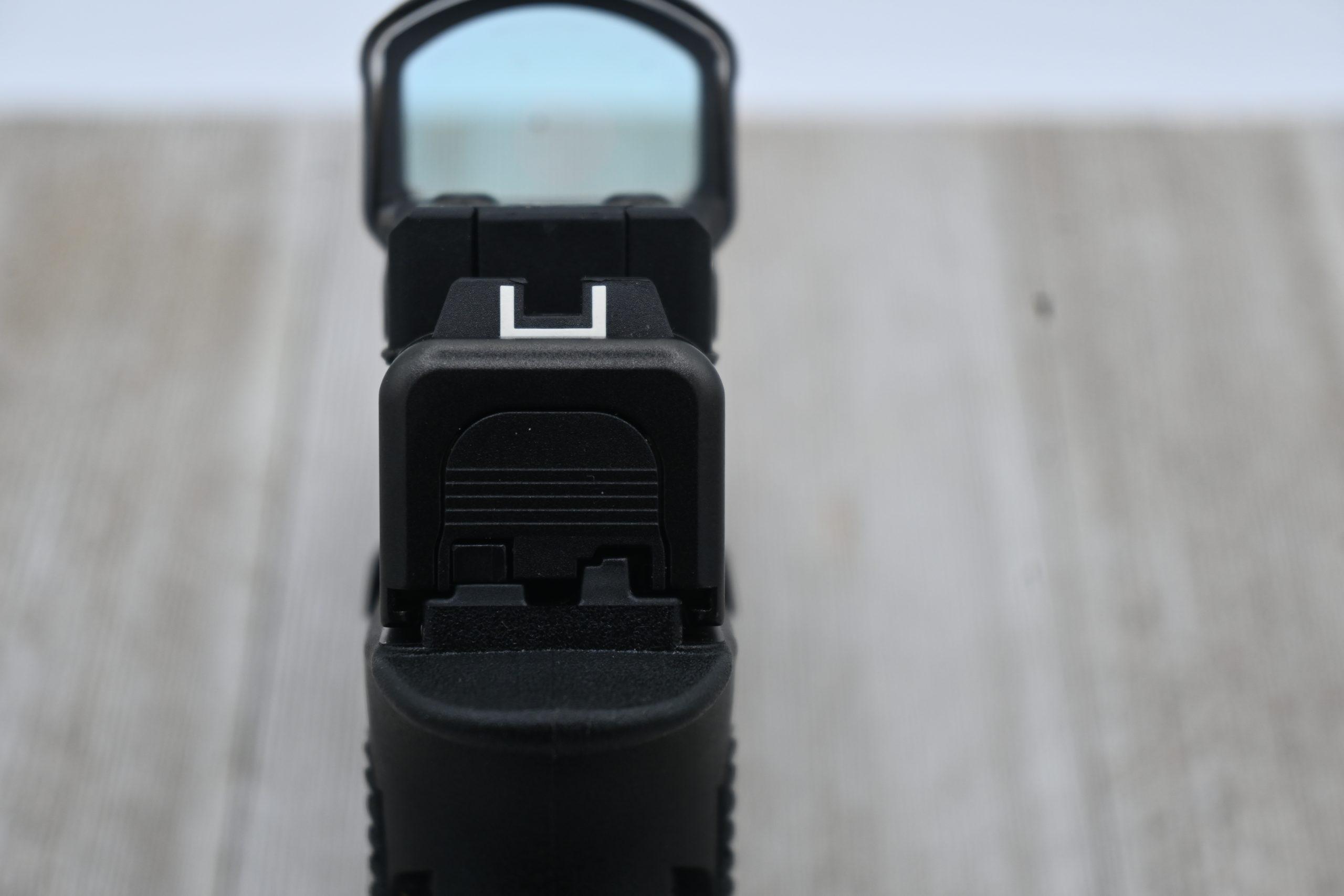
Co-witness is the wrinkle. The Gen 6’s direct-mount system sits lower than MOS plates, but standard factory iron sights still don’t co-witness through most of these optics.
We mounted a Leupold DeltaPoint Pro and confirmed the standard sights were invisible through the lens. Installing a set of suppressor-height irons brought both the DPP and a Vortex Defender ST into lower-third co-witness.
The good news: the Gen 6 retains the same legacy fixed sight dovetail footprint, so aftermarket sight compatibility is unchanged.
Internal Changes
When Gaston Glock’s original P80 design went into production in the early 1980s, it ran a single captured recoil spring on a polymer guide rod. That remained standard for three decades until the Gen 4 swapped it for a shock-absorber-style dual spring system, carried forward into the Gen 5.
The Gen 6 returns to the original single-spring design, and Glock’s reasoning is straightforward: their testing showed the dual spring isn’t needed on 9mm pistols, adds complexity for field replacement, and has historically caused issues with some muzzle devices and compensators. Glock’s recommended replacement interval is every 5,000 rounds.
The redesigned extractor and striker assembly are Gen 6-specific — they do not interchange with Gen 5 or earlier handguns, and the manual of arms for extractor removal and replacement is different from what armorer-trained Glock users will be used to.
For buyers with deep drawers of Gen 5 spare parts, this is worth factoring into the upgrade calculus. For everyone else, it’s a non-issue.
The Glock Marksman Barrel — first introduced with the Gen 5 in 2017 and widely credited for the accuracy step-change that generation delivered — carries forward in the Gen 6.
The 4.02-inch barrel retains the same polygonal rifling and recessed crown that made it a notable upgrade from Gen 4. The shorter slide relative to the G17 means a correspondingly shorter sight radius on the G45, though that trade-off is essentially irrelevant for anyone running a red dot.
Despite the internal changes, in our testing we found no reliability issues attributable to the pistol. The Gen 6 G45 ran cleanly across all loads tested.
Which Gen 6 Is Right for You?
The Gen 6 launches in three 9mm configurations. Here’s how they stack up:
| Model | Frame | Slide | Capacity | Best For |
|---|---|---|---|---|
G17 Gen 6 | Full / G17 | Full / G17 | 17+1 | Duty range open carry |
G19 Gen 6 | Compact / G19 | Compact / G19 | 15+1 | Concealed carry duty |
G45 Gen 6 | Full / G17 | Shorter / G19 | 17+1 | Duty carry competition best of both worlds |
The G45’s crossover concept originated with Glock’s entry to the Army’s 2017 Modular Handgun System competition. When the G19X hit the commercial market that fall — first in Coyote finish, then as the blacked-out G45 — the combination of a full G17-sized grip frame with a shorter G19-length slide proved immediately popular in both law enforcement and consumer channels.
Department after department tested the G45 against competitors and against other Glock models, and it kept winning. The full grip maximizes magazine capacity at 17+1 and gives the shooter more to hold onto, while the shorter slide clears a holster faster and disappears slightly better at the muzzle end than the G17.
In the Gen 6 lineup, the G45 remains the “Goldilocks” configuration for anyone who wants duty-grade capacity and control with the improved concealment characteristics of a shorter slide.
For a deeper look at the crossover concept’s origins and how the G45 lineage developed, our Glock 19X review covers that history in detail.
Gen 5 vs. Gen 6: How Do They Compare?
| Feature | Gen 5 G45 | Gen 6 G45 |
|---|---|---|
Grip Texture | RTF-4 | RTF-6 (more coverage better feel) |
Beavertail | Swappable backstrap insert | Integrated into frame |
Trigger Shoe | Curved | Flat face |
Trigger Reach | Standard | Slightly shorter trigger reach |
Trigger Guard | Standard undercut | Deeper undercut |
Thumb Ledges | None | Built-in (both sides) |
Optics System | MOS (plate-based) | ORS (direct mount) |
Recoil Spring | Dual spring | Single captured spring |
Extractor Channel | Open | Sealed |
Marksman Barrel | Yes | Yes |
Holster Compatibility | Gen 3+ holsters | Most Gen 3-5 holsters |
Magazine Compatibility | Gen 3+ 9mm | Gen 3+ 9mm (unchanged) |
MSRP | $745 (MOS) | $745 |
Range Time: Live Testing and Performance
We spent just under 1,000 rounds testing the Gen 6 G45. Ammunition included Federal’s 124-grain Syntech FMJ and 124-grain HST hollow points, Speer 124-grain Gold Dot JHPs, and Black Hills’ 115-grain FMJ and 124-grain JHP, among others.
Drills ran from 5, 7, and 15 yards using modern two-handed tactical/practical standards, with barricade work at 15 and a benchrest session at 25 yards for accuracy evaluation.
Here are our 25-yard groups, shot slow, five rounds per group, from a bench rest:
| Load | Group Size (25 yds.) |
|---|---|
Federal 124 gr. Syntech FMJ | 2.75 in. |
Federal 124 gr. HST JHP | 1.9 in. |
Speer 124 gr. Gold Dot +P | 2.3 in. |
Black Hills 124 gr. JHP | 1.8 in. |
Black Hills 115 gr. FMJ | 2.6 in. |
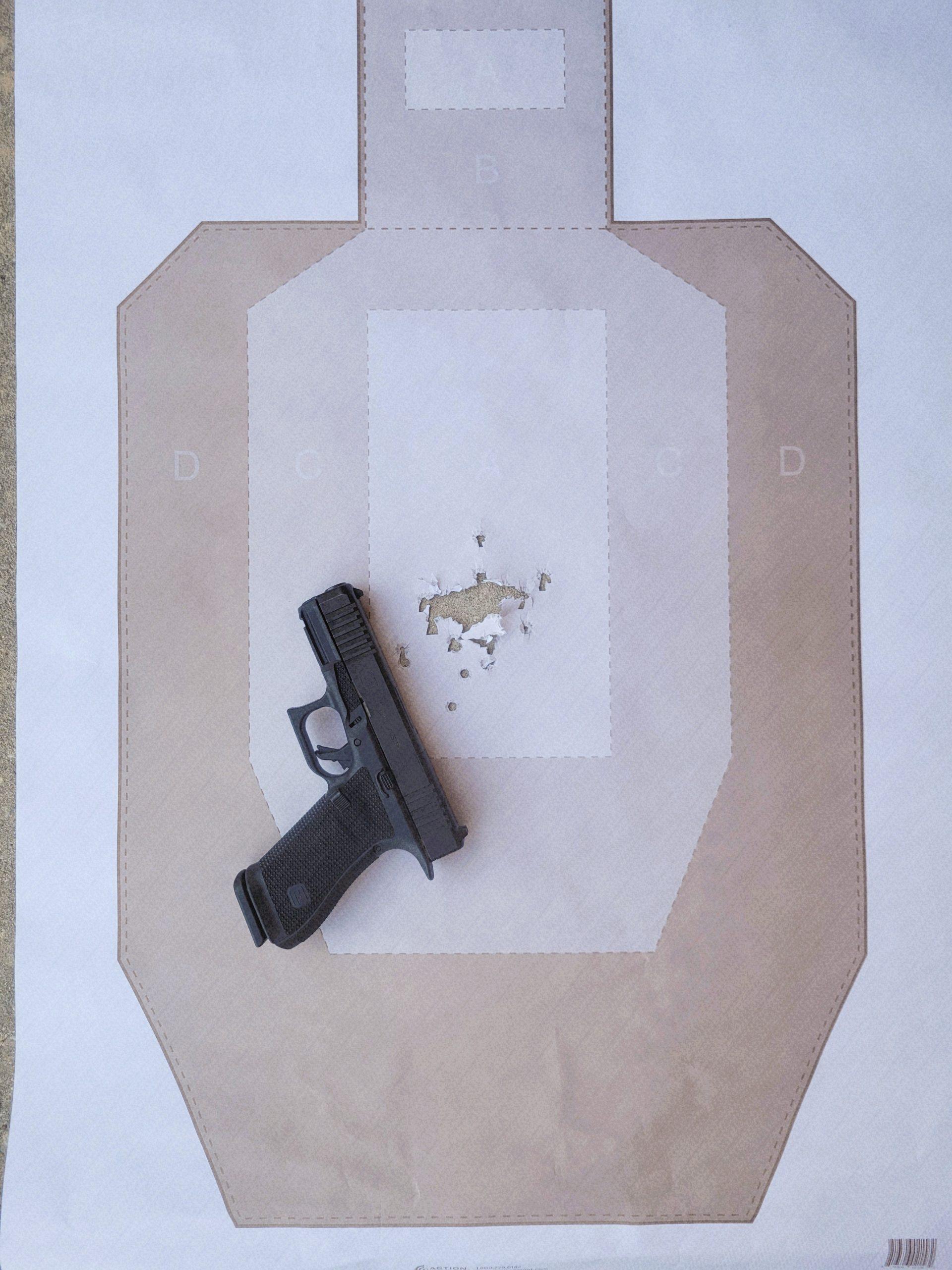
Those numbers are consistent with what Glock’s Marksman Barrel has been delivering since the Gen 5 introduced it — the Gen 6 doesn’t regress on accuracy, and in the best loads was notably tight.
The Gen 5 average benchmark with a Marksman Barrel runs around 2.5 inches at 25 yards; the Gen 6 G45 meets or beats that standard depending on load.
Off-hand at 5, 7, and 15 yards, head-zone hits at the latter distance were achievable for most shooters, and the A-zone out of a standard USPSA target was no real challenge.
The G45 Gen 6 ran noticeably flatter than a stock Gen 5 G19 under the same conditions — a result I’d attribute to the combined effect of the integrated beavertail, the deeper undercut trigger guard, the improved palm swell geometry, and the forward thumb ledges working together. When I mounted the Leupold DeltaPoint Pro and zeroed it at 15 yards, split times on 8-inch steel at 7 yards tightened further.
No malfunctions attributable to the pistol were reported across quality factory-loaded ammunition spanning 115 to 147 grain loads and multiple JHP defensive rounds.
Holster Compatibility
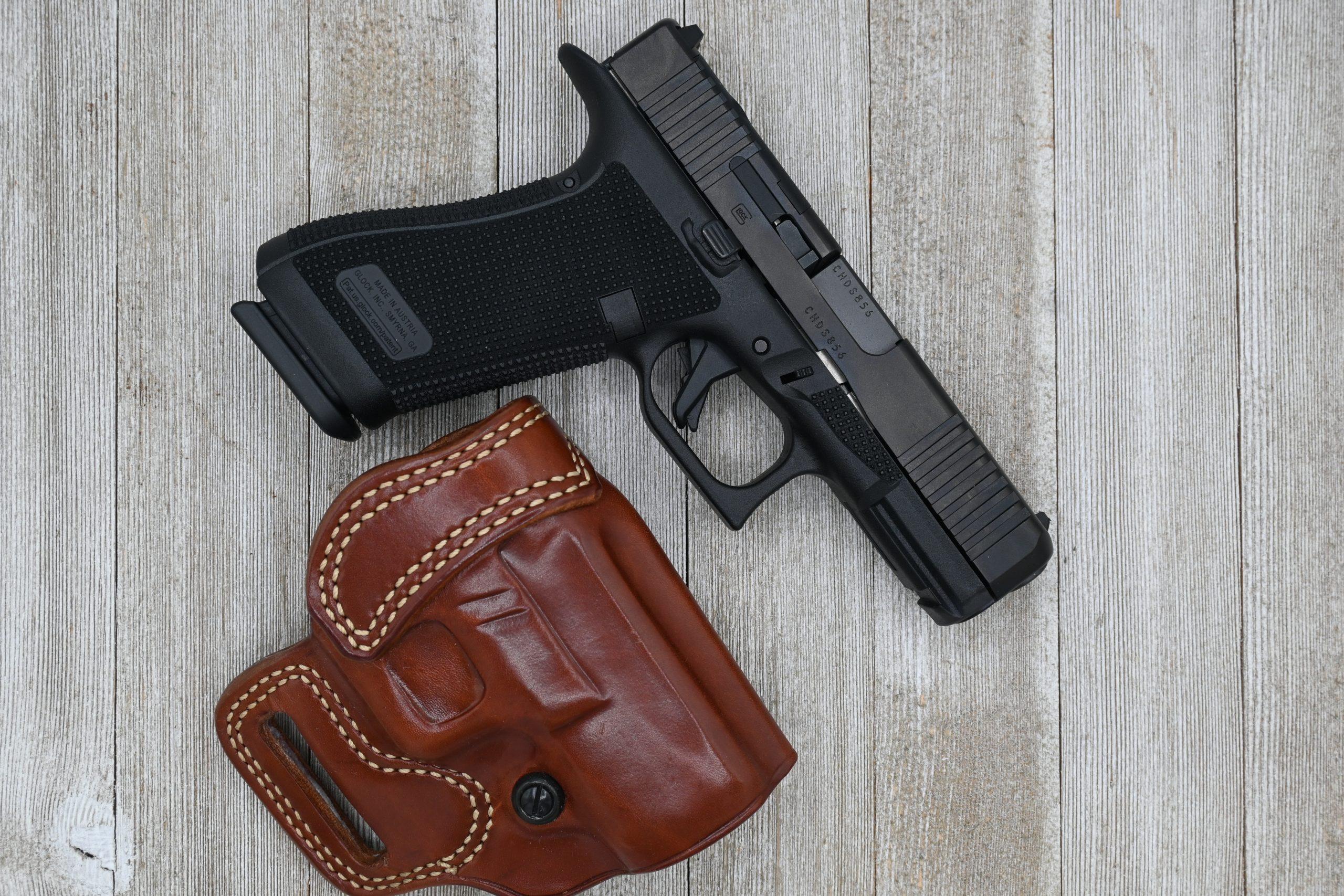
Holster compatibility is one of the Gen 6’s better stories. The G45’s overall external profile changes are modest enough that it maintains dimensional compatibility with the vast majority of existing holsters designed for Gen 3, 4, and 5 G19-pattern pistols.
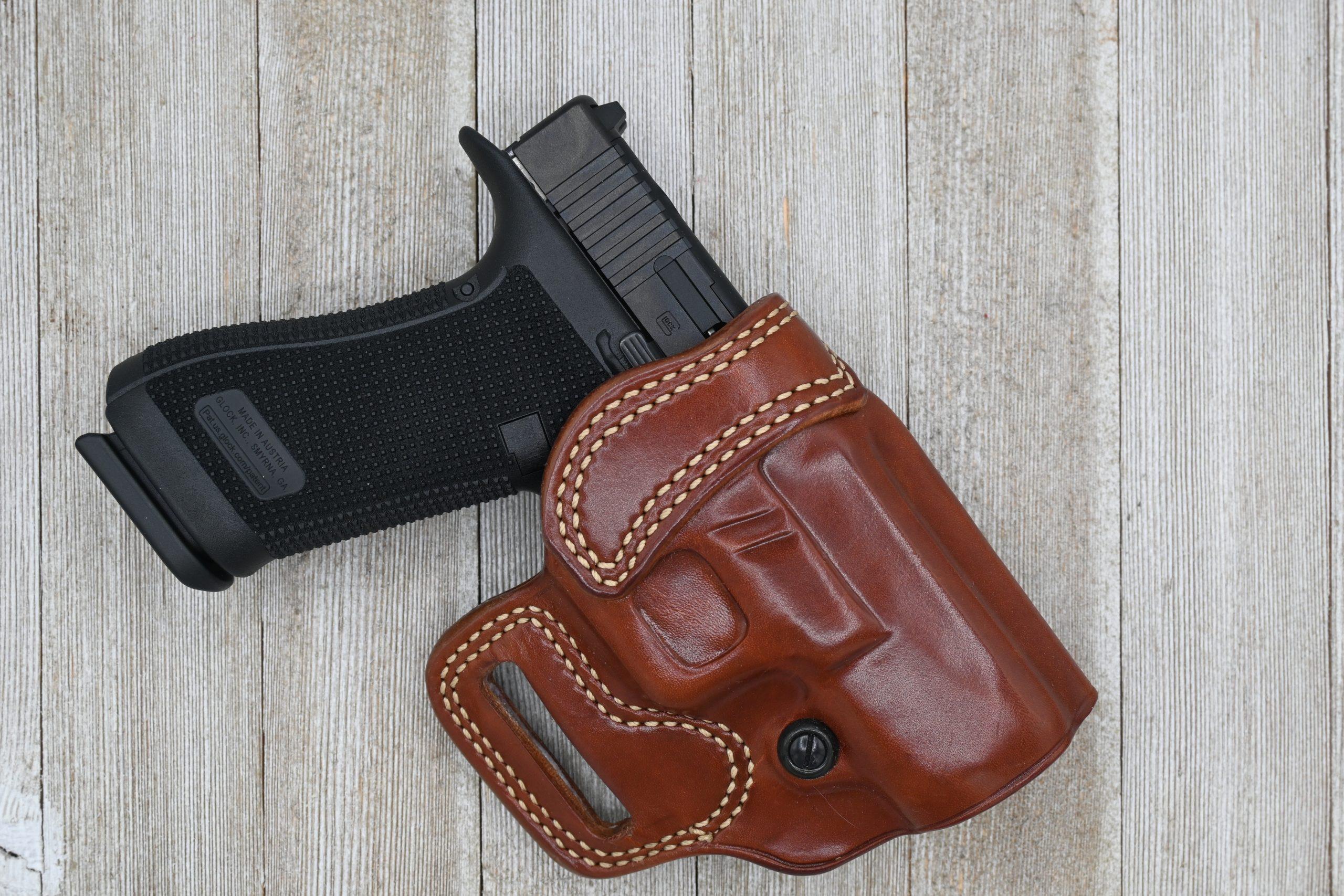
We tested fit with a DeSantis Pegasus Veiled Partner IWB, a FALCO Carbon Fiber OWB, a Galco leather OWB, and a Safariland retention holster — all fit without issue, including satisfying trigger guard retention snaps where applicable.
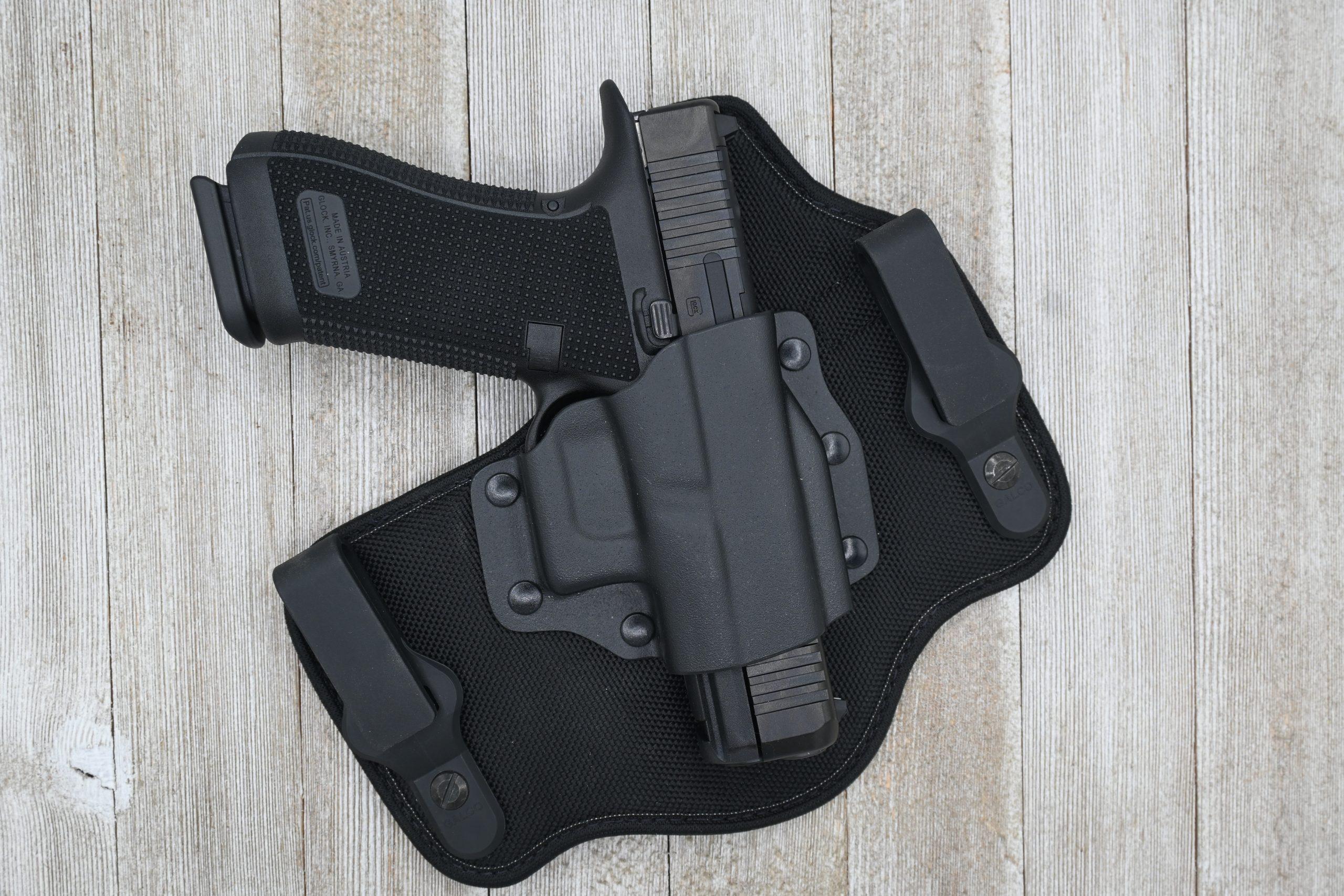
There are two caveats worth noting. First, the integrated thumb ledge shelves and the enlarged protective shelf around the ambidextrous slide stop create slightly more outboard protrusion than previous generations. Most precision-molded Kydex holsters built for Gen 5 G45 pistols should still fit, but test before trusting — tight trigger guard fits on precision Kydex may require minor adjustment.
Second, the integrated beavertail adds a small amount of height at the grip tang. Carrying a Gen 5 G19X AIWB for years without the beavertail accessory, I noticed a distinct new pressure point at the back of the grip using the same rig with the Gen 6 G45.
For most shooters and most rigs it will be inconsequential, but AIWB-focused deep concealment carry is worth evaluating fresh.
For those building a carry system around the Gen 6, our Best Concealed Carry Holsters guide covers tested IWB, OWB, and AIWB options, several of which have confirmed Gen 6 Glock compatibility.
Pros & Cons
Pros
Egronomics
The Gen 6 G45 is the most ergonomic factory Glock ever sent to market. The RTF-6 grip texture is a genuine improvement over every previous generation — not too aggressive, covering more frame real estate, and finally dispensing with the need for aftermarket grip tape as a workaround.
The Trigger
The flat face trigger delivers a meaningful improvement in perceived pull feel and consistency without Glock having changed the safe-action operating system itself.
The ORS System
The new optics mounting system is a real step forward — a lower deck height, a sealed extractor channel, and simplified two-screw mounting that MOS users have been asking for since the plate system launched.
The Package
The G45 configuration continues to be the right answer for a large portion of duty and concealed carry users: full-size 17+1 capacity, faster holster clearance from the shorter slide, and now built with the best ergonomics Glock has even offered at the same asking price as the Gen 5 MOS it replaces.
Cons
Parts compatibility
Parts compatibility with previous models is the Gen 6’s most significant drawback for existing Glock owners. The barrel, extractor, trigger housing, and striker assembly are all Gen 6-specific.
Gunsmiths familiar with Gen 5 internals will need to learn the new extraction procedure, and owners with stocked spare parts drawers will find most of that inventory doesn’t carry forward.
For civilian recreational shooters, this is a minor inconvenience. For armorers supplying fleet pistols to agencies or organizations, it’s worth factoring into transition planning.
Holster compatibility
Holster compatibility is largely intact but not universal — precision Kydex users should test fit before assuming the old rig works. The integrated beavertail, while welcome for shooting performance, will prompt some AIWB carry re-evaluation.
Only 3 models (for now)
Finally, the Gen 6 standard lineup at launch covers only three 9mm models, leaving compact options like the G26 and all other calibers without a Gen 6 offering — for now.
Closing Assessment: Worth the Upgrade?
Whether to upgrade to the Gen 6 depends on where you’re coming from. A current Gen 5 owner with a pistol that runs flawlessly and carries an aftermarket flat trigger and acceptable optics setup has less to gain than someone starting fresh.
The MOS-to-ORS upgrade is meaningful, but not crisis-level. On the other hand, first-time Glock buyers have no compelling reason to look at earlier generations when the Gen 6 is available at the same price.
For law enforcement duty and agency purchasing decisions, the calculus is clearer: the Gen 6 G45 in particular is the best factory Glock ever produced, full stop.
That full-grip 17+1 configuration with a shorter slide that clears holsters fast and stays tucked when needed — now paired with the improved optics mounting system and refined ergonomics — makes a compelling argument over the Gen 5 equivalents agencies have been buying for years.
The Gen 6 isn’t revolutionary. It’s what Glock does: disciplined, incremental improvement on a platform with 40 years of proven performance. But the increments this time are the right ones, in the right places, at the same price. That’s a harder combination to argue with than most.
FAQs
Will Gen 5 parts fit the Gen 6?
Which optics fit the Gen 6 ORS slide?
When should I replace the Gen 6 recoil spring?
How does the Glock 45 Gen 6 compare to the Gen 5 for concealed carry?
Is the Glock 45 Gen 6 good for first-time buyers?
Sign up for our newsletter
Get discounts from top brands and our latest reviews!
View by Category

In-Hand Reviews

Firearm News

Featured Comparisons

Firearm & Ammo Reviews

Popular Guides & Stats


Range Gear & Accessories

Gun & Ammo Safes